
Innovate Local
Reimagining City Regulations to Empower Entrepreneurs.
In October 2024, Cities Work hosted Innovate Local: A Policy Hackathon in Kansas City, Missouri.
Innovate Local brought together leading experts from across the country to instill new energy and innovative ideas into the local small business regulation field that is characterized by outdated and exclusionary policies. We were joined by 15 key stakeholders including policy experts, entrepreneurs, design thinkers, and community leaders. They were split into four teams to tackle the challenge of building a new local regulatory regime for small businesses from scratch. The prompt provided the unique opportunity to bring diverse stakeholders to the table to design regulations that encourage entrepreneurship–all while being untethered to the divisive political environment that can constrain innovation.
Below is a sample of the teams’ ideas created in collaboration with Cities Work. We hope they will serve as a brainstorming starter kit to encourage innovative small business regulatory reform.
Ideas to Spur Local Innovation
Far too often, cities’ zoning codes do not align with their economic development goals. Zoning codes commonly include outdated requirements like mandatory minimum lot sizes and parking requirements or restrict land use by requiring special use permits or exemption variances which can add tens of thousands of dollars in fees and opportunity costs.
To address this barrier, one team proposed recommendations to help cities properly align their zoning code with their development goals. By relaxing their requirements and incentivizing small commercial space development through regulatory benefits, cities can encourage, rather than stifle, growth.
Inclusionary Commercial Zones
The vibrancy of commercial districts is largely created by family-owned small businesses. Unfortunately, many of these businesses are at risk of displacement due to increased costs and commercial spaces designed for large businesses like department stores. In these areas, cities can offer regulatory carveouts to incentivize the development of small commercial spaces and counteract this displacement.
Many cities use Floor Area Ration (FAR) to limit the size a building can be in relation to the size of the property. For example, if a city allows a FAR of 3.0, then a building up to 3x the size of the lot could be developed (i.e. a three-story building covering the whole lot or a six-story building covering half the lot).
Cities can incentivize developers to allot spaces for small businesses by creating a FAR carveout that would allow retail spaces of less than 1,500 square feet to not count toward the building’s floor-to-area ratio.
This carveout would mean developers could add extra floor space to be rented or sold without them needing to obtain a zoning variance, exemption, or rezoning.
Allow By-Right Accessory Dwelling Units & Accessory Commercial Units
To increase opportunities for economic activity and development while reducing barriers to entrepreneurial start-ups, the city should relax its zoning codes to allow for accessory dwelling units (ADU) and accessory commercial units (ACU) by right in residentially zoned areas.
Allowing the units to be built “by right” means an improvement on these parcels can proceed without additional permits or discretionary reviews, as long as it meets the basic standards.
Cities can encourage development and density by allowing their residents and businesses to meet the needs of their families and customers, without costly taxpayer subsidies, abatements, or property and sales tax diversions. This opportunity adds housing and small businesses in an incremental fashion while imposing minimal change on existing neighborhoods.
Remove Zoning Variance Requirements for Certain Commercial Uses
Obtaining a zoning variance is costly and time-consuming for entrepreneurs. The public notice and hearing process discourages entrepreneurs from applying for a variance. Removing zoning variance requirements for certain commercial uses would encourage the expansion and growth of small businesses in a cost-effective manner; activate streets and draw more people to the area; and increase revenue for the business owner and sales tax revenue for the city.
Cities should begin by removing zoning variance requirements for outdoor seating and takeout services for restaurants, cafes, and markets. The city should allow these uses by right if there is enough space to accommodate the use (i.e. compliant with ADA sidewalk width requirements). In place of the variance process for outdoor dining, cities should require submission of a scaled drawing with measurements to prove sufficient space exists to allow for outdoor seating. The variance is unnecessary because the site plan already addresses the central issue in question and the health and safety codes already address issues surrounding the expansion of service.
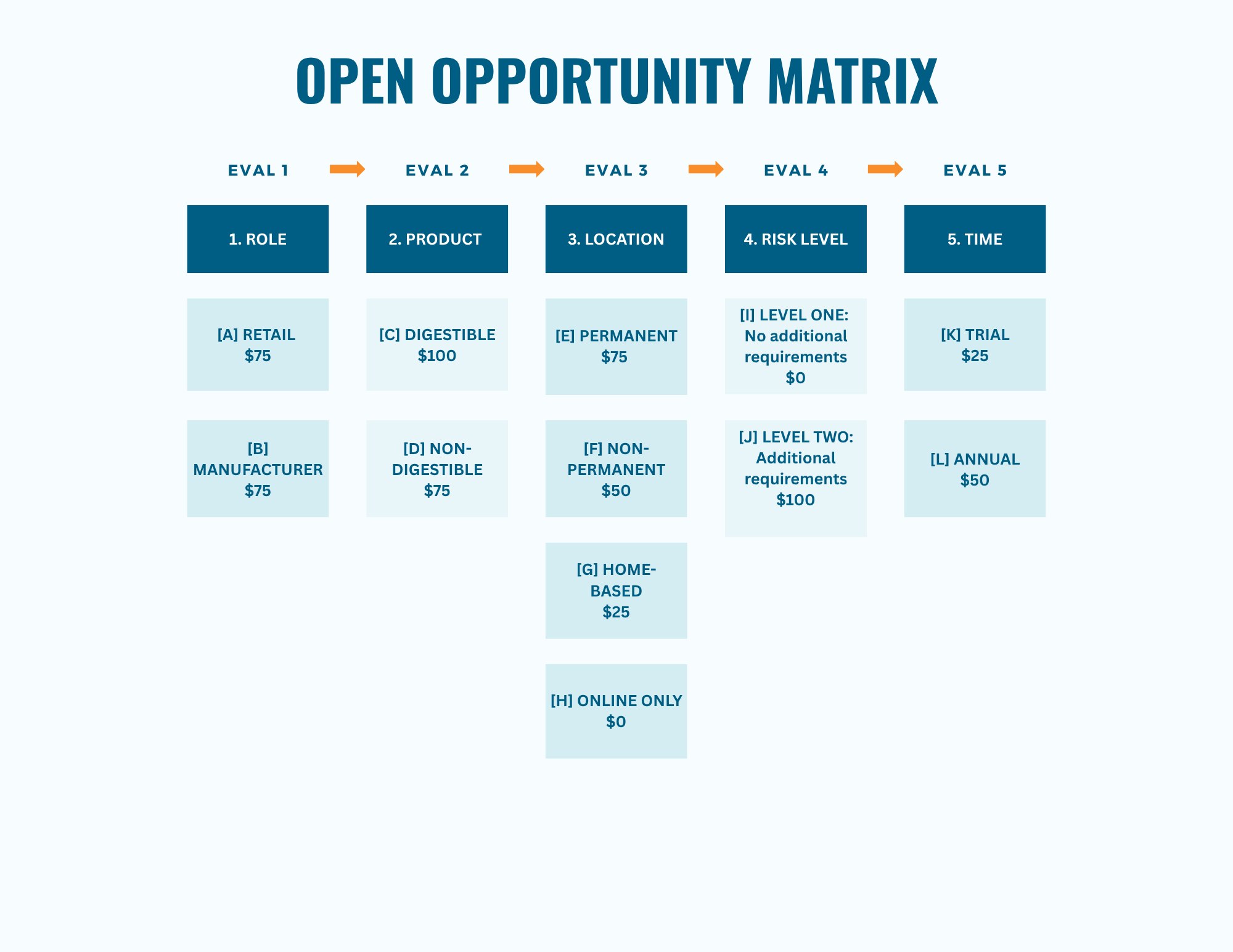
The traditional form of permitting and licensing regulates based on business type categories. This categorical way of regulating may have worked adequately when there were limited common forms of small businesses like brick-and-mortar food establishments, retail stores, and offices.
In recent decades, however, we have seen this regulatory strategy fail—leaving innovative entrepreneurs with limited paths forward. Entrepreneurs must decide whether they should abandon this form of business, operate without proper documentation, or expend the resources to convince the city to allow an exception in category eligibility or create a new category. All these options result in harm to a city, respectively: disincentivizing innovation, increasing the number of entrepreneurs operating illegally which can reduce public health and safety, and limiting success to entrepreneurs with substantial resources to navigate this process and maze of regulations.
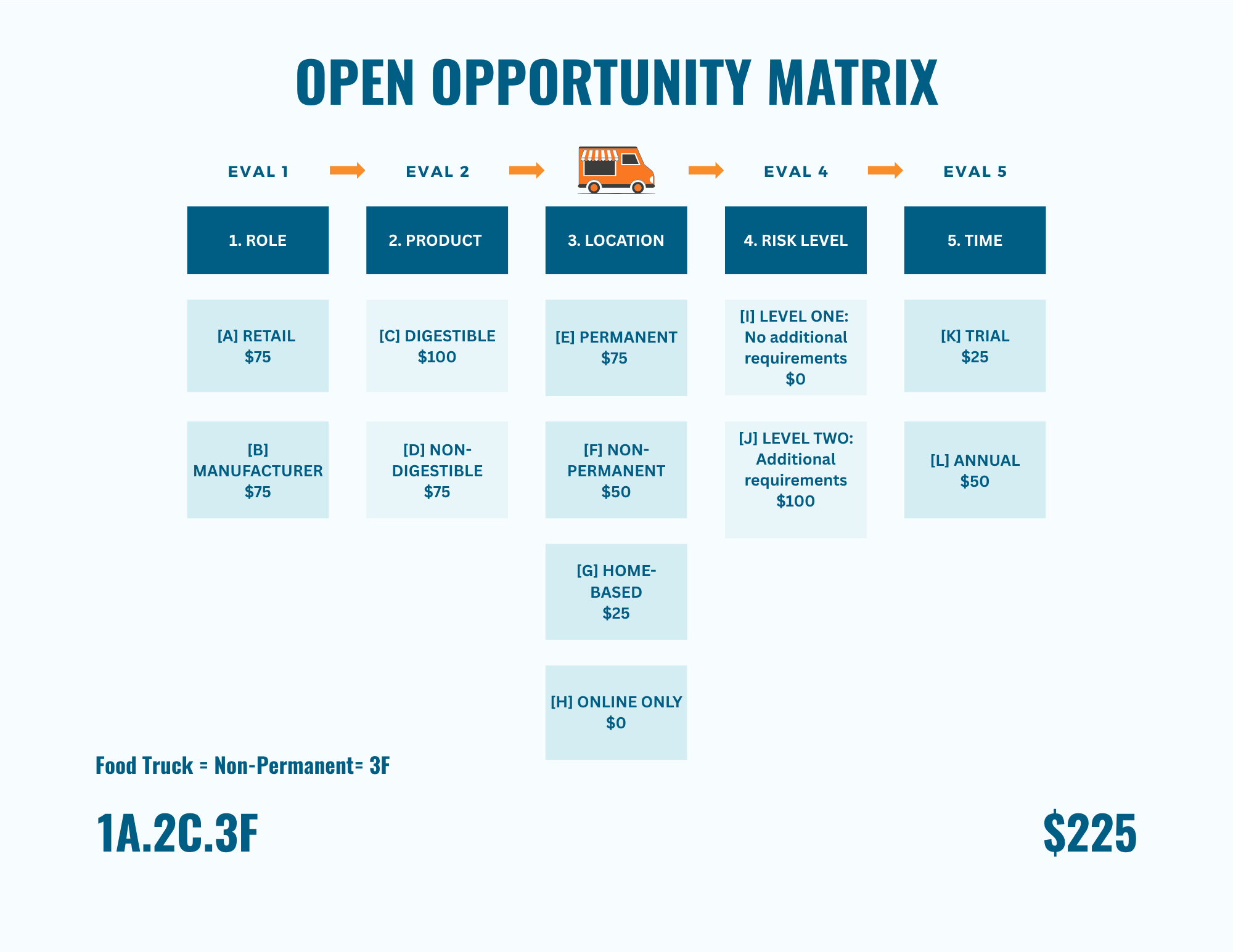
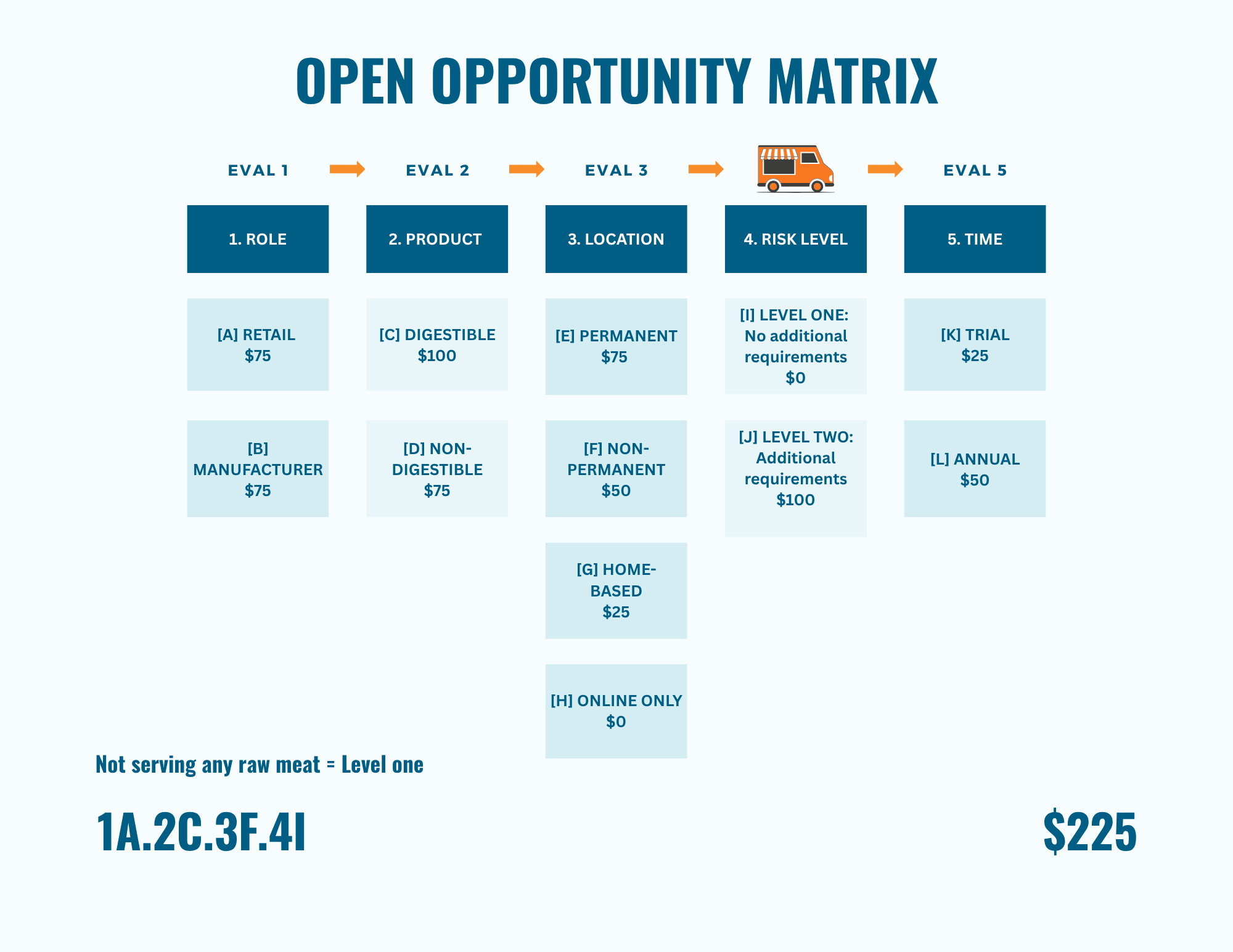
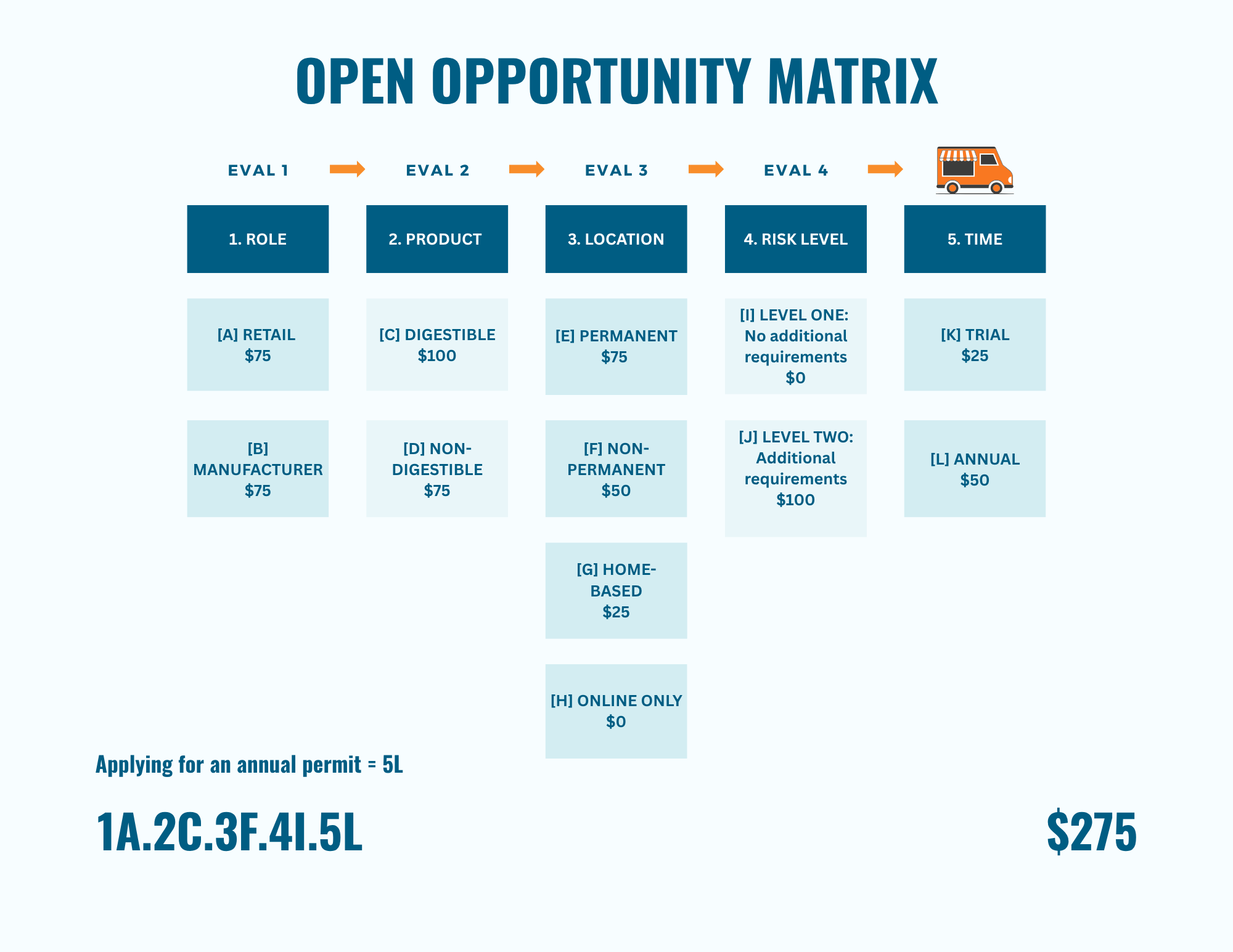
To address this problem, a team designed the Open Opportunity Matrix which is a regulatory system based on risk level rather than business type.
How Does it Work?
The Open Opportunity Matrix operates similar to a Chipotle line: the customer chooses what to add to their order at multiple stages with the total cost depending on the ingredient and labor costs of their specific order.
For example, let’s say Chipotle has four stages (form, base, protein, and toppings) that each contain multiple options. A customer might choose the following:
Order = Carnitas Burrito
- Form: burrito (+ $9.95)
- Base: white rice and black beans (+ $0)
- Protein: carnitas (+ $.75)
- Toppings: green tomatillo salsa, guacamole, and cheese (+ $2.95)—
= Total ($13.65)
Similarly, the Open Opportunity Matrix has five stages (role, product, location, risk level, and coverage period) that each contain multiple options with the total cost depending on the city’s material and labor costs for approving each stage. An entrepreneur might choose to open a business with the following characteristics:
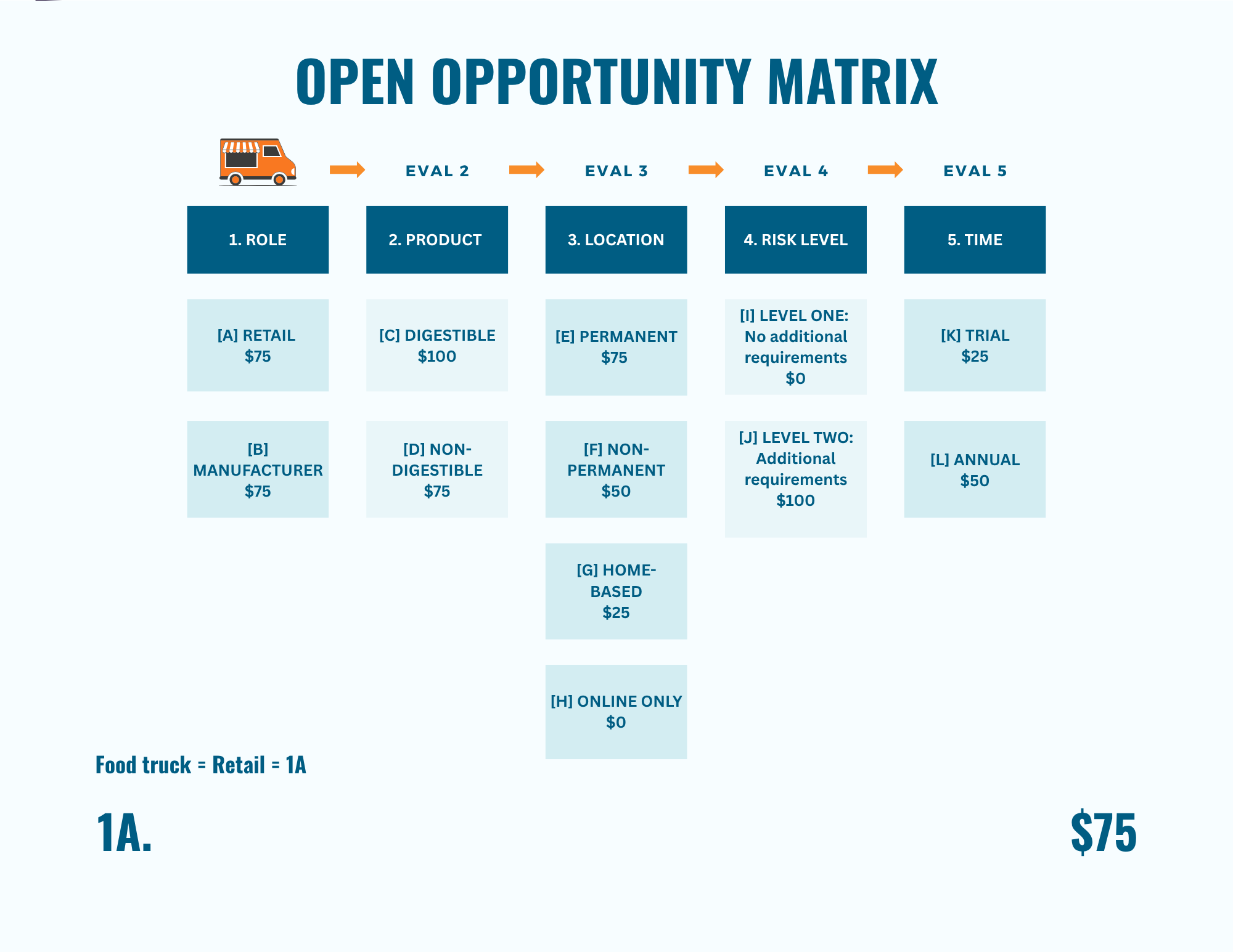
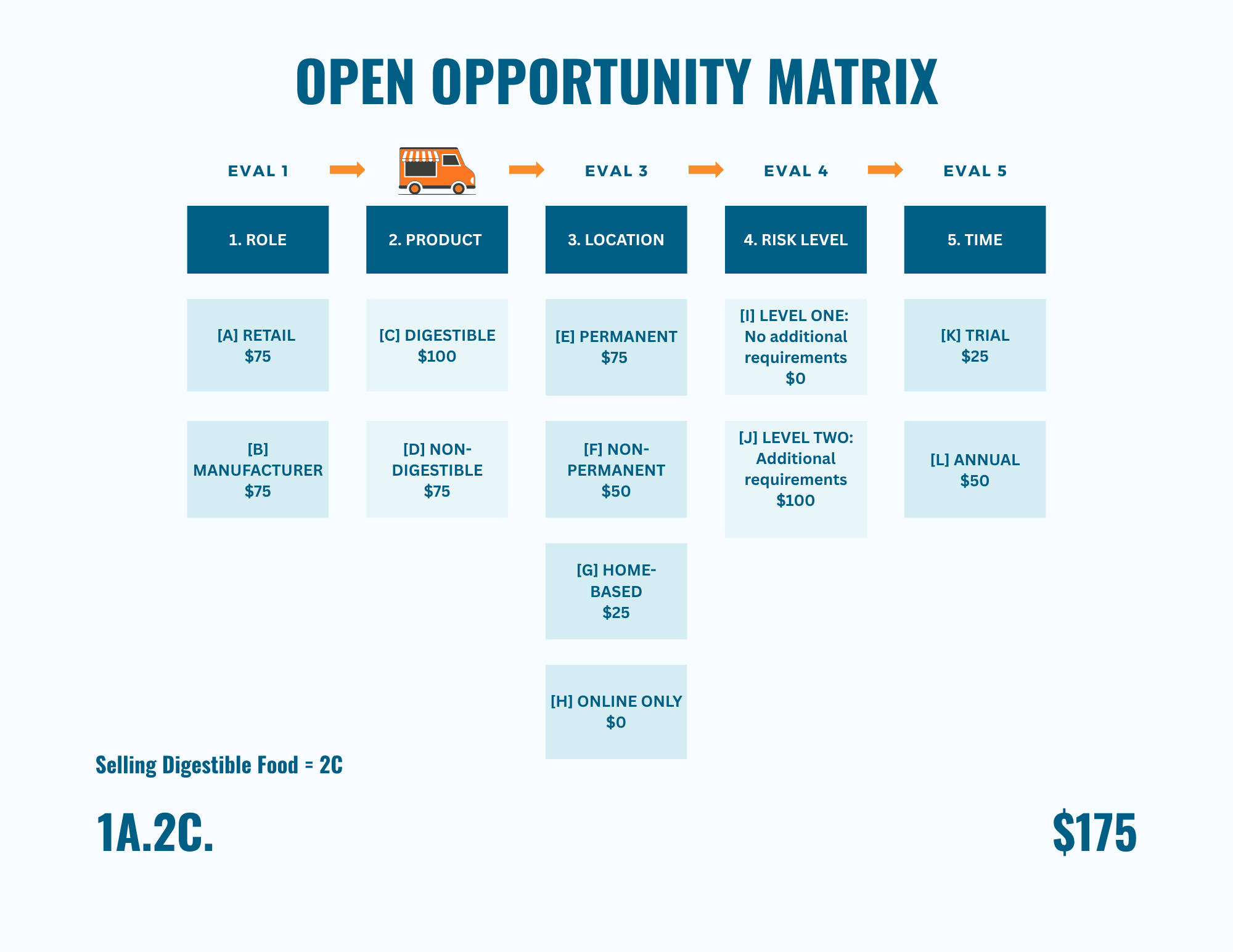
Business Idea = Coffee Shop on Wheels (a food truck that sells coffee and pre-made pastries)
- Role: retail (+ $75)
- Product: digestible (+ $100)
- Location: non-permanent (+ $50)
- Risk Level: level one, minimal (+ $0)
- Coverage Period: annual (+ $50)
= Total ($275)
Instead of requiring multiple business permits, the entrepreneur only needs to get one custom permit. We have tested a variety of businesses and believe that every business can be split into these five stages. The Open Opportunity Matrix saves city and entrepreneur time and resources all while reducing confusion, increasing compliance, and encouraging innovation.
Important Notes
This is for local business-type permits and licenses ONLY—not for zoning, construction, occupational nor precludes state and federal permits and licenses.
Definitions
- Retail = The sale of products directly to consumers or services
- Manufacturer = The sale of products to other businesses
Risk Levels
- Level One = Minimal Risk – Does Not Involve Processes that Increase Hazard Level of Materials and Does Not Involve a Nuisance Risk
- Level Two = Involves Potentially Hazardous Materials/Processes or Involves a Nuisance Risk
- Level Three = Involves Potentially Hazardous Materials with Complex Processes Potentially Hazardous or Facilitates Nuisance Actions
- Level Four = Serving Highly Susceptible Populations, Processes Involving Highly Regulated Materials, or Guarantees Nuisance Actions
An Analogous Model
To our knowledge, there are no cities utilizing this version of permitting. However, the defining concept of regulating based on impact or nuisance appears in other areas, including how cities approach zoning.
Take Euclidian zoning versus form-based and performance zoning. Euclidian zoning regulates land use based on categories (i.e. commercial, residential, industrial) while performance zoning regulates based on impact (i.e. pollution, traffic, noise). This mirrors the dynamic between the traditional permitting and licensing strategy and the Open Opportunity Matrix permitting and licensing.
Category-Based Zoning (CBZ) = Traditional Permitting and Licensing (TPL)
Category-based
- CBZ: Commercial, residential, industrial, agricultural, mixed-use, etc.
- TPL: Food establishment, mobile vending, sidewalk vending, temporary food establishment, farmers market, special events, retail, manufacturing, etc.
High Rigidity—Restricts Change and Innovation
- CBZ: Buildings’ uses must fit into the properties’ zoning to be allowed. Keeps areas segregated by building type and reduces opportunity to change based on the community’s needs. Restricts opportunities for mixed-use development.
- TPL: Businesses must fall into one of the pre-defined categories to be allowed to operate. Decreases innovation by placing parameters on how a business could operate by forcing businesses into a pre-defined form to be allowed to open.
Impact-Based Zoning (IBZ) = Open Opportunity Matrix Permitting and Licensing (OOM)
Impact-based:
- IBZ: Regulates based on how a development’s design and use would impact the surrounding environment such as noise and light levels, air quality, traffic congestion, building buffering and screening, operational hours, etc.
- OOM: Regulates based on a business activity’s nuisance and risk level such as potential for negative impact on public health, potential for nuisance behavior, potential for pollution, etc.
High Flexibility—Allows Change and Innovation:
- IBZ: Narrowly tailors regulations based on the impact of the development. As long as the impact falls within the allowable thresholds, the development can operate in a variety of forms.
- OOM: Narrowly tailors regulations based on the impact of the business’s activity. As long as the impact falls within the allowable thresholds, the business can operate in a variety of forms.
A Visual Example
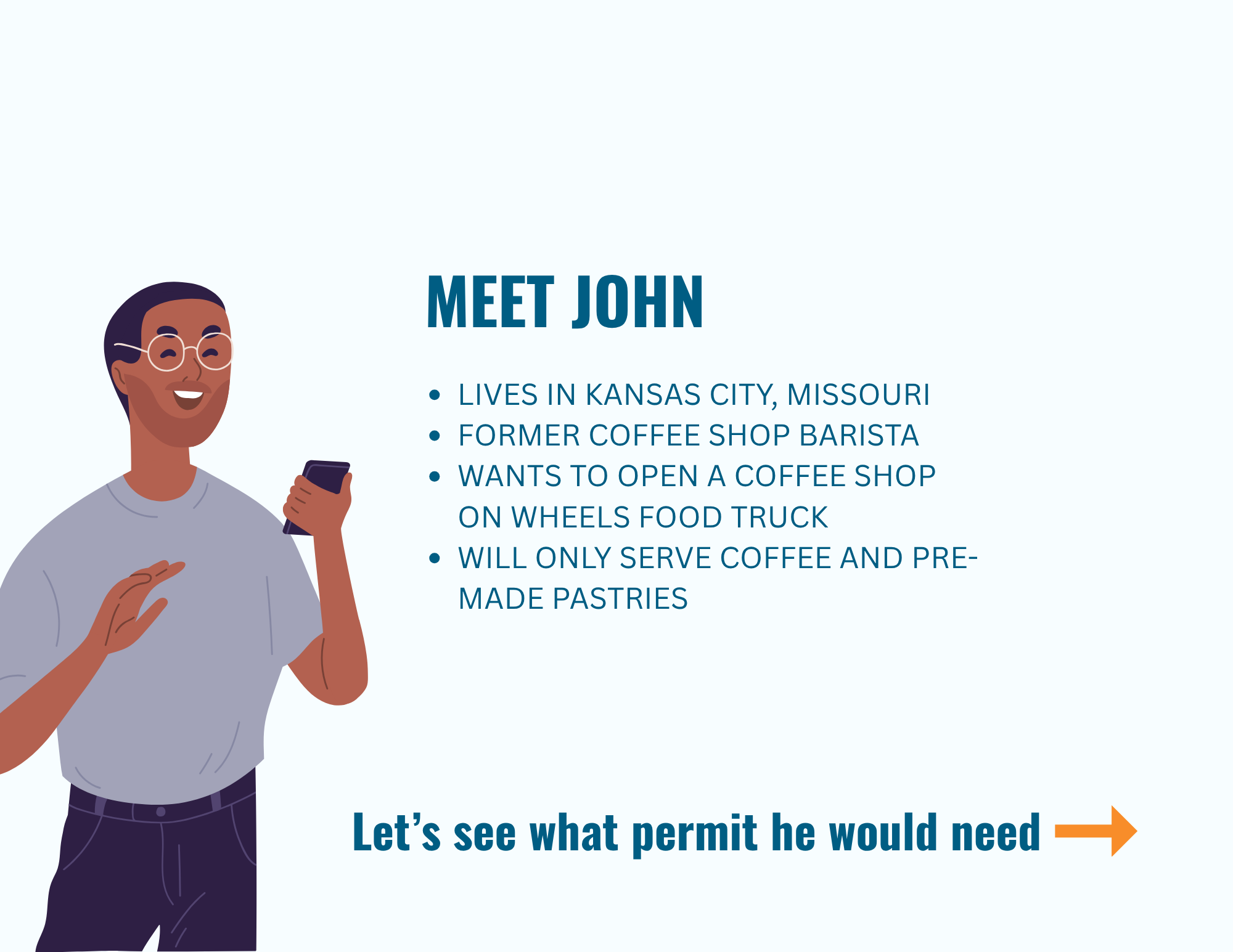
Inspections are crucial safety measures that have been bogged down by confusion, lack of information on requirements and process steps, and enforcement subjectivity. When entrepreneurs fail their first inspection, an entrepreneur’s business may be delayed in opening, and the city and entrepreneur must expend resources for a reinspection. Far too many cities accept multiple rounds of reinspection as status quo rather than address why so many entrepreneurs are failing first inspections.
To address one upstream aspect of this bottleneck, one team proposed utilizing virtual inspection compliance readiness checks. Over the last few years, Cities have begun using virtual inspections. However, these virtual inspections are only for limited inspection types, ones that are simple and routine. Understandably, more complex projects require in-person inspections because video inspections only show so much. But, with higher complexity, there are more opportunities for a project to fail an inspection.
Cities have the opportunity to use virtual inspections as compliance readiness checks for complex projects. Before a complex project can schedule an in-person inspection, they must have a compliance readiness check to ensure they pass the most common violations. This readiness check will save the city and entrepreneur time by decreasing the likelihood of an inspector showing up for a complex project inspection, only for the project to fail immediately because of a common violation. By targeting the most common violations, there will be an increased likelihood of complex projects passing their inspection on the first attempt.
A virtual inspection compliance readiness check would be two parts: 1) a compliance readiness checklist and 2) a video submission of the items that are most frequently failed. For example, if you were opening a restaurant, you would send in a video of your sinks, storage bins, refrigerators, etc. to confirm that you are in compliance with these critical items before an inspector spends the time and resources to inspect in-person.
Many cities are utilizing virtual inspections to save time and resources. The virtual inspection technology is the same technology that would power an inspection compliance readiness check.
Case Studies & Peer Models
Many cities are utilizing virtual inspections to save time and resources. The virtual inspection technology is the same technology that would power an inspection compliance readiness check.
Case Studies
San Diego, California—This article discusses the benefits San Diego experienced when they adopted virtual inspections. Highlights include:
- Increased the number of inspections each inspector can conduct by more than 40% per day.
- Inspectors conducted approximately 20 virtual inspections daily, providing customers a guaranteed appointment time.
- By conducting inspections virtually, City inspectors saved 3,000 miles of driving in one month alone.
this article reports on the benefits of using virtual inspections to speed up recovery times for cities who have been hit by natural disasters. This article explores Los Angeles’s use of virtual inspections following the Palisades fire and references Tampa’s use of virtual inspections following Hurricane Helene and Hurricane Milton. Highlights include:
- Use of virtual inspections reduced drive time and miles drive by 35%.
- The digital documentation created by virtual inspections also speeds up the permit closure process by establishing a digital record that easily verifies inspection completion.
Peer Models
Phoenix, Arizona—Allows virtual inspections for 12 inspection types.
Arlington, VA—Considers all building-related inspections (building, electrical, mechanical, plumbing, energy) for virtual inspections, but approval for a virtual inspection depends on the size and/or complexity of the project.
Placer, California—Allows virtual inspections for over 40 types of inspections.
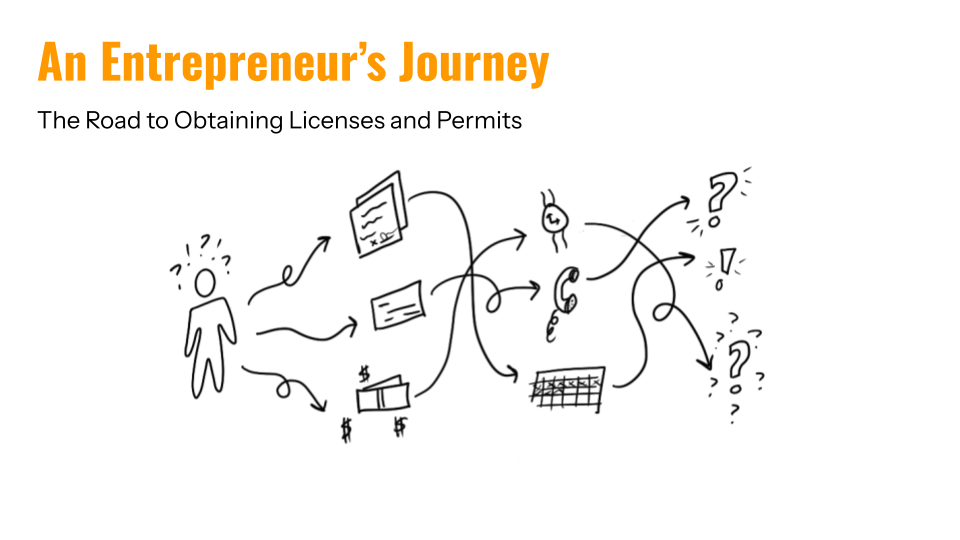
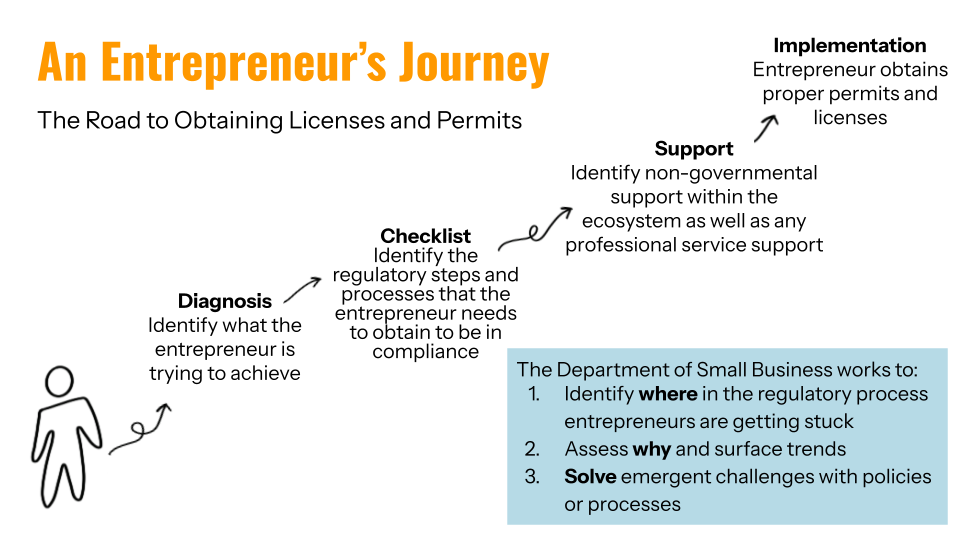
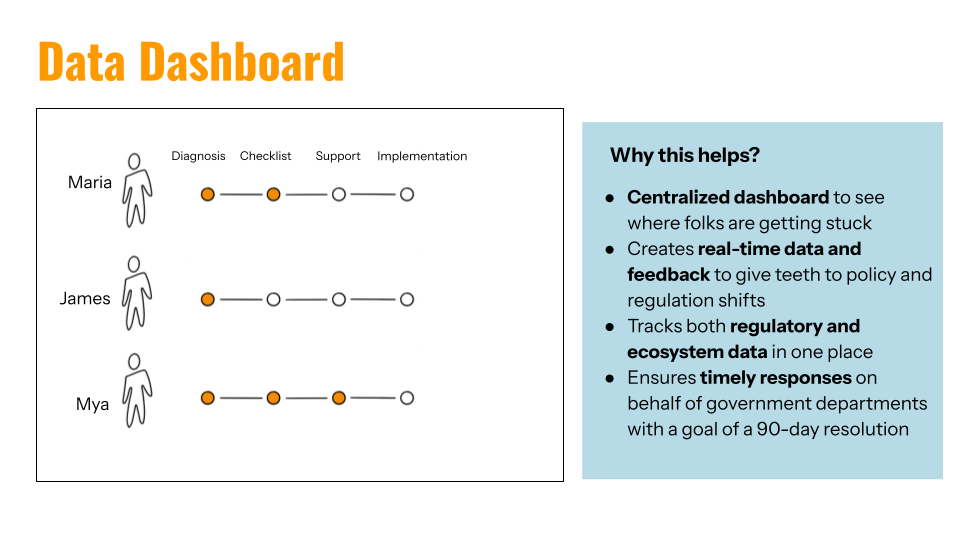
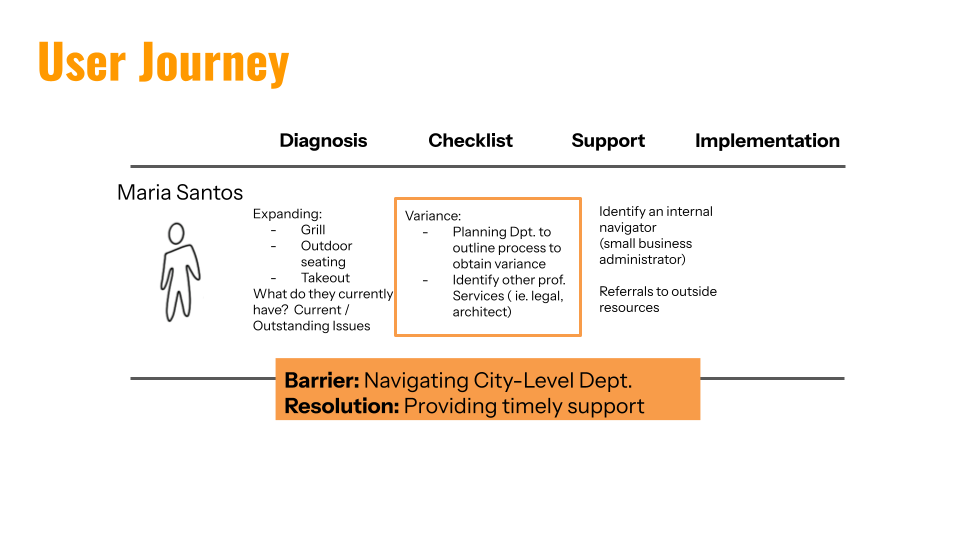
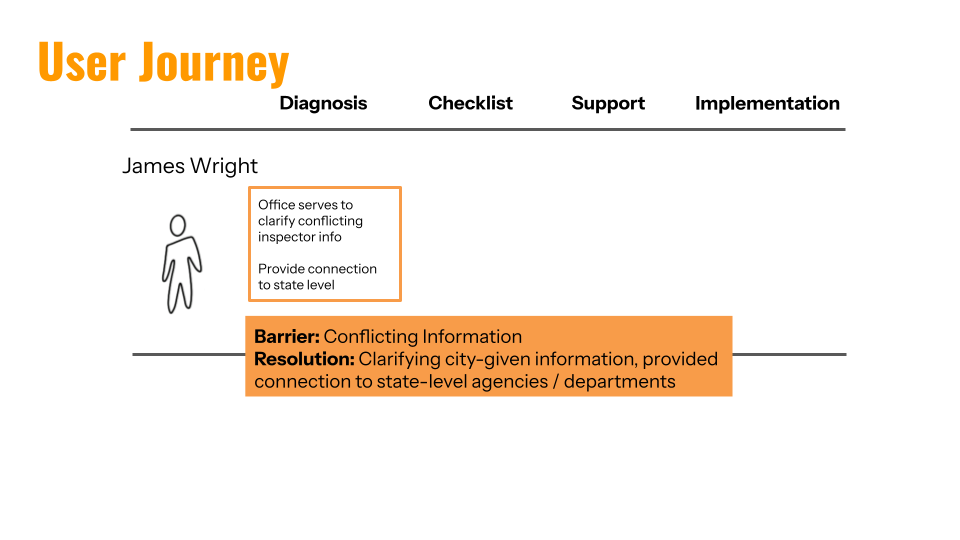
Entrepreneurs regularly mention a feeling of fear and frustration towards the city. In many of their eyes, the city acts as a gatekeeper—deciding who gets to start a business and at the whim of the city’s timeline. City employees have shared they get frustrated because they often feel as though the entrepreneur shoots the messenger. Many employees expressed their desire to help entrepreneurs and feel like entrepreneurs don’t recognize they are working within the city’s regulatory and resource constraints. All parties suffer from this relationship. To address this negative cycle, one team established the From Adversary to Ally process improvement. From Adversary to Ally increases transparency, facilitates proactive assistance, and utilizes data to pinpoint internal bottlenecks to empower process improvement.
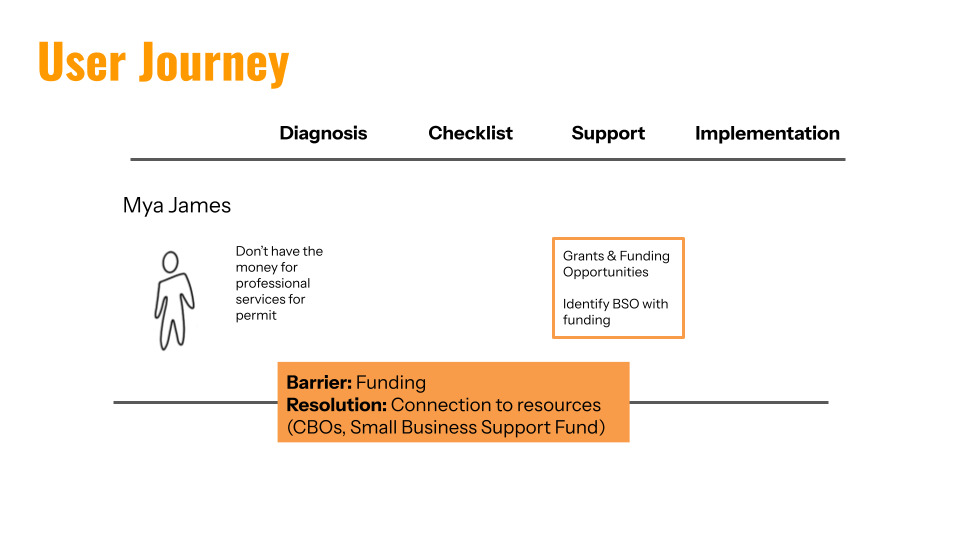
How does it work?
From Adversary to Ally would establish proactive assistance for an Entrepreneur’s Journey through tracking key metrics which would allow cities to identify and rectify bottlenecks in their internal processes.
Cities would categorize teams/steps into one of the four steps of the Entrepreneur’s journey:
- Diagnosis: Identify what the entrepreneur is trying to achieve
- Checklist: Identify the regulatory steps and processes that the entrepreneur needs to obtain to be in compliance
- Support: Identify non-governmental support within the ecosystem as well as professional service support
- Implementation: Entrepreneur obtains proper permits and licenses
Departments would:
- Track where in the regulatory process entrepreneurs are getting stuck
- Assess why and identify surface trends
- Solve emergent challenges with policies or processes
Cities across the country are struggling to fill vacant properties. Often, the permitting and licensing process limits economic opportunity and disincentivizes small businesses from building or renovating commercial spaces.
To address this issue, cities can adopt incubation zones. Incubation zones are a zoning designation for owners/landlords of commercial spaces that are:
- Pre-inspected
- Already permitted
- Designated for a single, specific business use category
- Rented to members at a below market rate
Change of use and change of occupancy processes can add months and tens of thousands of dollars to a project. These incubation zones eliminate the need for these processes.
How does it work?
Supply Side – Developers and Landlords
Developers and landlords can opt into incubation zoning which would allow them to build or designate commercial properties to match a supply need of the city. For example, if a city is experiencing an uptick in food establishments and there are not enough properties that already meet the city’s requirements, developers or landlords can commit to their space being a restaurant. Developers and landlords would fit the space for a restaurant with the proper permits and licenses.
Developers and landlords are incentivized to join this program because it can increase certainty in having a constant flow of tenants. The city will be facilitating matches and rental agreements between the incubation zone and entrepreneurs. Additionally, developers and landlords would not have to change their commercial space type as they would only be matched with entrepreneurs who own businesses whose use category matches that of the incubation zone. This increase in certainty will save the developers and landlords time and money by removing the tenant searching process which would allow the property to be rented at a below market price.
Demand Side – Entrepreneurs
Entrepreneurs benefit from certainty. The incubation zone removes uncertainty by ensuring entrepreneurs know the property is ready to go with matching legal use and proper permits.
Eligible entrepreneurs would become members of the incubation zone program. The membership would last between 3-5 years and would include access to an assigned city-employed case manager, below-market rental rates, and connection to ready-to-go permitted properties. The case managers would match the entrepreneur with the commercial space and facilitate the rental agreement. By joining the program, entrepreneurs would save time and money and encourage them to grow.
Peer Models
Check out these programs to see how other cities are addressing the issue of commercial vacancies!
Hidden costs, like surprise additional fees on medical or phones bills, are something most people have unfortunately experienced. Entrepreneurs have shared that these hidden costs from cities can make or break them being able to open their business. Cities often do not have an easily accessible way to determine all fees you will need to pay to comply with their requirements in advance of beginning the process. Being able to create a realistic budget is crucial for entrepreneurs, and cities need to ensure that their fees are upfront and transparent. Two teams decided to tackle this issue by applying the concept of piggy banks and “Clippy” to the local regulatory process.
The Permitting Piggy Bank
The permitting piggy bank will equip entrepreneurs to create a better, realistic budget for navigating city requirements. Before ever applying or beginning a process, entrepreneurs can use a fee tool to determine how much their project would cost. They can use this tool to see how much in city fees it would cost to open a business in a variety of situations, like how much it would cost to open a business on a property that is properly zoned versus on a property that needs a change of use. When ready, the entrepreneur can choose their project’s characteristics and obtain an itemized invoice and total cost estimates that will be used for the permitting piggy bank. The permitting piggy bank will allow entrepreneurs to add funds to their piggy bank before starting their project. Similar to how you can select a portion of your salary payment to be automatically sent to a savings or retirement account, entrepreneurs will be able to do this for their permitting piggy bank or add in funds whenever they want. This optional tool will decrease the uncertainty and confusion around fees and start the entrepreneur off more prepared as they begin this next step.
A return to “Clippy”
Another way cities can promote affordability is to utilize a “Clippy” tool. As entrepreneurs input their project characteristics into the city’s cost estimation tools, a Clippy tool would pop up with more affordable options. For example, if someone is looking to start a brick-and-mortar food establishment but realizes it might be too expensive, they can ask Clippy for more affordable options. Clippy might suggest beginning with a catering permit, food truck, or special event pop-up. For the entrepreneur who only wants to open a restaurant in a brick-and-mortar space, Clippy can help ensure the entrepreneur understands their undertaking before diving in the deep end. If an entrepreneur wants to open a restaurant in a brick-and-mortar space, they need to obtain a certificate of occupancy which requires the property location to be properly zoned for the desired activity. Rezoning and change of use processes can cost tens of thousands of dollars in fees and delay-costs, and many entrepreneurs have signed property contracts not knowing the property was inappropriately zoned. The cost estimation tool would allow the entrepreneur to put in a potential property’s address, so the entrepreneur can know if they would need to undergo rezoning, change of use, or any other processes before obtaining a certificate of occupancy. If an entrepreneur inputs a property that would require a change of use, Clippy could provide information like how much the entrepreneur would save in compliance fees by finding a property that’s most recent legal use was a restaurant. Additionally, with proper AI and software integration, Clippy could aggregate all available for-rent or for-sale properties that match the cost-saving criteria.
Innovate Local Participants
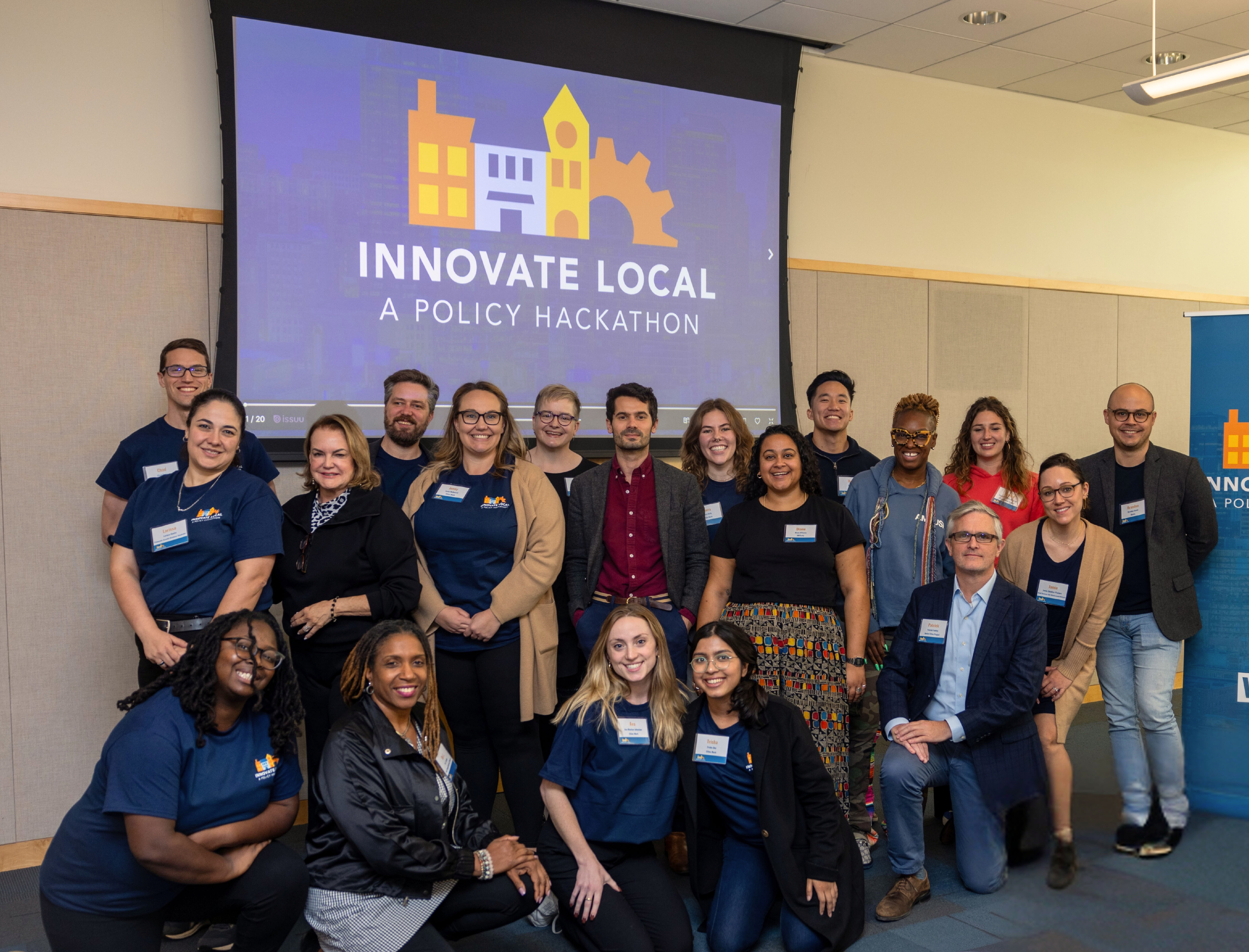
Thank you to everyone who participated in Innovate Local! We are deeply grateful for you spending time tackling this challenge with us. We couldn’t have done this without each of you—your insights and expertise are helping shape how cities approach to small business regulations.
Larissa Davila, Economic Growth Business Incubator
Diane D’Costa, IDEO.org
Angel Gregorio, The Spice Suite and Black and Forth
Brandon Gumm, Qwally
Tony Jordan, Parking Reform Network
Carina Kaufman-Gutierrez, Street Vendor Project at the Urban Justice Center
De J. Lozada, Soul Popped Popcorn
Eric Parker, Make Startups
Jamie Shanker-Passero, Small Business Anti-Displacement Network
Ariel D. Smith, The Food Truck Scholar
Myrna Sonora, Prospera
Patrick Tuohey, Better Cities Project
Nia Webster, City of Kansas City, Missouri
Jason Wiens, Rise Policy
Heather Worthington, Urban3

Cities Work is an initiative of the Institute of Justice’s Activism team.