Denver Man Asks Supreme Court to Revive Fourth Amendment’s Warrant Requirements
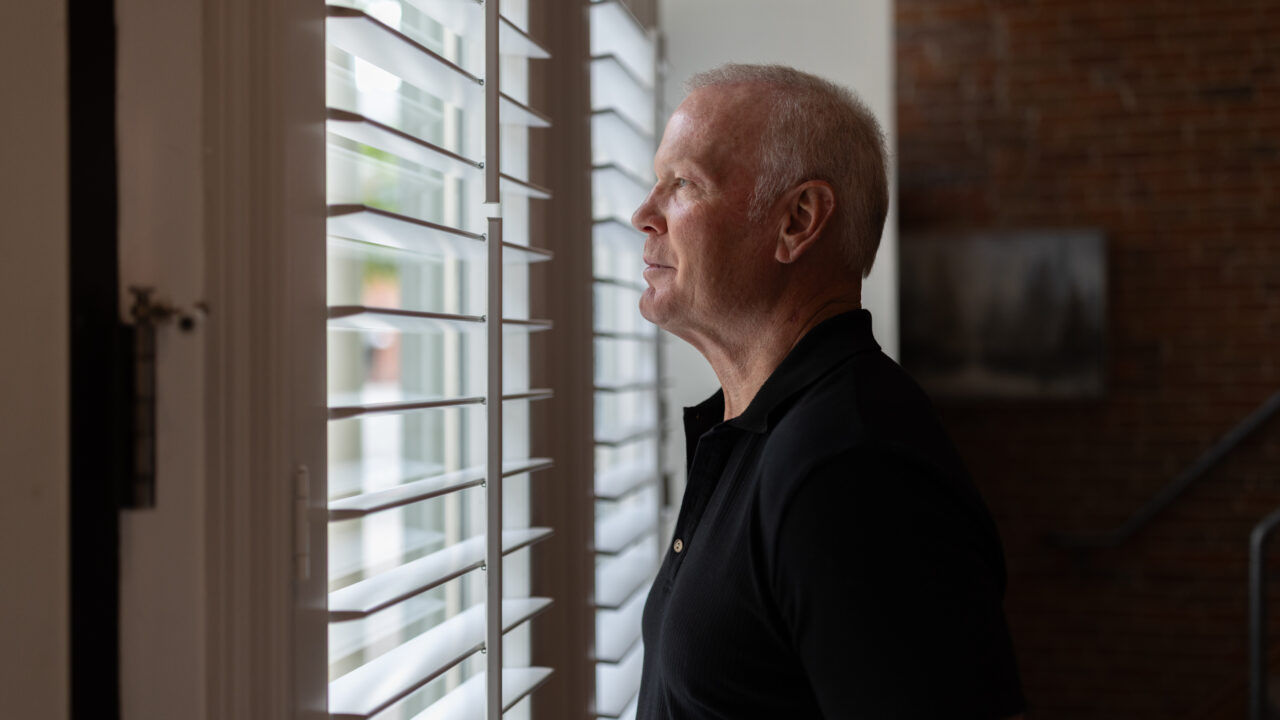
WASHINGTON— The Fourth Amendment says that warrants must be “supported by oath or affirmation.” For much of American history, that meant that warrants required firsthand testimony from a witness. But a 1960 Supreme Court decision opened the door for authorities to use hearsay instead. Rather than hearing from a witness directly, courts could hear from someone who claimed to have heard from a witness. Now, with the help of the Institute for Justice (IJ), a Denver man is asking the Supreme Court to revive the Fourth Amendment’s original meaning.
“The Warrant Clause of the Fourth Amendment contains three independent requirements for a valid warrant: probable cause, an oath or affirmation, and particularity. Each does independent constitutional work. ” explained IJ Senior Attorney Anya Bidwell. “It makes no sense that one of these three requirements—that a witness swears an oath before a judge signs off on a warrant—is not enforced.”
Michael Mendenhall’s townhome was searched and his property seized after the police used thirdhand information to get a search warrant. He was also forced to spend a night in jail. The testimony of a single witness was passed like a game of “telephone” from a police officer, to a detective, and then to a judge. Days after his arrest, the charges against Michael were dropped. However, the police continue to hold onto the commemorative baseball bat they seized with the warrant.
Michael filed a lawsuit over the violation of his Fourth Amendment rights, directly challenging Jones v. United States (1960), the Supreme Court decision that read the “oath or affirmation” section out of the Fourth Amendment’s text. After the U.S. 10th Circuit Court of Appeals ruled against Michael, based on Jones, he petitioned the US Supreme Court to overturn that flawed precedent.
“I think the people who wrote the Fourth Amendment were careful to set the bar high for getting a warrant to invade someone’s private property,” said Michael. “What happened to me was wrong, and poorly considered warrants in many other cases have ended in tragedy. I hope this case brings attention to how we’re no longer enforcing one of the most important aspects of the Constitution.”
The problem with no longer requiring firsthand testimony is apparent in Michael’s case. While working late one evening in 2023, Michael and his friend heard screams coming from the front stoop. Michael grabbed a commemorative baseball bat and they opened the door. After less than a minute of argument, the strange man who had been sitting on the stoop backed away and Michael shut the door.
A short while later, police knocked on the door and arrested Michael, without even asking for his side of the story. While Michael was being held in a squad car, an officer called a police detective and relayed the allegations. That detective in turn used this secondhand account to apply for a warrant to enter the townhouse and search for the baseball bat.
After police got the warrant, they entered the home and seized the bat. Michael was taken to jail and charged with felony menacing. Michael bailed out the next morning. Given the flimsy testimony of Michael’s accuser, charges were dropped less than a week later. Michael still has not had the bat returned to him, which is from the 2021 All-Star Game and is signed by players.
“By deleting a whole clause from the Fourth Amendment’s text, the Supreme Court erased a powerful safeguard from our Constitution,” said IJ Senior Attorney Patrick Jaicomo. “Through this and other modern refinements, the courts have transformed the warrant process from a meaningful check on government abuse into a mechanism of laundering accountability.”
The Institute for Justice works to protect the U.S. Constitution through its Project on the Fourth Amendment and Project on Immunity and Accountability. IJ is representing families in Georgia, Indiana, and North Carolina whose homes were wrongly raided. IJ is also suing on behalf of a woman wrongly arrested in Florida.
More on Private Property
Private Property
South Bend Mom’s Fight for Compensation After Police Wrecked Her Home Heads to State Court After Supreme Court Turns Down Appeal

Private Property
Supreme Court Declines to Hear Los Angeles Business Owner’s Case Seeking Compensation After SWAT Team Destroyed Shop

Private Property
