Maryland: You Want Rights? We’ve Got Rights
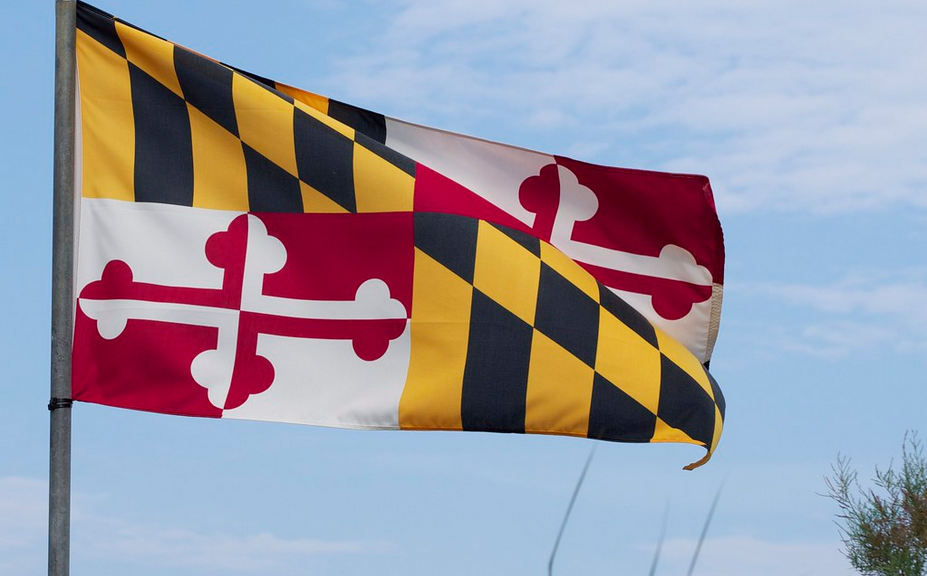
[This is the fourth post in a series about declarations of rights that the newly independent states adopted in 1776. You can read the first post here, the second post here, and the third post here. We are running the posts in the lead up to a conference called “The Other Declarations of 1776.” Co-sponsored with our friends at the Liberty & Law Center at George Mason University’s Antonin Scalia Law School, it is an all-day conference (with a free lunch!) in Arlington, Virginia on April 10, 2026. Members of the public—including you!—are very much invited to attend in person. See the details, and register, here!]
If you like rights then you’ll love the Maryland Constitution. (The text at least. Judicial interpretations may vary.) I haven’t done a 50-state survey in prepping for this blog post, but based on my past experience pursuing the various bills and declarations of rights of the United States it’s a fair guess that Maryland’s 48 separate paragraphs (called “articles”) in its Declaration of Rights top the charts for any state constitution. That is nothing new, either. The original Declaration of Rights from 1776 had 42 paragraphs, far more than others of the time (or almost any time). And yet, the constitution they were a part of was considered “conservative” in comparison with other state constitutions of 1776. This was to some extent due to the restrictive property ownership requirements for voting—and in comparison to the much more “radical” constitution of Pennsylvania just north of the border.
Here we’ll briefly look at how the Old Line State wrote and adopted its cascading enumeration of rights—including where it took many of its provisions from—and dig into a the text of a couple. Upfront I want to state that this post is hugely indebted to two articles that now-Judge Dan Friedman, who sits on the Appellate Court of Maryland, wrote several years ago. They concern (1) the drafting of declarations of rights in 1776, especially Maryland’s and Delaware’s, and (2) of the history of Maryland’s declarations of rights across its four constitutions. You can find his articles here and here.
Capping off the conventions
Like in Pennsylvania, discussed in our third post, much of the work of drafting Maryland’s Declaration of Rights came early in the convention that wrote and adopted its constitution. Since the effective loss of British governance, Maryland had seen serial “conventions” that passed legislation and made other decisions affecting the colony-cum-state. The ninth of these met on August 14, 1776 with the task of making a “plan of government” like other states, such as Virginia and New Jersey, had earlier that year. A committee was tasked with drafting a “declaration and charter of rights” and released one less than two weeks later, on August 27. A second draft came out on September 17 and it was circulated in the state for public comment. The final text of the declaration and full constitution was adopted on November 11. Changes were made along the way but the bulk of the final text was quite similar to the August 27 version.
Who’s on first?
A controversy lurked for a while on which state drafted its declaration of rights first—and thus who might have copied from whom: Maryland or nearby Delaware. Delaware’s 1776 constitution was adopted well over a month earlier than Maryland’s, on September 21. This and other evidence from the patchy historical record led to a conclusion that Delaware drafted its declaration first, with Maryland copying much of it.
However, Judge Friedman’s meticulous research convincingly demonstrates that it was the reverse. Delaware did not even start drafting its declaration until August 27, the very day that Maryland completed its first draft. Maryland was, however, very influenced by the first draft of the Virginia Declaration of Rights, which we examined earlier. Interestingly, though, a comparison of the textual similarities between Virginia’s, Maryland’s, and Pennsylvania’s declarations indicates that there doesn’t seem to have been any influence from Pennsylvania’s upon Maryland’s, even though Pennsylvania’s work on its declaration, as we saw in our last post, was done by August 16 (with the full constitution not adopted until late September). This likely could be that there just wasn’t enough time for the draft to circulate down from Philadelphia to Annapolis in the few days after Pennsylvania was done. (Although there is evidence Pennsylvania’s draft declaration influenced Delaware’s, something we’ll look at in the next post in this series.) And Maryland was not just influenced by Virginia—it had about a dozen provisions that were a first for a state constitution.
Rights inflation?
As to why Maryland’s declaration was so long compared to others, that is a hard question to answer, especially as the deliberations at the convention were not recorded. But a bit of that—although only a bit—is definitional. The declaration contains some articles that arguably belong in the “structural” portions of the constitution and with analogues that other states have but don’t put in declarations or bill of rights. For example, Article 30 of the 1776 declaration protects judges from being fired “during good behavior,” similar to protections for federal judges in Article III of the U.S. Constitution. The provision states that independent and upright judges are “a great security to the rights and liberties of the people” (and which we very much agree with at the Center for Judicial Engagement!) so there is a bit of a tie-in to the purpose of the Declaration of Rights, of course. But if this had been included elsewhere in the constitution no one would have blinked an eye. There are other examples, including a separation of powers clause (Article 6).
A provision that we are particularly found of at IJ is Article 39, which reads: “That monopolies are odious, contrary to the spirit of a free government, and the principles of commerce; and ought not to be suffered.“ This was the first “anti-monopoly clause” of any state constitution, clauses which today are found in (depending on how one categorizes them) over twenty states. (For a dive into these clauses see this article by former IJ clerk, and now lawyer at the Upper Midwest Law Center, Allie Howell.) The clause may have been a response to the British Navigation Acts and likely were informed by the history of antagonism toward state-granted monopolies in the common law, highlighted by Lord Coke’s rulings against monopolies almost two centuries before, such as in Darcy v. Allein, aka The Case of Monopolies. Indeed, the common law itself was protected in Article 3.
Maryland adopted new constitutions in 1851, 1864, and 1867, in a tumultuous stretch of history centered around slavery and its awkward geographic position in the Civil War. All through those changes, though, it kept its long list of rights.
Anthony Sanders is the Director of the Center for Judicial Engagement at the Institute for Justice.