
Federal Government Reissues Federal Cash Surveillance Order; IJ Lawsuits Will Continue
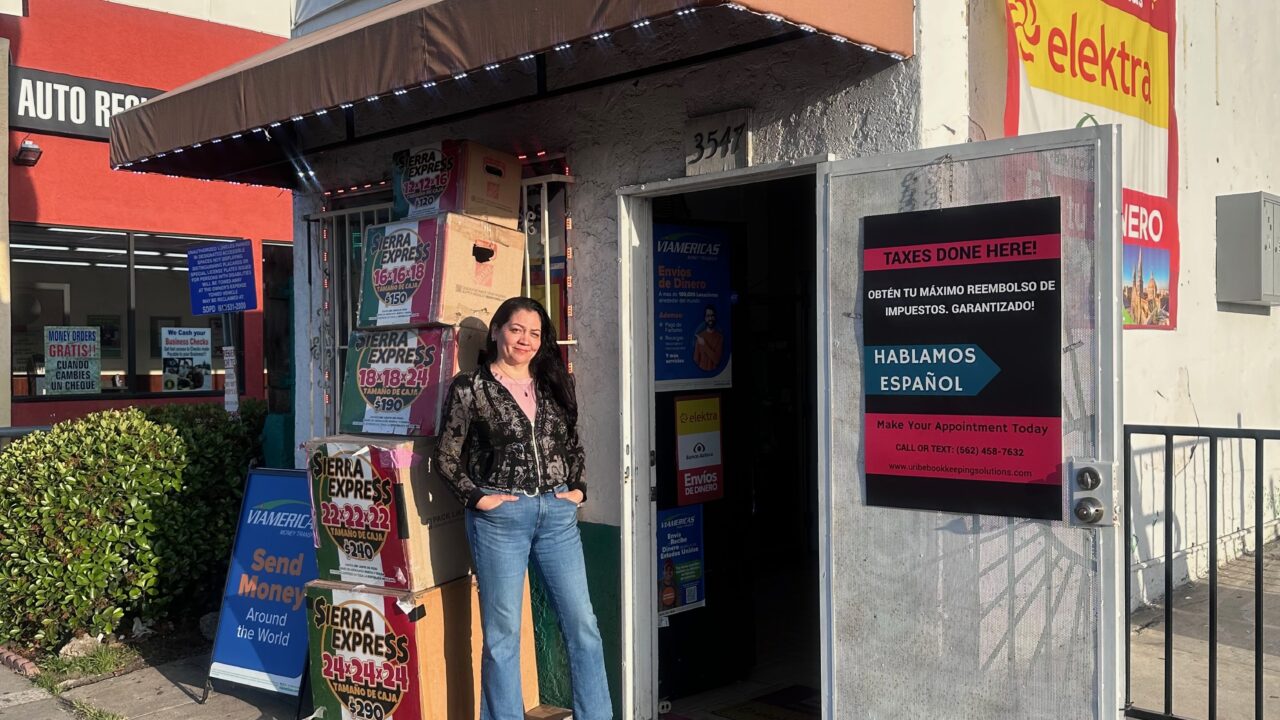
ARLINGTON, Va.—Yesterday, the federal Financial Crimes Enforcement Network (FinCEN) reissued an order targeting border businesses with intrusive financial surveillance. The order applies to businesses that provide essential financial services for working class customers, many of whom do not have bank accounts—including cashing pay checks, exchanging dollars for pesos, and wiring funds to family. The order was set to expire Sept. 9 but now has been extended to March 6, 2026.
When the order was first issued (in March 2025) it applied to all cash transactions at targeted businesses over just $200. The reissued order raises the reporting threshold to $1,000, but it otherwise doubles down on the surveillance program—expanding the targeted area to include additional parts of Texas and two counties in Arizona.
The Institute for Justice (IJ) is representing targeted businesses in three cases challenging the order, and judges in all three cases have issued preliminary injunctions. A judge in California enjoined the order for all targeted businesses in the state, and two judges in Texas enjoined the order as to the particular businesses named as plaintiffs in those lawsuits (in San Antonio and El Paso). The government has appealed to the 9th U.S. Circuit Court of Appeals and 5th U.S. Circuit Court of Appeals. The reissued order acknowledges that the preliminary injunctions will remain in effect pending those appeals, but businesses in Arizona and Texas that are not covered by the preliminary injunctions will be subject to the reissued reporting requirements.
IJ Senior Attorney Rob Johnson released the following statement:
In the teeth of three separate decisions finding its surveillance program unlawful, FinCEN has decided to expand the program to new counties and new states. Whether targeted at transactions over $200 or $1,000, the program is a massive invasion of privacy—if $200 is the equivalent of a cart of groceries, $1,000 is the equivalent of a monthly payment of rent. Both are ordinary amounts. And while multiple judges have held that FinCEN unlawfully cut procedural corners when first issuing its order, FinCEN cut those same corners this second time around. We are confident that judges will find this reissued order as unlawful as they did the order before, and we will continue fighting to bring this surveillance program to an end.
More News

Cosmetology
South Carolina Entrepreneur Files Lawsuit Challenging Irrational Ban on Mobile Beauty Services

Freeport, Texas, Family to Appeal in Case to Keep Their Land From Port’s Eminent Domain Abuse

4th Amendment Project