Class Action Plaintiffs and Brookside, Alabama, Submit Settlement Proposing $1.5 Million in Compensation, Plus Reforms to Town’s Towing and Ticketing Practices
Small town that netted cash by policing for profit agrees to settle federal lawsuit from Institute for Justice
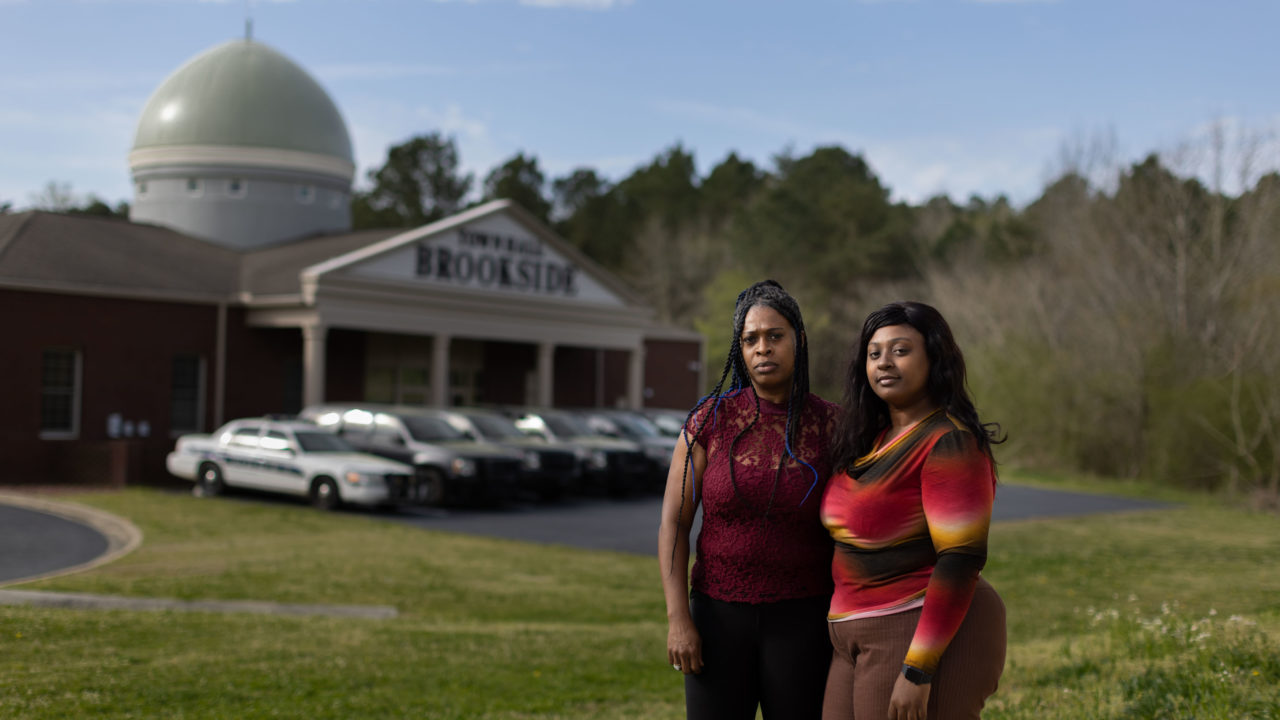
BIRMINGHAM, Ala.—In early 2022, the town of Brookside, Alabama made national headlines for running a relentless policing-for-profit scheme that victimized thousands of drivers in a few short years. The town’s ensuing 640% increase in revenue from fines, fees, and forfeitures was used to enrich the police department at the expense of its own residents and other unsuspecting drivers in town and on the adjoining Interstate 22. Last Friday, Brookside agreed to settle a federal class action lawsuit seeking compensation for those practices, and seeking to put a stop to them. The case has been litigated by the Institute for Justice (IJ), a national nonprofit public interest law firm.
“We’ve asked the Court to approve a settlement that achieves two ambitious goals,” said IJ Attorney Jaba Tsitsuashvili. “First, it compensates people who were impacted by Brookside’s aggressive towing and ticketing policies, to the tune of $1.5 million in total. Second, it entrenches meaningful systemic reforms, by severing the link between Brookside’s policing and its revenue. This is the justice that the community deserves.”
The town’s money-making policies were implemented by two primary means: 1) towing cars and charging $175 to get them back and 2) collecting fines and fees via Brookside’s municipal court. As detailed in the motion for preliminary approval of the settlement filed on February 6, Brookside has agreed to a financial settlement of $1.5 million in compensation for individuals impacted by those aggressive policing practices.
Of that, $1 million compensates people whose cars were ordered towed by town police from March 1, 2018, to August 1, 2022. The remaining $500,000 compensates people who were charged with offenses in Brookside’s municipal court during the same period.
The $1.5 million secured by the settlement is close to the full amount that a municipal-funding expert calculated Brookside raised via fines and fees during the class period. And the agreement is designed to ensure that the full amount of compensation goes to the individuals affected by the town’s policies. As part of that design, IJ has agreed not to seek any attorneys’ fees arising from litigation of the case.
The town has also agreed to substantial systemic changes designed to prevent a re-emergence of its policing-for-profit scheme. These include:
- Brookside will permanently repeal its fee to retrieve towed cars, severing the town’s financial incentive to tow.
- Brookside will remove the Brookside Police Department from Interstate 22 for 10 years (unless necessary to respond to an emergency).
- Brookside will keep 0% of the revenue generated by its policing and its code enforcement for 5 years. After that, it will keep only 1% for another 10 years. Finally, it will keep only 2.5% for another 15 years. In total, that’s a 30-year obligation for the town to sever the link between policing and revenue.
- Brookside will implement a slew of transparency measures designed to ensure compliance with these obligations and provide IJ the documents to track those obligations for 10 years.
Finally, the town has agreed to provide class members an acknowledgment that Brookside’s “policy of aggressive policing likely interfered with the Town’s obligation to administer justice equally under law, undermined the public’s trust in the justice system, and raised serious constitutional concerns under the Due Process Clause of the Fourteenth Amendment.”
The named plaintiffs in the case are Brittany Coleman, Brandon Jones, Chekeithia Grant, and Alexis Thomas, four drivers who had their cars towed and were hauled into Brookside’s municipal court. They brought the case to vindicate their own rights and to ensure that no one else would face a policing systemic whose incentives were warped away from doing justice and toward generating money.
“Police are supposed to protect and serve, not ticket and collect,” said Chekeithia Grant. “When that gets flipped around, people suffer. We brought this case to remind Brookside of that, and to get the town on the right track. This settlement should do that. And it should be a warning to other towns.”
Added Brittany Coleman: “We hope this will show other towns in Alabama and across the country that their police departments are not supposed to treat people like ATMs.”
The proceeds of the ticketing and towing scheme that the plaintiffs challenged went almost entirely to Brookside’s police department. Of the $610,307 raised through fines and forfeitures in 2020, for example, $544,077 went directly to the police, in the form of training, conferences, vehicles, and salaries. These purchases included expensive unmarked black SUVs and military-style equipment. The department even paid for a mine-resistant, militarized vehicle, which officers parked outside the town hall and drove around the town as part of their intimidation tactics.
“Systems that permit policing for profit inevitably result in abuse,” said IJ Senior Attorney Sam Gedge. “The settlement we’ve proposed compensates those impacted by Brookside’s system and keeps it from recurring.”
Now, the federal district court for the Northern District of Alabama will decide whether the settlement’s terms are fair, reasonable, and adequate and whether to give the agreement preliminary approval. If so, class members will have an opportunity to submit claims for inclusion in the settlement’s terms, or to opt out of the settlement.
The Institute for Justice is a nationally recognized advocate for fighting government abuse of fines and fees to pursue illegitimate goals. IJ has challenged fines and fees practices in California, Florida, and around the country.
Bill Dawson of Dawson Law LLC is the local counsel partnered with IJ in this lawsuit.
More on Private Property

Private Property
Animal Sanctuary’s Fight to Stay Open Ends After North Carolina Supreme Court Rejects Appeal

Private Property
Supreme Court Declines to Hear Los Angeles Business Owner’s Case Seeking Compensation After SWAT Team Destroyed Shop
Private Property
