Public Interest Law Firm Urges Supreme Court to Rule Geofence Warrant Violated Fourth Amendment
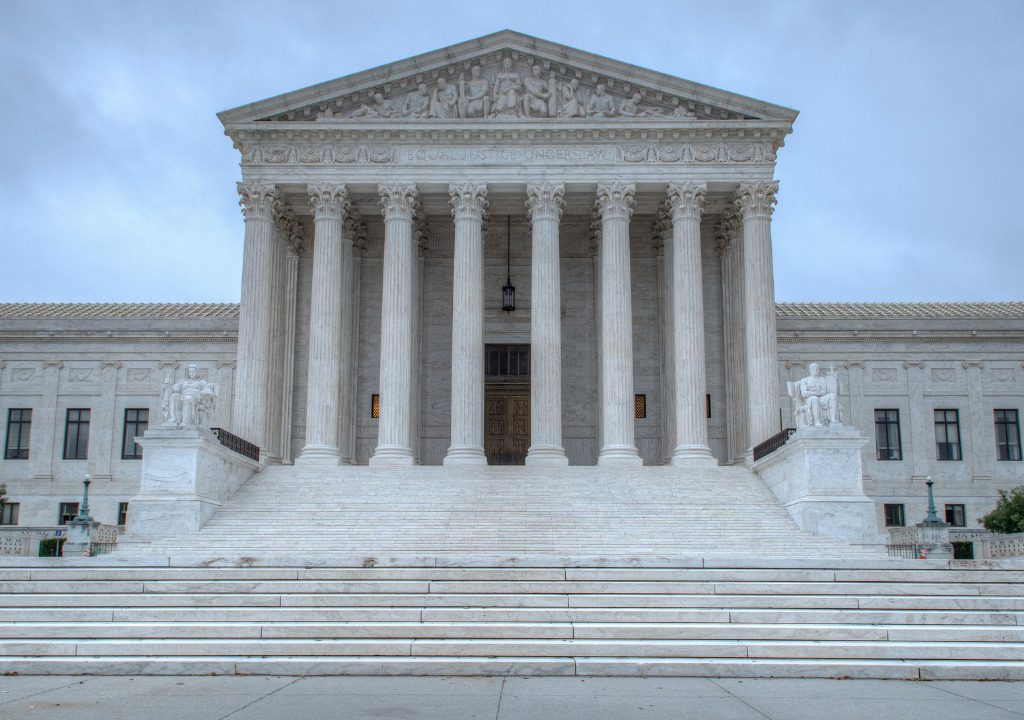
WASHINGTON—Today, the Institute for Justice (IJ) submitted an amicus brief in the United States Supreme Court case Chatrie v. United States, urging the court to recognize that the execution of a multi-step geofence warrant violated the Fourth Amendment.
In Chatrie, following a bank robbery, police obtained a multi-step warrant from a judge to conduct three searches, beginning with compelling Google to produce anonymized location information for all users who were within 150 meters of the bank during a one-hour period. The warrant then authorized police to conduct two additional searches: one seeking expanded location histories for devices the police decided to look into further, and another authorizing the police to choose which of those users’ identities would be unmasked. IJ’s brief argues the second and third searches failed to satisfy the Fourth Amendment’s probable cause and particularity requirements.
“The lower court was divided over whether executing the geofence warrant was a ‘search,’ but that’s the wrong question—each step of the warrant plainly authorized a search,” said IJ Attorney John Wrench, who authored the brief and a recent law review article on the subject. “The real issue is that steps two and three of the warrant were not supported by probable cause and did not particularly describe the place to be searched or the persons or things to be seized. A judge approved only the first search and then delegated to an officer and a private company the discretion to decide whether the Fourth Amendment’s probable cause and particularity requirements were satisfied for the two additional searches. That created precisely the sort of general warrant our Founding Fathers were opposed to when they drafted the constitution.”
“The Fourth Amendment requires that a warrant describe a particular place to be searched and particular people or things to be seized. In this case the warrant did not specify how many users could be chosen by the officer, what factors should guide the officer’s choice, or what, if any, connection a user must have to the crime before their location history could be further expanded,” said IJ Senior Attorney Joshua Windham. “Leaving all of these decisions to the discretion of the police officer is dangerous and clearly unconstitutional.”
Through its Project on the Fourth Amendment, IJ fights against various types of unconstitutional searches, including warrantless inspections of rental properties, warrantless trespassing by state officers, and the use of surveillance cameras to track everyday drivers.