U.S. Citizen’s Lawsuit Demands an End to Unconstitutional Raids and Detentions at Alabama Construction Sites
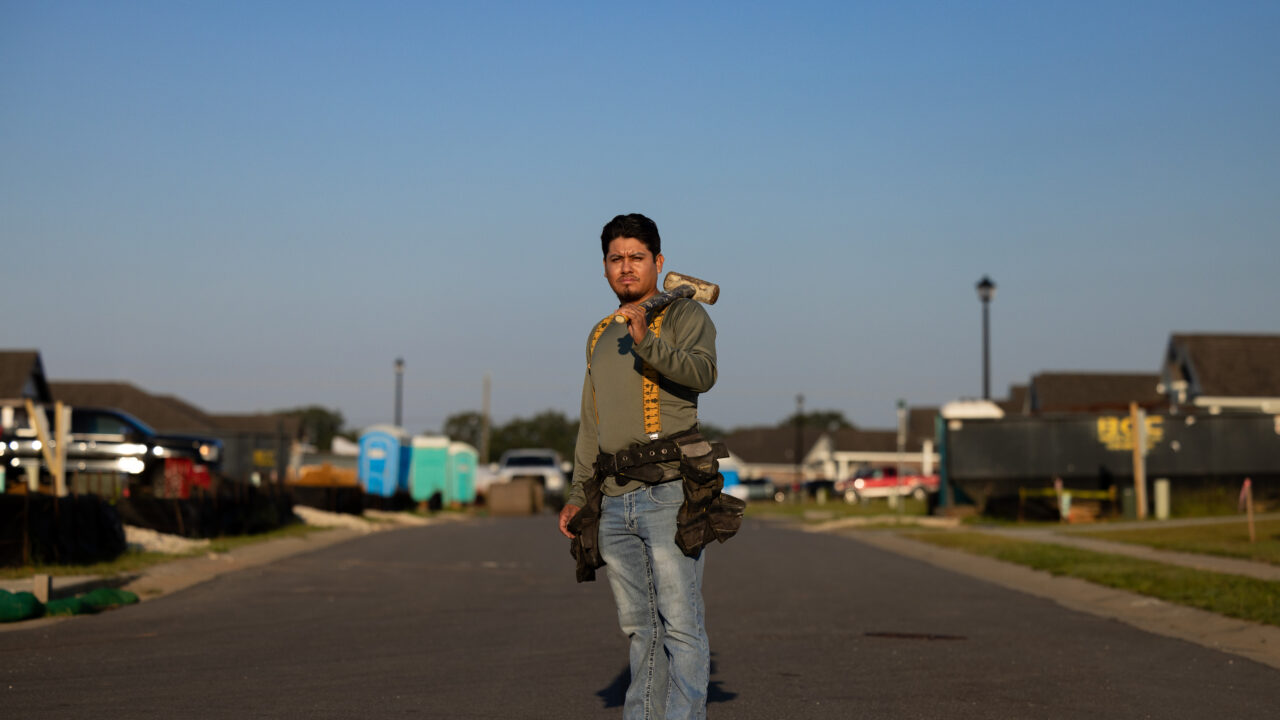
MOBILE, Ala.—Leo Garcia Venegas is an American citizen and construction worker in south Alabama. Even though he has done nothing suspicious and is working on private property, Leo has been repeatedly detained (once violently) by federal officers enforcing immigration laws. Even when he presents his Alabama-issued REAL ID, officers reject it as fake. Today, to stop the violations of his and other construction workers’ Fourth Amendment rights, Leo filed a federal class-action lawsuit with the Institute for Justice (IJ).
“Armed and masked federal officers are raiding private construction sites in Alabama, detaining whoever they think looks undocumented, and ignoring proof of citizenship,” said IJ Attorney Jared McClain. “That’s unconstitutional, and this case seeks to bring that practice to an end.”
In the United States, people cannot be detained for no reason, and the government cannot invade private property without a warrant. But these constitutional guardrails have been pushed aside to enforce immigration laws. That’s not how our constitutional system works. Regardless of how one feels about the current enforcement of immigration laws, we cannot permit under our Constitution an ends-justifies-the-means approach.
Leo specializes in laying concrete foundations for homes being built in fast-growing Baldwin County, Alabama. On May 21, he was working on a new home when masked federal agents jumped a fence and ran toward fellow workers. Leo started recording the arrests, including a violent takedown of his brother, and became a target himself. While the agents tackled Leo, non-Latino coworkers recorded his arrest without agents approaching them.
Leo protested that he was a citizen and said he would show his identification. An agent took Leo’s driver’s license out of his pocket but dismissed the license as a fake. Leo was kept tightly handcuffed for an hour and only released after an agent finally used Leo’s Social Security number to verify his citizenship. The violent encounter left Leo shaken and afraid to go to work.
When Leo gathered the courage to go back, it happened again. On June 12, Leo was on another construction site working alone inside a mostly completed home. Two agents snuck up on Leo, cornered him in a back bedroom, and ordered him to leave the house. Just like the first time, the officers didn’t know who Leo was and had no reason to think he had done anything wrong.
Again, agents looked at Leo’s REAL ID and, again, refused to accept that it was real. With one armed agent in front and another behind, Leo was marched to the edge of the development and held with other detained Latino construction workers, including at least two who were also legally in the country. After 20 minutes of this baseless detention, agents released Leo and the other two documented workers.
“It feels like there is nothing I can do to stop immigration agents from arresting me whenever they want,” said Leo. “I just want to work in peace. The Constitution protects my ability to do that.”
The Fourth Amendment protects people from unwarranted searches and seizures. Generally, officers need a warrant to enter private property, even one that is under construction. Officers also need individualized suspicion to detain someone and probable cause to arrest them.
But DHS has authorized immigration officers to ignore these legal requirements. Under the administration’s policy, immigration officers can raid construction sites without a warrant and without any reason to believe the employers or employees on a particular site are violating immigration laws. Once on the property, officers can arrest anyone they think fits the profile of an undocumented worker and detain them until the worker proves their legal status. But proving legal status can be difficult because immigration officers do not accept REAL IDs as proof—even though that was a big reason behind the REAL ID Act.
“Immigration officers are not above the law,” said IJ Attorney Jaba Tsitsuashvili. “Leo is a hardworking American citizen standing up for everyone’s right to work without being detained merely for the way they look or the job that they do.”
Leo’s lawsuit asks the court to halt unconstitutional and illegal immigration enforcement tactics in the Southern District of Alabama (see here for the counties covered). Leo has also submitted claims to the federal agencies who violated his rights, announcing his intent to sue under the Federal Tort Claims Act (FTCA). The FTCA requires a six-month waiting period before Leo can sue over his unconstitutional treatment.
“The Constitution is the highest law in the land and officers cannot violate the Fourth Amendment just because they are enforcing immigration laws,” said IJ Senior Attorney Joshua Windham. “The Constitution forbids officers from entering private property without a warrant and detaining (let alone tackling) workers like Leo.”
Through its Project on the Fourth Amendment, the Institute for Justice works to protect the right to be secure from unreasonable searches and seizures, and through its Project on Immunity and Accountability IJ seeks to ensure that every right guaranteed by the Constitution has a remedy in an American court. IJ is currently representing Virginians fighting warrantless surveillance in Norfolk, property owners in Alabama trying to stop trespassing game wardens, and people in California and Arizona falsely arrested and held by federal officers.
More on 4th Amendment Project

4th Amendment Project
Pottstown Residents File Second Lawsuit After Borough Tries to Circumvent Court Ruling with New Rental Inspection Law
4th Amendment Project
Federal Jury Strikes Down Texas Sheriff’s Surveillance-Driven Traffic Stop Program
4th Amendment Project