Victory! City of Jacksonville, NC, Chooses Not to Appeal Food Truck Decision, Cuts Checks Instead
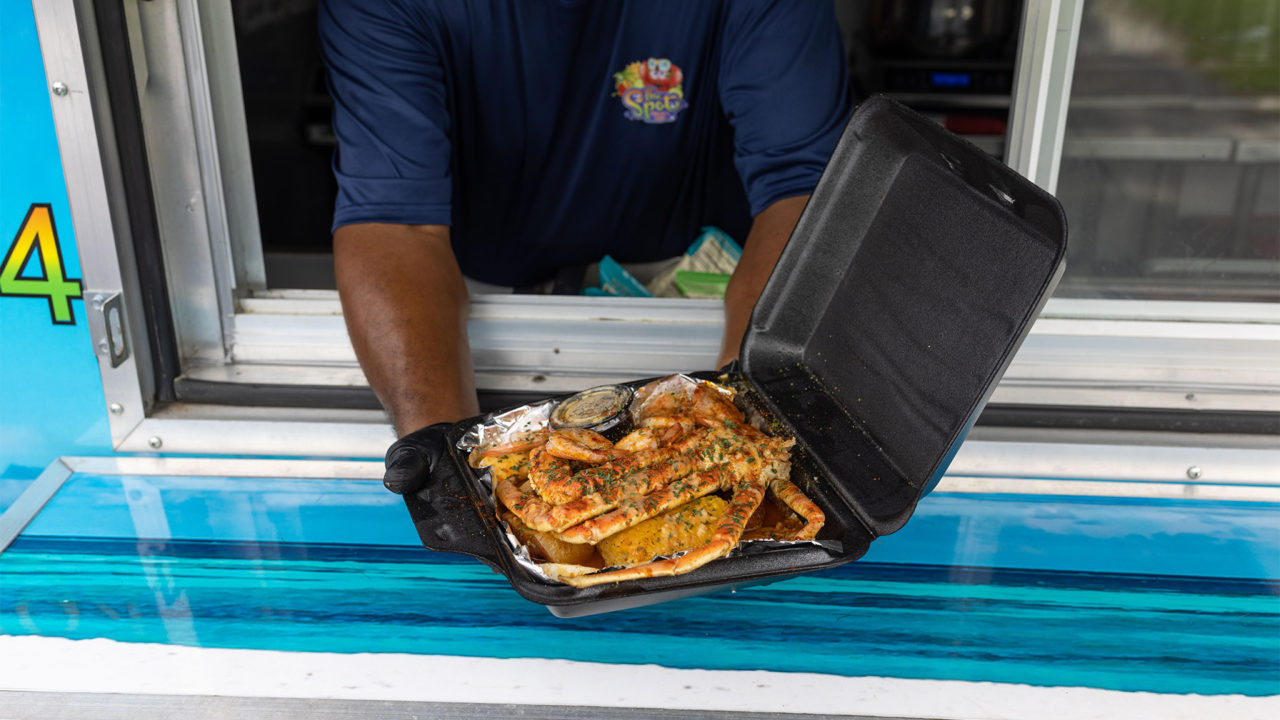
ARLINGTON, Va.—Anthony “Tony” Proctor and Octavius “Ray” Raymond, local food truck owners of “The Spot” and “The Cheesesteak Hustle,” respectively, and Nicole Gonzalez, who owns Northwoods Urban Farm in Jacksonville, North Carolina, can finally celebrate a legal victory years in the making. The city of Jacksonville, North Carolina, has decided to not appeal a court decision granting them nominal damages. This comes after an April 9 court ruling which held that Tony, Ray, and Nicole prevailed on all their claims, ordered the city to pay nominal damages of $4 each in recognition of the harm they suffered under the since-repealed ordinance, and further ordered the city to reimburse the plaintiffs’ lawyers in the amount of $15,861.56 for the out-of-pocket costs incurred in bringing the case. With the city declining to file an appeal, the plaintiffs’ victory is now final and permanent. The Institute for Justice (IJ), a nonprofit, public interest law firm, represented the plaintiffs in their case.
“The court’s judgment is now final, which means that these restrictions will not return to Jacksonville,” said IJ Senior Attorney Justin Pearson. “The government doesn’t get to pick winners and losers in the marketplace.”
Nicole, Tony, and Ray are all entrepreneurs working hard to live out their version of the American Dream. Nicole owns property where she wants to host a food truck to attract more customers to her store. Tony and Ray want to earn a living by accepting invitations from property owners like Nicole to sell food from their food trucks on private property in Jacksonville. However, the city of Jacksonville had made it illegal to sell food from trucks in nearly 90% of the city, including where Nicole’s store is located.
That is because Jacksonville officials took a dim view of competition and consumer choice. The city preferred to “help” brick-and-mortar restaurants by quelling food truck freedom: Food trucks couldn’t operate within 250 feet of certain properties, including any property with a brick-and-mortar restaurant. The city also specifically and narrowly restricted signage relating to food trucks while allowing every other kind of food business to display more and larger signs. Finally, the city set the permit fee for food trucks at an unusually high level that had no relationship to the city’s cost to regulate food trucks. So, while food trucks may technically have been allowed to operate in some small, restaurant-free, areas of Jacksonville, the challenged and since-repealed restrictions stacked the deck against them.
But the city’s stifling economic protectionism violated the North Carolina Constitution, which is why the courts sided with Nicole, Tony, and Ray. People have a fundamental right to use their private property in safe and reasonable ways, such as by inviting someone to earn an honest living on that property by selling safe and quality seafood or cheesesteaks from a food truck. They also have a right to equal treatment under the law, meaning the city can’t prohibit food trucks in areas where it allows similar restaurants unless it has a legitimate reason for singling food trucks out. And people have the right to use their private property and earn their honest living without the government suppressing their truthful and accurate speech or charging them excessive and unreasonable permit fees.
“The government is not allowed to restrict food trucks just because they might compete with their friends’ restaurants,” said IJ Attorney Robert Fellner. “These laws didn’t just hurt food truck owners and the property owners who wanted to invite them, but the laws also took away people’s freedom to choose where to eat. Thanks to this court victory, those freedoms have been restored.”
IJ is a public interest law firm with a mission of protecting individuals’ constitutional rights. In the past, IJ has stood up for the rights of food truck owners to earn an honest living all over the country by defeating similar ordinances that limit where food trucks may operate. Nearby, in Carolina Beach, IJ’s lawsuit led town officials to repeal an unconstitutional law which required food truck owners to also own a brick-and-mortar store; in Fort Pierce, Florida, IJ helped defeat a law that banned food trucks within 500 feet of an established restaurant; and in Louisville, IJ beat a law that blocked food trucks from serving within 150 feet of any establishment that serves food.
# # #
To arrange interviews on this subject, journalists may contact Phillip Suderman, IJ’s Communications Project Manager, at [email protected] or (850) 376-4110. More information on the case is available at: https://ij.org/case/north-carolina-food-trucks/