Returning to Our Roots

By Paul Avelar
The very first case the Institute for Justice filed 20 years ago was a challenge to Washington, D.C.’s cosmetology licensing law on behalf of African hairbraiders. To lawfully offer hairbraiding services, the District required would-be practitioners to invest thousands of hours and thousands of dollars in a training program that had nothing to do with braiding.
Demonstrating the power of litigating cases in the court of public opinion, D.C. was forced to relent and repeal its law. And in the years since, IJ has helped braiders take on cosmetology licensing laws—and cosmetology cartels—in six states, posting big wins for economic liberty every time.
IJ has once again taken up the cause of economic liberty for braiders—this time in Utah.
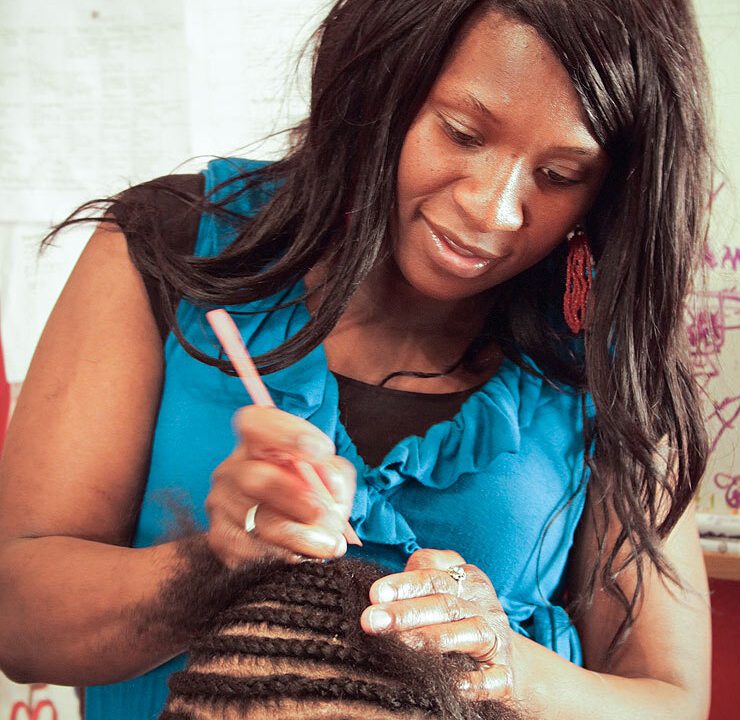
Jestina Clayton grew up in Sierra Leone and has been braiding since she was just six years old. She came to the United States after fleeing from the horrible violence of the Sierra Leone civil war. Since arriving in America, she has graduated from college, married and had two children with a third on the way.
In 2005, Jestina realized there was an unmet demand for African hairbraiding in Utah and that she could make money by braiding. Before she started her business, however, she confirmed with the state licensing board that she did not need any special license. She continued her business because it combined the opportunity to provide for her family with the flexibility of being a stay-at-home mother.
But in 2009, a licensed cosmetologist complained that Jestina did not have a cosmetology license. And even though the licensing board had previously said she did not need a license, the board threatened to shut her down. Now, in order to braid hair for money, Jestina must spend as much as $18,000 to take 2,000 hours of cosmetology classes. Not only is that more class hours than Utah requires of armed security guards, mortgage loan originators, real estate sales agents, EMTs and lawyers—combined—none of those cosmetology classes actually teaches how to braid hair.
Research shows that occupational licensing laws make it more difficult for people—especially poor, minority, immigrant and older workers—to start or change careers, and do nothing more than protect industry insiders from new competition. Government-imposed roadblocks, like cosmetology licensing requirements for braiders, cut off the first rung of the economic ladder for those who need it most. It forces them into the underground economy.
Jestina has already explained to the licensing board and to legislators why Utah’s licensing scheme makes no sense, but no one has been willing to change the laws.
In her native language, “Jestina” means “justice.” IJ is going to Utah federal court to get justice for Jestina. So it is fitting that she teamed up with IJ to change the unjust law.
Jestina shouldn’t need the government’s permission to braid hair. Both the federal and Utah constitutions protect every individual’s right to earn an honest living in their chosen occupation free from arbitrary and irrational government regulations. But this constitutional right is meaningless unless courts enforce it.
Paul Avelar is an IJ Arizona Chapter staff attorney.
Also in this Issue

Liberty & Law
IJ Puts Eminent Domain on the Ropes in National City

Liberty & Law
Limousine Lockout

Liberty & Law
Victory for El Paso Street Vendors
Liberty & Law
Defending the First Amendment at the Supreme Court

Liberty & Law
Research Shows Clean Elections’ Harms

Liberty & Law
Forfeiting Accountability: Georgia Lawsuit Targets Hidden Civil Forfeiture Funds

Liberty & Law
Behind the Scenes at the CYAC Trial
Liberty & Law
Buzzing By The Constitution

Liberty & Law
Your Investment in IJ Remains True After 20 Years
Liberty & Law
School Choice Takes Off

Liberty & Law
Taking the Measures of Freedom to Legislatures

Liberty & Law
Political Privacy Should be a Civil Right
Subscribe to get Liberty & Law magazine direct to your mailbox!
Sign up to receive IJ's bimonthly magazine, Liberty & Law, along with breaking news updates about the Institute for Justice's fight to protect the rights of all Americans.