Lighthouse Sues Wenatchee for Shuttering Soup Kitchen to Satisfy Politically Connected Complainers
Institute for Justice lawsuit defends Lighthouse Christian Ministries’ right to use private property to feed the hungry
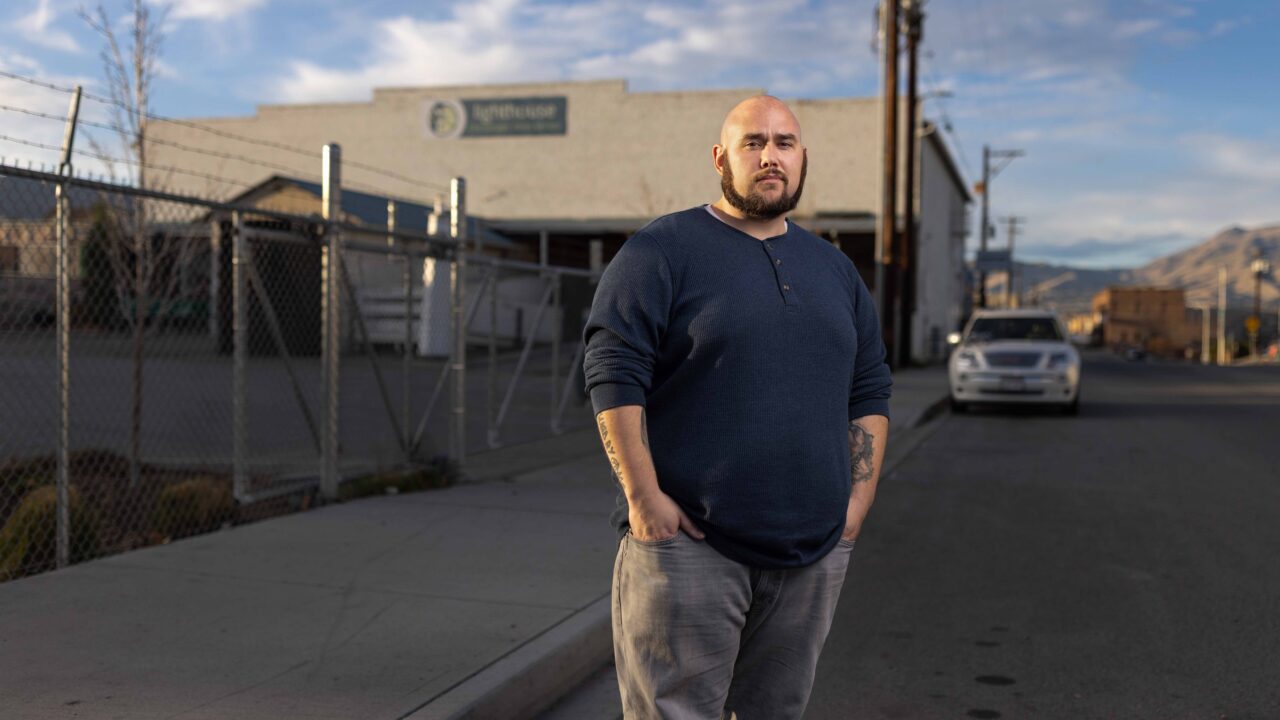
Press Conference
What: Press Conference announcing lawsuit
When: Tuesday, December 16, 2025 at 10:30a.m.
Where: Lighthouse Christian Ministries, 410 S Columbia St, Wenatchee, WA 98801
Who:
- Kolin Oliveira, director of Lighthouse Christian Ministries
- Jeff Rowes, Senior Attorney, Institute for Justice
- Christie Hebert, Attorney, Institute for Justice
- Riley Grace Borden, Litigation Fellow, Institute for Justice
Contact: J. Justin Wilson, (202) 413-5716, [email protected]
WENATCHEE, Wash.—With winter here, a Wenatchee soup kitchen sits dark and empty—not because of health or safety problems, but because the city of Wenatchee shut it down. Now, Lighthouse Christian Ministries, represented by the Institute for Justice (IJ), is suing in federal court to reopen its doors and defend the right of charities to use their property to help people in need.
“Wenatchee should be collaborating with private citizens who step up to help their neighbors, not shutting them down based on trivial infractions and misrepresented 911 call data,” said Jeff Rowes, senior attorney at the Institute for Justice. “The Constitution protects Lighthouse’s right to use its property to help the needy.”
For six years, Lighthouse Christian Ministries faithfully served hot meals each day to anyone who was hungry, providing a safe and supervised space for Wenatchee’s low-income and homeless residents. Lighthouse spent $1.6 million to transform a warehouse in an industrial area into a secure, welcoming soup kitchen—complete with accessibility upgrades, fencing, security cameras, and a management plan approved by city officials.
Yet in May 2025, after a handful of complaints from politically-connected business owners, Wenatchee revoked Lighthouse’s conditional use permit—the legal authorization required to operate in its industrial neighborhood. The city claimed the ministry violated its permit because it locked a gate, changed its entrance, and allegedly caused a “nuisance.” In reality, those supposed infractions were either minor, easily corrected, or fabricated from misleading statistics.
“Lighthouse did everything right,” said Christie Hebert, an attorney with the Institute for Justice. “It addressed every concern and even called police to enforce trespassing rules required by the city. Wenatchee’s decision to shut down the city’s only soup kitchen is both irrational and unconstitutional.”
“We’re not asking for special treatment,” said Kolin Oliveira, director of Lighthouse Christian Ministries. “We’re just asking to serve our community without being punished for helping people who have nowhere else to go.”
The lawsuit argues that Wenatchee’s actions violate the Fourteenth Amendment’s guarantees of due process and equal protection by irrationally targeting Lighthouse while letting other conditional-use permit holders correct issues without penalty. It also raises a Fifth Amendment claim, asserting that the city’s revocation unlawfully destroyed Lighthouse’s property right in its permit—an action equivalent to taking property without compensation.
“Cities cannot make homelessness disappear by outlawing compassion,” said Riley Grace Borden, IJ litigation fellow. “This case is about more than one soup kitchen. It’s about protecting the freedom of every American to do good in their own community.”
This case is part of IJ’s Zoning Justice Project, which defends the rights of property owners, religious groups, nonprofits and others to serve the public without arbitrary interference from government. IJ has successfully challenged similar abuses nationwide, securing victories for homeless service providers that offer private solutions to public problems.
More on Private Property

Private Property
Court Says Marion County Must Clearly State What Crime Was Committed Before Taking Money Seized at FedEx Hub
Private Property
South Bend Mom’s Fight for Compensation After Police Wrecked Her Home Heads to State Court After Supreme Court Turns Down Appeal

Private Property
