
Apprenticeships are a valuable way for workers to gain the real-world skills and experience they need to succeed. In 2026, there were over 755,000 Americans engaged in registered apprenticeships, up nearly 50% from a decade ago. 1 While apprenticeships are embraced by numerous skilled occupations and have deep historical precedents in the barbering profession, state licensing laws have, over the past century, privileged education in barbering school over on-the-job training. 2
Barbering apprenticeships typically take one of two forms. Most commonly, states manage programs themselves, usually as determined by statute and the board that oversees barbering. There is significant variability in the length, structure, and requirements of these programs. A minority of states recognize the U.S. Department of Labor’s (DOL) registered apprenticeship model as a pathway to a license for barbers.
This report compares apprenticeship programs across the country and highlights opportunities for states to improve on-the-job training options for aspiring barbers.
Key Findings:
- Thirty-two states and Washington, D.C. allow aspiring barbers to get their license through a standalone apprenticeship pathway as an alternative to attending traditional barber school.
- The average length of a standalone apprenticeship is 2,315 hours.
- Eighteen states offer no standalone apprenticeship pathway for aspiring barbers to get a license.
- Three of them—Kentucky, Nevada, and North Carolina—require both school and an apprenticeship to get a license.
- The remaining 15 may allow hands-on training to be a part of a student’s barber school experience, but still require significant classroom hours.
States should continue to expand opportunities for on-the-job training by reducing red tape (for both aspiring barbers and the licensees who want to train them) and introducing alternative options for aspiring barbers to get experience in shops.
States and D.C. with a standalone apprenticeship
States with no standalone apprenticeship
Average hours for a standalone apprenticeship
For a table of state programs and references, download the full report.
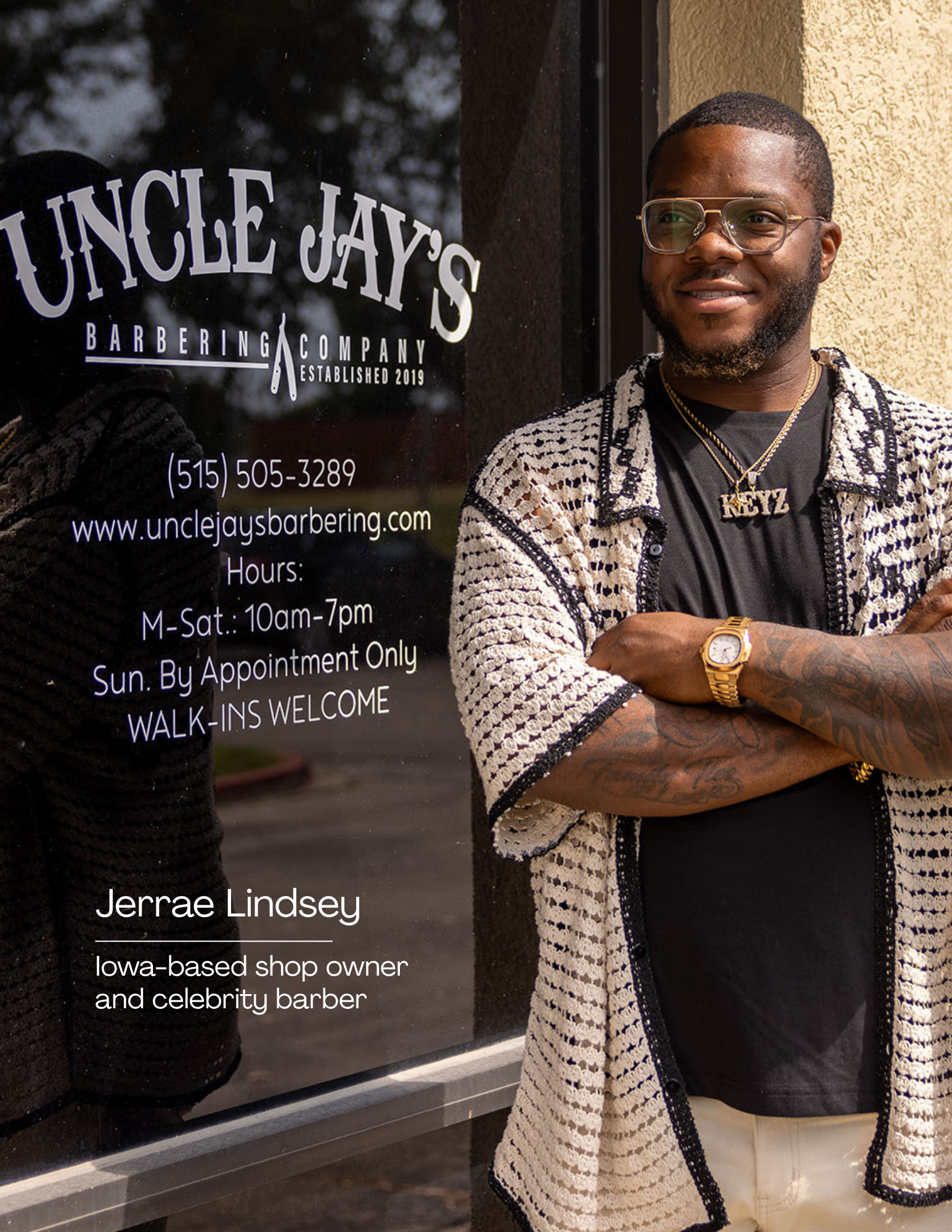
Jerrae Lindsey
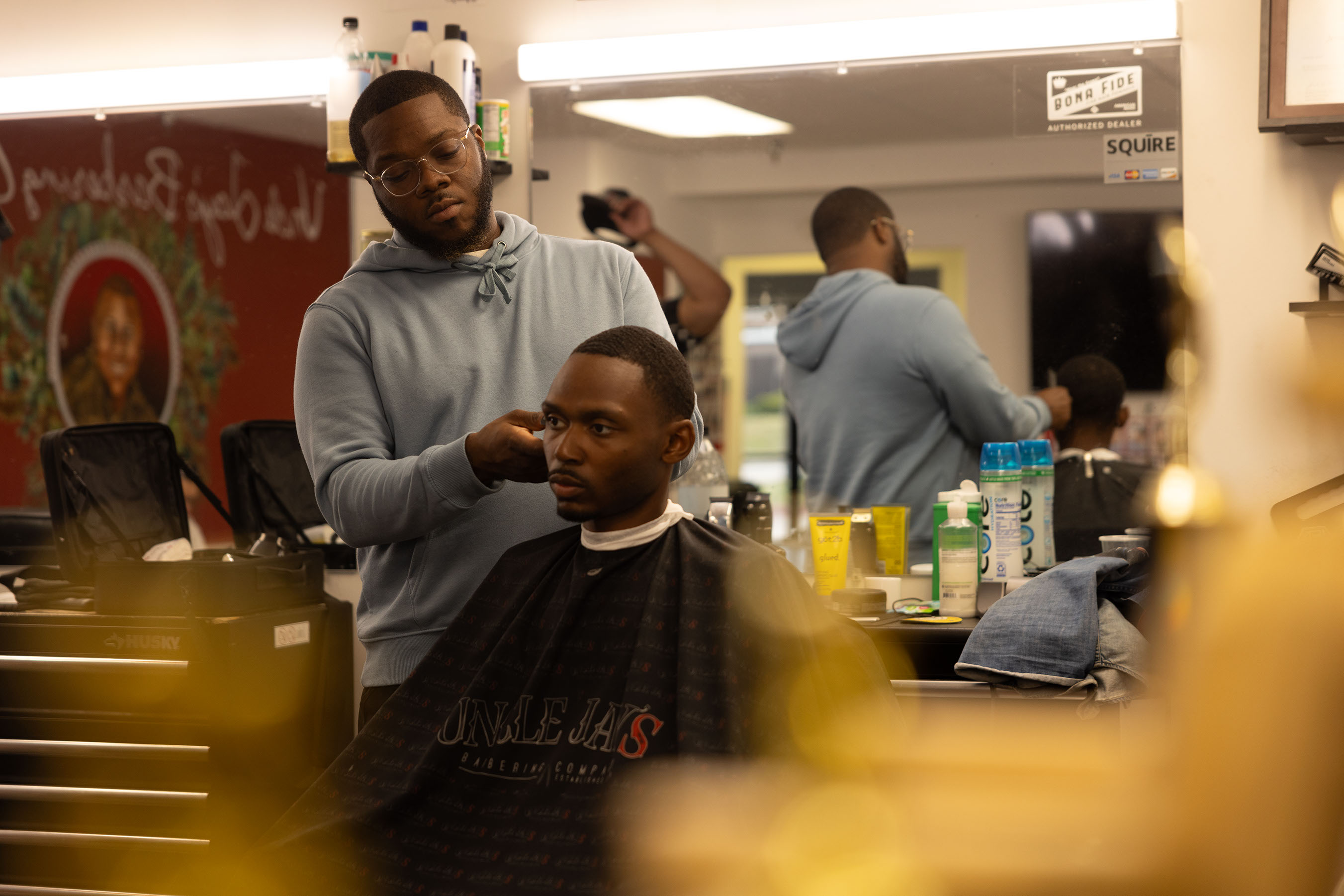
At the time, Iowa had recently introduced an apprenticeship pathway to barber licensure. While apprenticing has long been a tradition in the barbering industry, Jerrae was shocked to find how convoluted, burdensome, and expensive it would be to comply with the program’s requirements. After giving it a go once, he decided it was unworkable and reluctantly turned other prospective apprentices away.
While Jerrae ultimately decided to take this issue to the legislature and help create a new, less complicated in-shop training option for Iowa barbers (see Supervised Services Programs below and the policy recommendations for more information), his story underscores both the high demand for on-the-job training among aspiring barbers and the need for programs that are economically and logistically viable for training providers and trainees alike.
Supervised Services Programs
States have begun considering “Supervised Services Programs,” which allow barbers to get on-the-job training under licensed practitioners outside of a traditional apprenticeship. This option allows any licensed practitioner to hire, train, and supervise an individual regardless of their licensure status. It does not have the curriculum or time limit requirements that apprenticeships typically have. Unlike an apprenticeship, participating in such a program does not necessarily lead to licensure, though states may allow (but not require) participants to take the test for licensure after a certain period of time in the program. This model creates a legal structure that is easier to comply with for the sort of on-the-job apprenticeship training that is already common in the barbering industry. In 2025, Iowa enacted a Supervised Services Program (known there as the “Establishment Training Program”) with the support of a coalition of barbers and stylists, including Jerrae. 3 Other states, such as Kentucky, Missouri, and Nevada, have considered introducing this model as well. 4
Methods:
To better understand how states regulate apprenticeships as a pathway to barber licensure, I compared the requirements for apprenticeships in all 50 states and Washington, D.C. I define two categories of apprenticeships:
- Standalone apprenticeships, which include all programs that allow an apprentice to obtain a license or permit upon completion that allows them to practice independently and where the vast majority of training is completed on the job rather than in school. These programs may include a small portion of bookwork or classroom attendance, but that does not constitute a majority of the training. These can be broken down into two sub-categories:
- State-based apprenticeships, which are programs created at the state level and typically managed or approved by the board that oversees barbering.
- DOL apprenticeships, which are programs that are recognized by the state as a pathway to a license and are also registered with the DOL. Around one year in length, DOL apprenticeships follow federal standards, including requirements for apprentices to be paid from day one of training and access to need-based financial aid, and result in a nationally recognized certification upon completion. 5
- Post-school required apprenticeships, which include on-the-job training that must be completed after a full course of study in a barber school and before a barber can receive a full license.
This report considers only apprenticeships required at the state level, not any that might be required at the local level. 6 It also does not consider any continuing education required to maintain licensure. And in the case of states with post-school required apprenticeships, I do not count required school hours in the apprenticeship hours. See Table 1 for a breakdown of both required components.
Information on apprenticeships is not always fully located in state statute. To varying degrees, the power to structure and recognize apprenticeships is delegated to agencies such as a state’s barber board (or its equivalent), department of education, or office of apprenticeship. If the information is sufficiently available in a state’s statutes, I included that citation. Failing this, I cited the administrative code, then agency websites. I also cited legislation that had recently been signed into law. Where information was unavailable, ambiguous, or unclear, I contacted agencies directly. 7 As a last resort, I reviewed the lengths of existing programs available online to arrive at an approximation. 8
States do not uniformly report the required duration of apprenticeships. For ease of comparison, I standardized all durations into hours. 9 For states that report in terms of whole hours, I simply present that number. For states that report in terms of months, I multiplied the number of months by 21.67, which is the approximate number of non-weekend days in a month in a non-leap year. 10 I then subtracted the number of vacation days permitted by law, if specified. Finally, I multiplied the difference by 8, the number of hours a person might spend at their apprenticeship in a day, and rounded the result to the nearest hour. In all cases, I assumed a 40-hour work week. 11
DOL apprenticeships may follow one of three tracks: time-based, competency-based, or a hybrid of those two. The time-based track requires a certain number of hours of instruction and on-the-job training, while the competency-based track allows progress to be defined by showing proficiency rather than logging hours. 12 While the competency-based and hybrid tracks could allow a barber to complete the program in less time, this report uses the time-based track for consistency and ease of comparison with other programs. 13
Following the time-based track, a DOL apprenticeship is required to last at least one year (a minimum of 2,000 hours) plus 144 hours of related instruction, or a minimum of 2,144 hours total. 14 This is the number I report for all states that recognize DOL apprenticeships, even if the statutory or administrative code requirement was different. 15
Results:
- Thirty-two states and Washington, D.C. allow aspiring barbers to get their license through a standalone pathway.
- Of these, 23 states and D.C. manage their programs at the state/District level.
- The remaining nine states recognize the DOL registered apprenticeship model.
- The average length of an apprenticeship across all states that offer a program (either via a state program or DOL) as a standalone pathway to licensure is 2,315 hours, with requirements ranging from 130 hours in Utah to 4,288 hours in Louisiana, and with a median length of 2,144 hours.
- Eighteen states do not offer a standalone apprenticeship pathway for aspiring barbers that would allow them to complete a majority of the training required for licensure on the job. 16
- Three of the 18 states—Kentucky, Nevada, and North Carolina—have post-school required apprenticeships. These are the most difficult states in which to obtain a barber license due to the extensive time required to be spent on education and training. 17 , 18 , 19 For these states, the hours reported here represent only the length of the apprenticeship, not the total length of time required to obtain a full license. As such, this does not accurately represent the full burden of obtaining a license in these states. See Table 1 for a tabulation of both the school and apprenticeship requirements in these states.
Table 1: Total Hours Required for Licensure in States with Post-School Required Apprenticeships
| State | School Hours | Apprenticeship Hours | Total Hours |
|---|---|---|---|
| Kentucky | 1,500 | 1,040 | 2,540 |
| Nevada | 1,500 | 3,024 | 4,524 |
| North Carolina | 1,528 | 2,080 | 3,608 |
Policy Recommendations:
The role of licensing in the barbering profession is a debated topic and must be included as part of any discussion around the length, content, format, and utility of apprenticeships. Because research has shown that there is no systematic evidence indicating that current licensing requirements for barbers and related professions are necessary to protect public health, the foremost recommendation is to simply not require licensure for the practice of barbering and instead rely on legal consumer protections that exist in every state. 20 Decisions about the training and employment of barbers should be left to private individuals—who, after all, are best suited to make those determinations—rather than the state.
That said, nearly all jurisdictions across the United States require barbers to obtain a license to be allowed to practice their craft. 21 To the extent jurisdictions retain their barber licenses, they should recognize on-the-job training as a standalone pathway to licensure.
Further, to minimize burdens on apprentices and training providers, all apprenticeship programs should:
- Be no longer than demonstrably necessary to learn skills and knowledge required for safe practice.
- Allow apprentices to be paid for their work.
- Require hours to be portable between training providers.
- Recognize previous relevant work experience and training, including out-of-state experience and training.
- Not impose significant requirements on barbers wishing to take on an apprentice, such as an instructor’s license.
- Not restrict the number of apprentices a shop or training provider can train.
- Not require apprentices to work full time or require apprenticeships to be completed within a certain amount of time.
- Give training providers and apprentices maximum control over the length, content, and format of individual apprenticeships.
Finally, states should adopt more flexible on-the-job training options outside of traditional apprenticeships, such as a “Supervised Services Program”. While a traditional, structured apprenticeship is a great option for some, expanding flexible options for on-the-job training and supervised work without a license would give more people an opportunity to pursue a legal pathway into barbering.
Conclusion:
Across the country, states are actively working to increase access to on-the-job training. For example, at the time of this writing, Michigan is considering a bill that would reduce the number of hours required for its apprenticeship, New Jersey is considering a bill to create standalone apprenticeship pathways, and earlier in the year, South Carolina considered legislation to remove its required apprenticeship and create a standalone program. 22
In June 2026, Illinois joined the ranks of states offering a standalone apprenticeship option for barbers with the signing of House Bill 3460 into law. 23
With the burdens of occupational licensing coming under increasing scrutiny combined with the high costs of attending barbering school, on-the-job training offers a tried-and-true approach for getting aspiring barbers the skills they need to succeed, increasing the pool of talent available to existing shop owners, and ensuring that deeply rooted traditions and skills are passed down from generation to generation. 24
The Institute for Justice is dedicated to ensuring that hard-working Americans are not excluded from earning an honest living because of arbitrary, unreasonable, or burdensome regulations. Apprenticeships are an important way for governments to lower the barriers to employment that licensure creates, through the recognition of on-the-job training as a legitimate pathway into the industry. While school can be valuable for many, one size does not fit all. Whether it is people living in rural areas, established professionals looking for a career change, immigrants who bring barbering skills from their home country but face language barriers, individuals who just don’t thrive in a classroom, or those on the first rungs of the economic ladder for whom school is not an option, apprenticeships can be the key that opens the door to a fulfilling and economically productive career. IJ encourages policymakers to expand and simplify on-the-job training options across the country as well as to embrace other alternatives to the rigid approach to training that has dominated the industry for decades.
Acknowledgments
The author would like to gratefully acknowledge the contributions of the Institute for Justice’s Activism team for assisting with research, review, and verification. This was truly a team effort. In addition, the author would specifically like to thank Jennifer McDonald, Christina Walsh, Mindy Menjou, Lisa Knepper, Meagan Forbes, Evan Lisull, Jerrae Lindsey, and Jessee Skittrall-Lemons for their contributions and assistance. Special thanks to Rima Gerhard for designing the webpage for this report.
About the Author
Tom Solomon is the Special Projects Associate on the Institute for Justice’s Activism team where he works with activists, advocates, and policymakers across IJ’s issue areas. In 2023, he helped initiate The Barber Project, a nationwide campaign aimed at collaborating with barbers to identify and reform outdated, unfair, and unnecessary regulatory barriers so that more barbers can earn an honest living in the industry. Reforms he has worked on have been covered by the Washington Post and his writing on the subject has appeared in the Las Vegas Review-Journal and the St. Louis Post-Dispatch.
Please note, the information provided in this report is intended solely for the purpose of advancing policy conversations related to the barbering industry and it is current as of November 2026. None of this information should be relied upon for making individual decisions about one’s occupation or training, nor does this report offer any legal advice. Consult a legal professional and/or your local regulating authorities for guidance and up-to-date information.
The Barber Project
Want to learn more about the Barber Project? Visit TheBarberProject.com or follow @BarberProject.ij on Instagram. Want to improve the barbering laws in your state? Let us know!
What do you want to improve about the barbering laws in your state?


