IJ Issue
Interior Design

Besides unconstitutionally censoring truthful commercial speech, “titling laws” serve as precursors to full-blown occupational licensure, which is the ultimate goal of a small faction within the interior design industry led by the American Society of Interior Designers (ASID).
Four states license the use of the term “interior designer” without regulating the work itself. The anti-competitive intent behind such regulations is clear: anyone who goes looking for an “interior designer” on the Internet or in the Yellow Pages in those states will find only government-licensed cartel members, while overlooking scores of capable designers.
Americans’ right to freely express themselves certainly includes the right to provide truthful information to potential customers and clients. That right, enshrined in the First Amendment, cannot simply be brushed aside by states seeking to promote the anti-competitive interests of the interior design cartel. Simply put, IJ’s lawsuit will demonstrate that the First Amendment is more than mere window dressing when it comes to interior designers.
Economic Liberty Issues

Braiding
The Institute for Justice fights to free natural hair braiders from licensing rules that can require many hours of cosmetology training unrelated to braiding. Through lawsuits and legislation, IJ has helped bring the number of states that fully exempt braiders from licensure to 38.

Cosmetology
Cosmetology is the study of beauty practices and includes styling hair, applying makeup, and providing nail care and skin care.

Food Freedom
All individuals have the right to produce, advertise, sell, procure, and consume the foods of their choice. IJ ensures they can use these rights to provide for themselves, their families, and their communities.

Fresh Start
A job is one of the best ways for people with criminal records not to re-offend. But strict occupational licensing requirements make it harder for people with…

Interior Design
Besides unconstitutionally censoring truthful commercial speech, “titling laws” serve as precursors to full-blown occupational licensure, which is the ultimate goal of a small faction within the interior…

Occupational Licensing
Occupational licenses, which are essentially permission slips from the government, routinely stand in the way of honest enterprise. Without these licenses, workers can face stiff fines or even risk jail time.

Transportation
Consumers and entrepreneurs, not government officials, should decide what transportation options are available.

Vending
IJ’s National Street Vending Initiative fights for the rights of all street vendors to earn an honest living.
Interior Design Cases

Commercial Speech | Economic Liberty | First Amendment | Interior Design | Interior Design | Occupational Licensing
Free to Design: Challenging Florida’s Unconstitutional Interior Design Law
Commercial Speech | Economic Liberty | First Amendment | Interior Design | Interior Design
Challenging Oklahoma's Licensing of Speech For Interior Designers
Commercial Speech | Economic Liberty | First Amendment | Interior Design | Interior Design
Challenging Connecticut’s Licensing of Speech For Interior Designers

Commercial Speech | Economic Liberty | First Amendment | Interior Design | Interior Design
Challenging Texas’ Licensing of Speech For Interior Designers

Commercial Speech | Economic Liberty | First Amendment | Interior Design | Interior Design
Challenging New Mexico’s Licensing of Speech For Interior Designers

Interior Design Research
Economic Liberty | First Amendment | Interior Design | Occupational Licensing | Occupational Speech
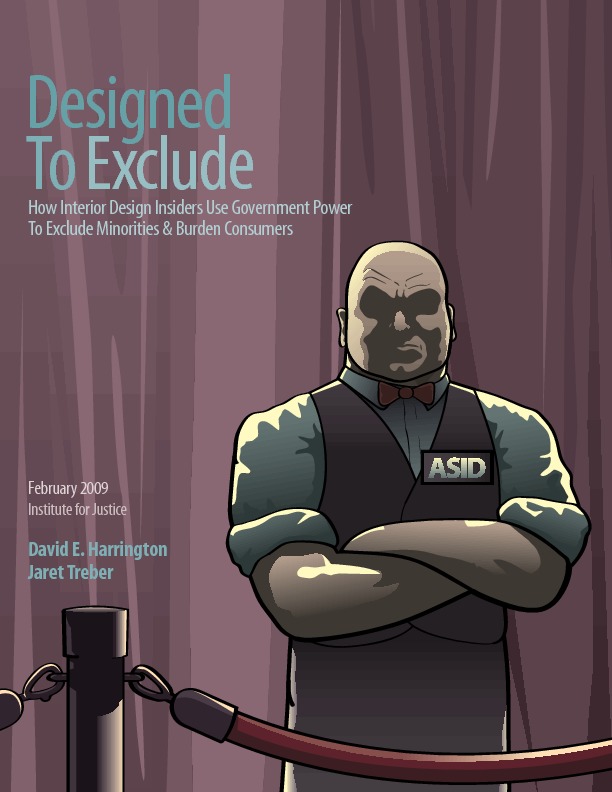
Designed to Exclude
Americans used to be free to practice interior design work and succeed or fail based solely on their skills. But, to the detriment of consumers and would-be entrepreneurs, that is changing. The American Society of…

Economic Liberty | First Amendment | Interior Design | Occupational Licensing | Occupational Speech
Designed to Mislead
Do people who design interiors “mislead” the public when they call themselves “interior designers” without government permission? Industry insiders advocating greater regulation say yes, but practicing interior designers who simply want to accurately describe what…