Texas City Hits Learning Pod with Cease-and-Desist in Violation of State Law
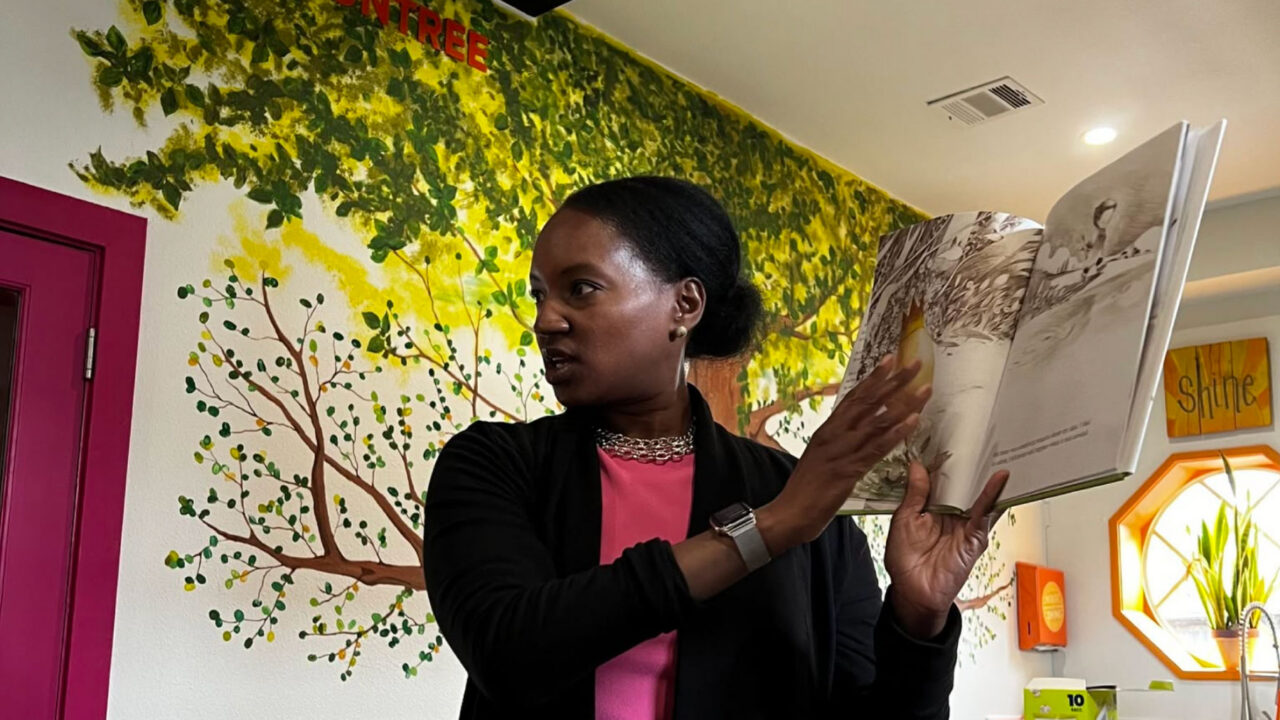
After working in K-12 education for nearly 30 years, including teaching special education and serving as a summer school principal, in 2025 Ruby Brock founded the Westmoreland Institute for Lifelong Learning (WILL), a learning pod in Grapevine, Texas. Her goal was to help students who struggle in traditional schools find their footing via customized lessons, field trips, and one-on-one instruction.
Ruby’s program resonated with the community, and today she teaches 14 students in 3rd through 8th grades. Some are homeschooled and others attend after-school instruction at the end of their public school day. No more than seven students are present at any time.
After a year of borrowing space from the local library, Ruby moved WILL into a dedicated location of its own, in the former offices of a local museum.
But shortly after WILL moved in, the city of Grapevine kicked them out.
The city told Ruby she couldn’t keep teaching there unless she complied with a laundry list of requirements. She would have to rezone the property, obtain a new certificate of occupancy, obtain a conditional use permit, install a fire suppression system, comply with landscaping requirements, and obtain a department of health inspection and permit just to give out pre-packaged food and drinks. The paperwork, permits, public hearings, and renovations would take months to sort out, and easily cost tens of thousands of dollars.
The city forced Ruby to leave the space on Sept. 22. She can’t come back until she complies.
Ruby’s students and their parents value her small, intimate learning program. Yet city officials are regulating it as though it were a sprawling school with hundreds of students.
“All I want to do is teach my students,” Ruby said. “Art studios can educate kids in this zoning district. So can the museum. Why is the city making WILL jump through extra hoops?”
Today, the Institute for Justice (IJ), a national public interest law firm, sent a letter to city officials warning that their actions are illegal under Texas’ Learning Pod Protection Act. The act, written in 2021, says that “any group, building, or facility associated with or used by a learning pod is exempt from any ordinance, rule, regulation, policy, or guideline adopted by a local governmental entity that would not apply to the group, building, or facility if it was not associated with or used by a learning pod.”
The city’s treatment of WILL is precisely the type of municipal action the law was written to prevent.
“The law could not be clearer: cities have to leave learning pods alone,” said IJ Attorney Griffin Brunk, who co-authored the letter. “Grapevine is treating a one-teacher learning pod like a 1,000-student campus. Texas law doesn’t allow that.”
The city also subjected WILL’s new location to an inspection in September. The Learning Pod Protection Act forbids local officials from conducting a “site inspection of, investigation of, or visit to” a learning pod’s location if they would not have done so had the learning pod not met there.
“Ruby Brock is exactly the kind of educator the city should be celebrating, not citing,” said IJ Senior Attorney Erica Ewing Smith, who co-authored the letter. “She takes students who are struggling in traditional schools and helps them by teaching to their individual strengths and learning styles. The city of Grapevine responded by investigating her and then giving her 10 pages of demands.”
Ruby has repeatedly asked city officials to explain why they believe the Learning Pod Protection Act does not apply to WILL. She has yet to receive a clear answer.
Moreover, she worries that if she tries to move WILL to a different location in the city, she will face the same hardships.
“I’m not asking Grapevine for anything special,” Ruby said. “I’m asking the city to follow a law Texas wrote for exactly this situation, and to let a teacher and a few students get back to work.”
The hurdles Ruby is facing are all too common for education entrepreneurs, who are often hamstrung by government rules created for large-scale educational institutions. IJ has litigated educational choice cases before the U.S. Supreme Court and has fought zoning restrictions on home-based and small-scale educational programs across the country. IJ is currently helping a Pennsylvania educator fight for her innovative hybrid school and has previously convinced officials in Cobb County, Georgia to end their crackdown on learning pods.
IJ recently launched the Education Entrepreneurship Project, dedicated to dismantling barriers to innovation, flexibility, and creativity in private education.
More on Education Entrepreneurship


Related Letters and Statements
Grapevine, TX Learning Pod
Grapevine, TX