
Baltimore Food Truck Case Over 300-Foot Ban Headed to Trial
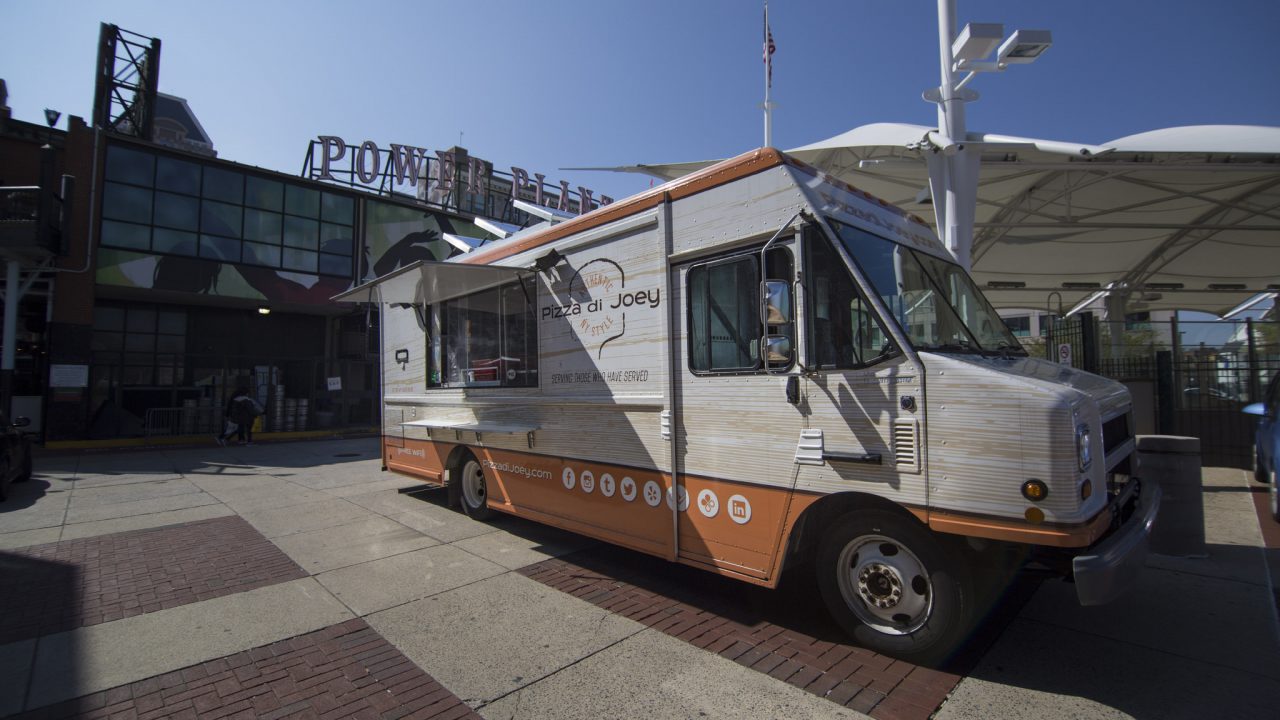
Baltimore, Maryland—Hungry Baltimoreans will have to wait a little bit longer for food trucks to serve their favorite locations after a City Circuit Court judge ruled the case should go to trial. The city bans mobile vendors from operating within 300 feet of any brick-and-mortar business that primarily sells the same product or service. At the trial—which is scheduled for September 28, 2017— the Institute for Justice will present evidence that the sole reason the 300-foot ban exists is to protect brick-and-mortar businesses from competition.
“The 300-foot ban is a textbook example of unconstitutional economic favoritism.” said Greg Reed, an attorney with the Institute for Justice, which represents Joey Vanoni, owner of the Pizza di Joey food truck, and Nikki McGowan, owner of the MindGrub Cafe food truck. “The circuit court’s decision merely delays the day when mobile vending entrepreneurs will be free to serve Baltimoreans.”
The city’s 300-foot ban is especially hard on Joey. The large number of pizzerias and Italian restaurants in Baltimore make it impossible for him to operate Pizza di Joey in large swaths of the city. If he is caught violating the ban, Joey faces $500 in fines for each violation and can have his vendor’s license revoked.
Joey Vanoni said, “I’m looking forward to finally having the city held accountable for their actions and letting small business owners like me live out our dreams without the government getting in the way.”
“Mobile vending gives Americans like Joey and Nikki a way to achieve their dreams by offering delicious food at competitive prices,” added IJ Senior Attorney Robert Frommer. “But Baltimore, like many other cities across this nation, has chosen to throttle those dreams in order to line the pockets of entrenched businesses. This unconstitutional treatment must cease, and we will keep fighting until all Baltimoreans get to decide for themselves where to go to lunch.”
The trial is scheduled for September 28, 2017 at the Baltimore City Circuit Court.
More on Vending

Vending
Public Interest Law Firm Asks Miami Gardens to Stop Defying State Law and Allow Food Trucks to Operate

Vending
Public Interest Law Firm Calls on Ohio City to Cease Efforts to Unconstitutionally Ban Food Trucks on Private Property

Vending