New IJ Report Exposes More Ways Licensing Bars Americans From Working
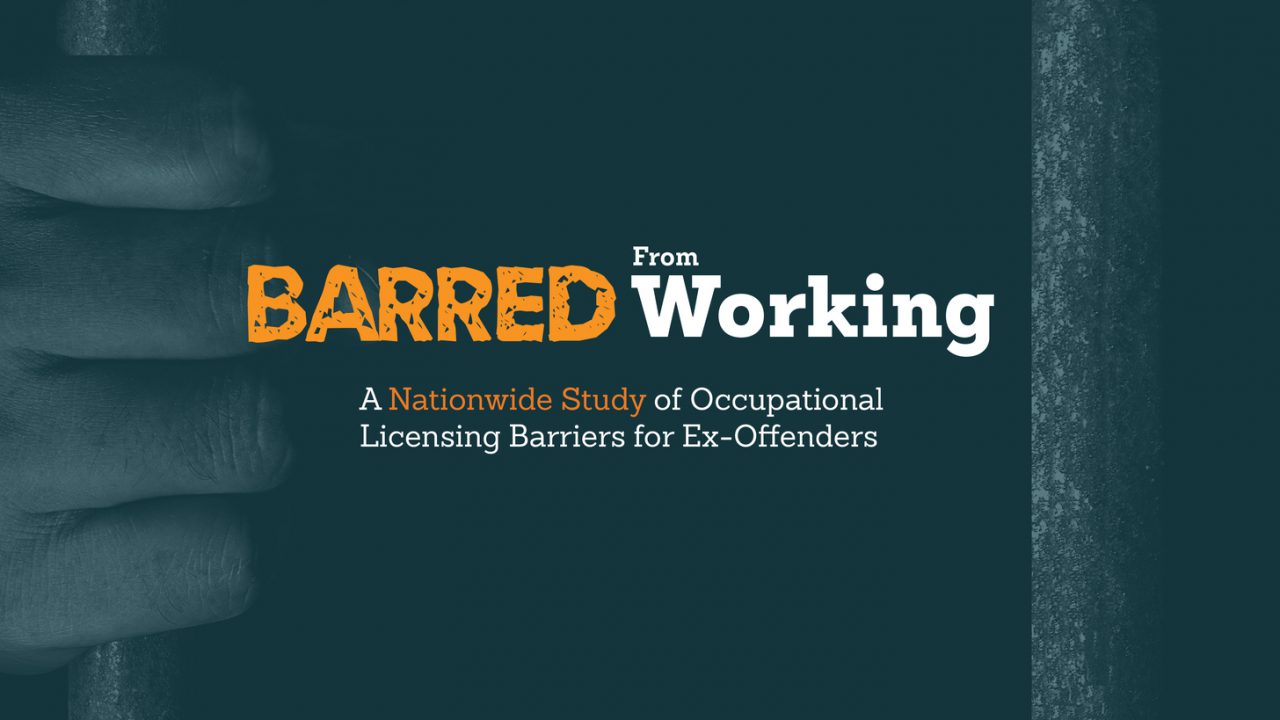
Nearly one in five Americans needs a license to work, while roughly one in three has a criminal record. Together, these growing twin trends in overregulation and overcriminalization have made licensing laws a major roadblock for people who committed crimes, served out their punishments, and seek a fresh start.
Thanks to IJ’s litigation, research, and activism efforts, the burdens that occupational licensing laws place on workers—especially those in low-income occupations—are well known and well documented. “Collateral consequence” laws magnify these burdens by completely banning people with criminal backgrounds from working in myriad industries, from cosmetology to plumbing to athletic training. To shine a light on this often overlooked barrier to reentry, we recently published Barred From Working, which provides the most comprehensive, up-to-date look at licensing restrictions for ex-offenders.
Using 10 distinct criteria, Barred From Working grades all 50 states and the District of Columbia on how well they secure economic opportunity for workers with criminal records. Indiana earned the report’s only A grade, while five states—Alabama, Alaska, Nevada, South Dakota, and Vermont—tied for last place due to an utter lack of safeguards.
Since the report’s release in June, Iowa and Missouri have already enacted sweeping reforms based on IJ’s model legislation. Previously, both states afforded few protections for ex-offenders seeking licenses. Now, their laws rank among the top 10 nationwide.
And that’s only the beginning. IJ has been invited to testify this fall before the New Jersey Civil Rights Commission about collateral consequences and occupational licensing, and we will work to advance reform bills pending in Michigan, Ohio, and D.C. Barred From Working has been cited by MarketWatch, NBC News, and Today and was the launching pad for an IJ op-ed campaign that placed pieces with Crain’s Chicago Business, the Des Moines Register, the Detroit News, and Forbes.com.
For too long, collateral consequences have imposed a “civil death” on people with convictions. As IJ pushes our fight for economic liberty forward in courtrooms and statehouses nationwide, Barred From Working will help us identify potential litigation targets and bolster our legislative efforts on behalf of millions of people who desperately need—and have worked hard to earn—a second chance.
Nick Sibilla is IJ’s writer and legislative analyst.
Also in this Issue

Liberty & Law
Maximize Your Support Through Employer Matching Gifts

Liberty & Law
Fired Up for a Fresh Start

Liberty & Law
Memphis’ Blight Court Left an Elderly Woman Homeless and Destitute—Now IJ Is Helping Her Fight Back
Liberty & Law
IJ Launches Customized Legislative Service to Foster Recovery and Reform

Liberty & Law
Real-World Results, in D.C. and Beyond

Liberty & Law
IJ Defends Homeowners From Seattle’s Renovation Extortion

Liberty & Law
Ending Policing for Profit in the Palmetto State

Liberty & Law
Fasten Your Seatbelts: New IJ Study Finds Feds Seized $2 Billion From Air Travelers

Liberty & Law
IJ’s Educational Choice Litigation Bonanza

Liberty & Law
IJ Scores Early Victory Combatting Kentucky’s Certificate of Need Program
Liberty & Law
Health Care Cons: A Survey
Subscribe to get Liberty & Law magazine direct to your mailbox!
Sign up to receive IJ's bimonthly magazine, Liberty & Law, along with breaking news updates about the Institute for Justice's fight to protect the rights of all Americans.