The Supreme Court Is Poised To Adopt IJ’s Views On Occupational Speech

IJ cases can’t always be center stage at the U.S. Supreme Court. Sometimes non-IJ cases have just the right timing, just the right facts, and just the right amount of good old-fashioned luck to be chosen for Supreme Court review. But IJ is invariably the voice driving the important changes in the law in our practice areas. And our long-term impact can be measured in how we influence the law in the years and even decades before a Supreme Court clash over fundamental principles.
We see this going on now in occupational speech, with the Supreme Court poised to issue a decision by the end of the term in June 2026, with implications for IJ’s work in this space.
Occupational speech combines economic liberty and free speech. Our clients have had their speech restricted by occupational licensing laws: from engineers to diet bloggers to mapmakers and more. We have argued in federal courts around the country that the First Amendment protects speech when the government tries to restrict it using occupational licensing. When IJ first started in this area in the late 2000s, the prevailing legal view (based on a 1985 Supreme Court concurrence) was that occupational speech was a special exception to the First Amendment.
We were the only people advancing what seemed like a radical take on free speech: People who speak for a living should get the same speech protections as everyone else.
Fast forward to fall 2025. In August, IJ won at the 7th Circuit on behalf of Lauren Richwine, an Indiana entrepreneur who helps people plan their final days and even home funerals. Indiana tried to shut her down, arguing that she needed to be a state-licensed funeral director even to have a conversation with people about their options. No, said the 7th Circuit, fully endorsing IJ’s view. All Lauren does is speak with people, and that speech is protected by the First Amendment.
And in October, a federal court in Minnesota followed suit with a ruling for IJ client Leda Mox, who teaches equine enthusiasts about horse massage. These victories were just the latest in a series of wins over the past 15 years that have fundamentally changed how courts think about occupational licensing and speech.
That brings us to Chiles v. Salazar, one of the “big” cases for the Supreme Court’s 2025 term. The question in Chiles is whether the First Amendment applies to Colorado’s use of psychology licensure to prohibit counselors from discussing aspects of sexuality and gender identity with minors (with the parents’ permission). It’s a difficult topic. When the Court indicated it was interested in deciding the occupational speech issue, we hoped it would take up one of the many IJ cases currently pending instead of one that is so caught up in the culture war.
Even so, we must seize the opportunities in front of us. And many of the cases debated in the Chiles briefing are IJ cases. Our amicus brief explained how to translate IJ’s view of speech into the eventual Chiles decision. It is impossible to imagine the Court reaching this point without IJ having patiently laid the groundwork for a pro-liberty revolution in free speech law.
And based on oral argument, that is what is coming. Justices across the ideological spectrum were skeptical that Colorado could pluck pure speech from under the protection of the First Amendment simply by using occupational licensing as the censorship tool.
That is good news for IJ because not only are we influencing the long-term evolution of the law, but the high court consistently recognizes the importance of our cases. We have three cert petitions currently being held until the decision in Chiles. Once Chiles comes down, we expect the two of those cases that were losses to be reversed (mapmaker cases out of the 4th and 9th Circuits) and a victory to be affirmed (a veterinarian case out of the 5th Circuit).
These will be the first appellate decisions applying Chiles, and thus we will have the first opportunity to cement and expand on what we anticipate will be a pro-First Amendment ruling. Stay tuned for an update next year on how all of this plays out.
Jeff Rowes is an IJ senior attorney.

Also in this Issue

Liberty & Law
Victory! Defeating Qualified Immunity Two Cases At A Time
Liberty & Law
Victory In Virginia! Court Holds Lifetime Ban Unconstitutional In IJ’s Fifth Win For Fresh Starts
Liberty & Law
Taking Flight To End Civil Forfeiture

Liberty & Law
Zoning Justice Project Litigates Cases On The Cutting Edge

Liberty & Law
A Big Win For Tiny Homes In Georgia
Liberty & Law
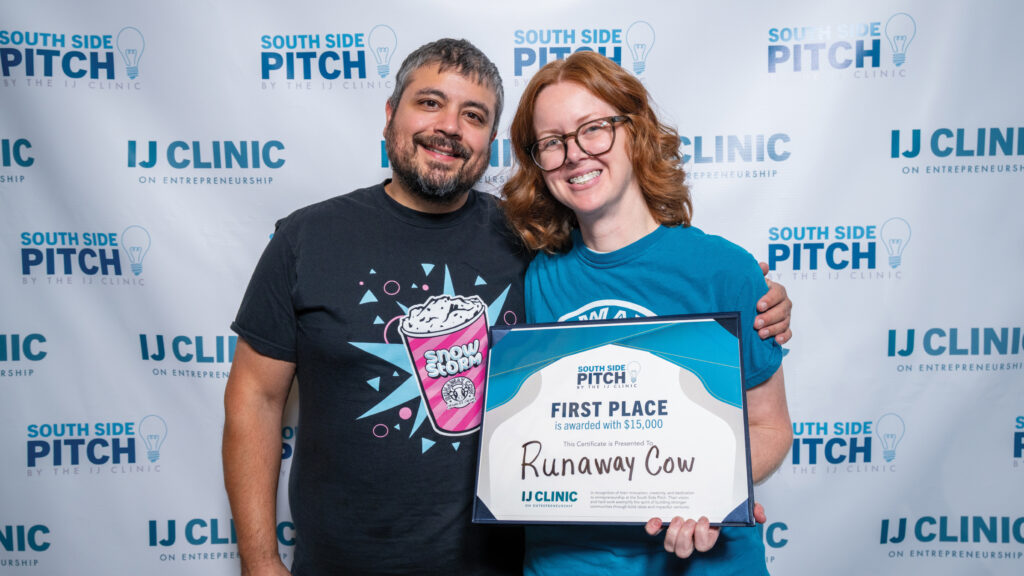
A Vegan Sweet Treat Company Is Crowned South Side Pitch Winner
Liberty & Law
IJ Defeats “Take Now, Plan Later” Eminent Domain Scheme
Liberty & Law
IJ Annual Report Fiscal year ’25
Liberty & Law
IJ Makes Headlines
Subscribe to get Liberty & Law magazine direct to your mailbox!
Sign up to receive IJ's bimonthly magazine, Liberty & Law, along with breaking news updates about the Institute for Justice's fight to protect the rights of all Americans.