As Abuses Mount Nationwide, Administration Calls on Court to Reject Lawsuit Challenging Constitutionality of License Plate Readers

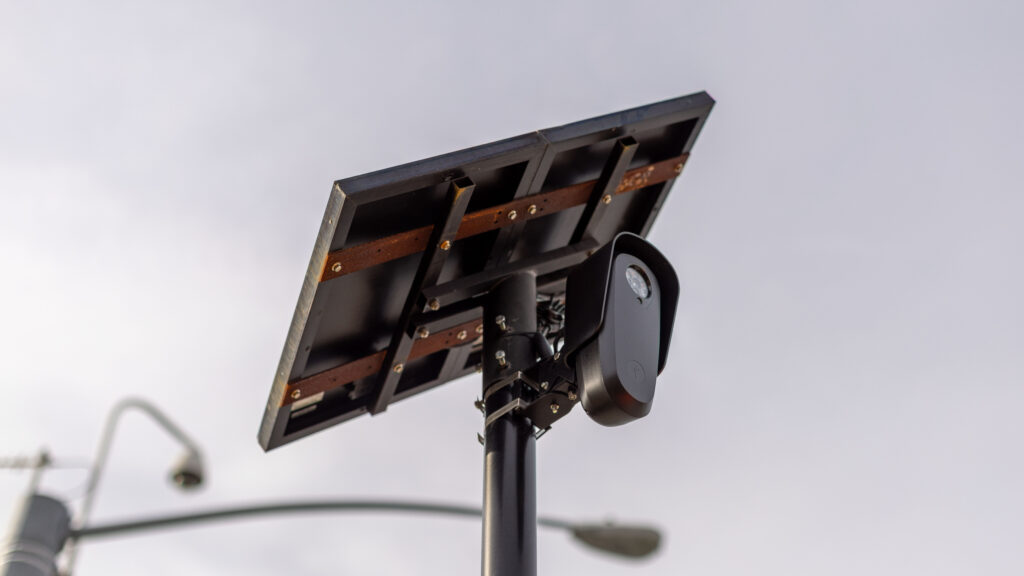
NORFOLK, Va.—On Saturday, the new United States Attorney Lindsey Halligan submitted a statement of interest in a constitutional lawsuit against the city of Norfolk, defending the city’s use of 176 Flock Safety automatic license plate reader (ALPR) cameras to track drivers’ movements. The lawsuit was filed last October by area residents Lee Schmidt and Crystal Arrington and their attorneys from the Institute for Justice (IJ). Relying on decades-old cases, the federal government argues that no American can reasonably expect privacy on public roads, so Norfolk’s use of hundreds of cameras to track people without a warrant is perfectly constitutional.
“News stories from around the nation have shown the dangers of giving officers unfettered access to ALPR cameras, which are now in thousands of local communities,” said IJ Attorney Michael Soyfer. “These cameras collect massive amounts of data about ordinary people’s movements, data that can be mined to reveal habits, patterns, and behaviors. This unusual decision to wade into a lawsuit to defend an ever-growing mass surveillance network should raise alarm bells over how the federal government plans to use this surveillance.”
Industry players have not been forthcoming about their involvement with the feds. One major ALPR company, Flock Safety, insisted for months that it had no federal contracts. But in response to journalists’ questions, Flock eventually admitted that wasn’t true and that it had been running a “pilot program” with Customs and Border Protection (CBP). In the wake of that admission, Flock announced in August it was ending its partnership with federal law enforcement.
Even where federal agencies don’t have official partnerships with ALPR companies, their officials have repeatedly been caught accessing ALPR cameras. Cities such as Denver, Colorado, Austin, Texas, and Sedona, Arizona have raised concerns about federal officials accessing data collected by those cities’ Flock cameras. These concerns led Austin and Sedona officials to cancel their contracts, while Denver officials have created a task force that will decide whether to continue using Flock cameras by the end of October.
State officials have likewise complained about federal agents accessing data collected by Flock cameras. Illinois Secretary of State Alexi Giannoulias accused Flock of breaking Illinois law by allowing CBP to access ALPR data. Officials in California have alleged that by sharing Flock data nationwide, police may have violated state privacy laws. And federal immigration officials have been caught accessing the camera database in Westchester County, New York, despite its status as a “sanctuary county.”
“ALPRs are a promising new technology that can be used for great good or great ill,” said Robert Frommer, co-director of the Institute’s Project on the Fourth Amendment. “We sued Norfolk so courts will begin to recognize that, to protect Americans’ rights, these incredibly powerful tools need constitutional oversight. For so long as officials can unilaterally decide for themselves to look up anyone at any time, these and worse abuses will only continue.”
Through its Plate Privacy Project, IJ is fighting back against the warrantless use of ALPR cameras. In addition to the lawsuit against Norfolk, earlier this year, IJ successfully persuaded a city in Arkansas to move an ALPR that was directly in front of an innocent family’s home. Before the camera was moved, it captured photos of the family’s driveway and part of their front yard every time a vehicle drove by, and photographed the family every time they left or returned home. Also, IJ worked closely with activists in Scarsdale, New York, who wanted to end their village’s ALPR program. The village ultimately scrapped its contract to install the cameras.
More on License Plate Readers
License Plate Readers
Police Have Reportedly Used License Plate Readers to Stalk Romantic Interests Dozens of Times in Recent Years

License Plate Readers
Hampton Roads Residents Will Appeal Court Decision Upholding Norfolk’s License Plate Reader Surveillance
License Plate Readers
