Victory: Arkansas City Moves Surveillance Camera from in Front of Innocent Family’s Home Following Letter from National Law Firm

ARLINGTON, Va.—The city of Greers Ferry, Arkansas has removed a surveillance camera from in front of an innocent family’s home. The decision comes after the Institute for Justice (IJ) sent the city a letter explaining that the use of the Flock Safety license plate reader camera in front of Charlie and Angie Wolf’s home poses grave Fourth Amendment concerns.
“After months of warrantless surveillance, we’re relieved the camera has finally been moved from in front of our home,” said Charlie. “But nobody else should have to experience this either, and it’s time for cities across the country to reassess whether partnering with Flock is really worth sacrificing our Fourth Amendment rights.”
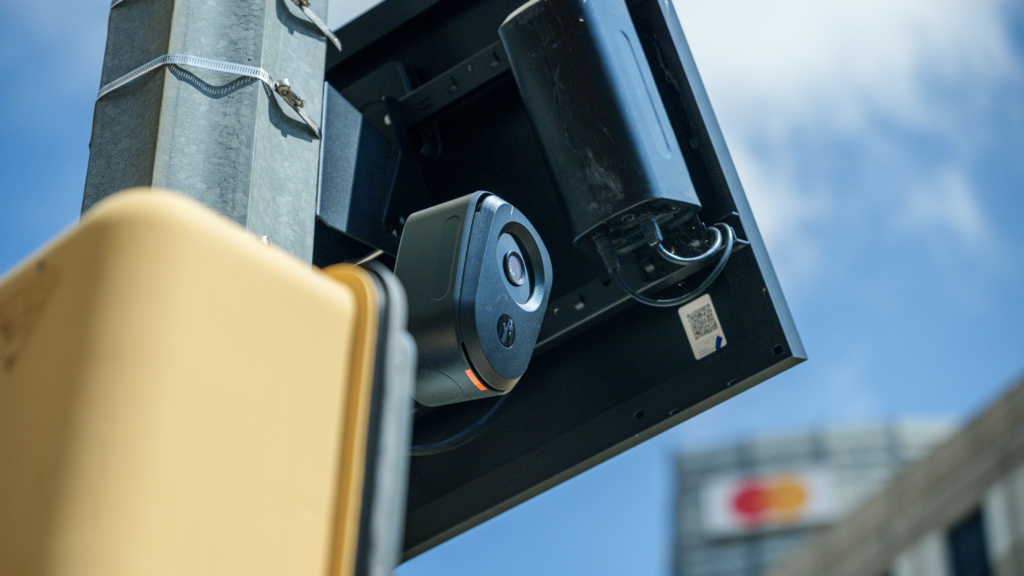
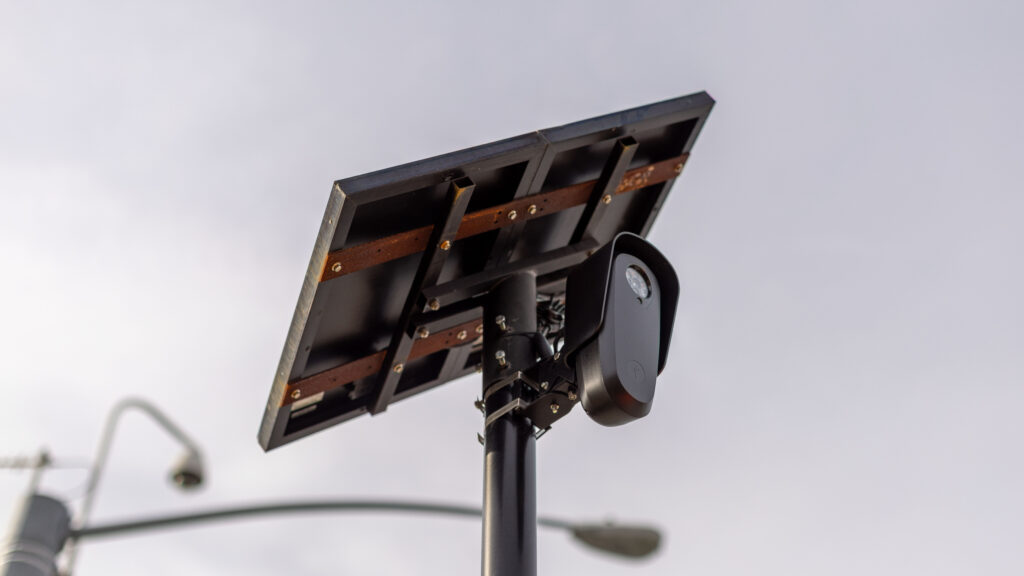
In 2024, Greers Ferry signed a contract with Flock to install five license plate reader cameras, one of which ended up being placed outside city limits directly in front of the Wolfs’ home. These cameras take a photo of every vehicle that drives by and analyze features such as the license plate number, car color, dents, bumper stickers, and more. Police can then use the database without a warrant to see each time a specific vehicle was spotted by not only their own cameras, but the cameras of any other department that opts to share data.
“We’re thrilled that the Wolfs will no longer be subjected to constant warrantless surveillance of their property,” said IJ Senior Attorney Joshua Windham, who co-directs IJ’s Project on the Fourth Amendment. “That said, there are still massive Fourth Amendment concerns with the use of these license plate reader cameras, and we urge the city not to renew its contract with Flock Safety when the initial term is up.”
Other cities throughout the country, including Denver and Austin, have opted to back out of contracts after learning just how intrusive and ripe for abuse these cameras are.
Every time a car drove past the camera that was located in front of the Wolfs’ home, the camera would take a picture that not only captured the traveling vehicle, but also the Wolfs’ driveway and a good chunk of their front yard. When the Wolfs left home or returned, a photo was taken. When their friends or family came over, a photo was taken. It got to the point where the Wolfs’ grandchildren stopped visiting while the camera was up.
After the camera was installed, Charlie reached out to the police chief to express his concerns and was told “it’s not moving.” The following month, the couple sent a letter to city council raising Fourth Amendment concerns and asking officials, once again, to move the camera. Then, on July 8, Charlie appeared before the city council to reiterate his concerns. After the city once again rebuffed Charlie’s concerns, IJ got involved, sending its letter on July 17.
As part of its Project on the Fourth Amendment, IJ filed a first-of-its-kind federal lawsuit against the city of Norfolk, Virginia over its use of Flock automated license plate readers. In February 2025, a judge ruled the lawsuit against the city could move forward, saying, “a reasonable person could believe that society’s [privacy] expectations, as laid out by the Court in Carpenter, are being violated by the Norfolk Flock system.”
More on License Plate Readers
License Plate Readers
The IJ Database of ALPR Abuse
License Plate Readers
Police Have Reportedly Used License Plate Readers to Stalk Romantic Interests Dozens of Times in Recent Years
License Plate Readers
Public Interest Law Firm That Uncovered Federal Border Surveillance Scheme Applauds Senator Markey for Sounding Alarm
Related Letters and Statements
Greers Ferry License Plate Reader Letter
Greers Ferry, Arkansas