Federal Court Grants Preliminary Approval to Settlement in Brookside, Alabama Policing-for-Profit Lawsuit
Victims of predatory ticketing and towing scheme will be able to apply for compensation.
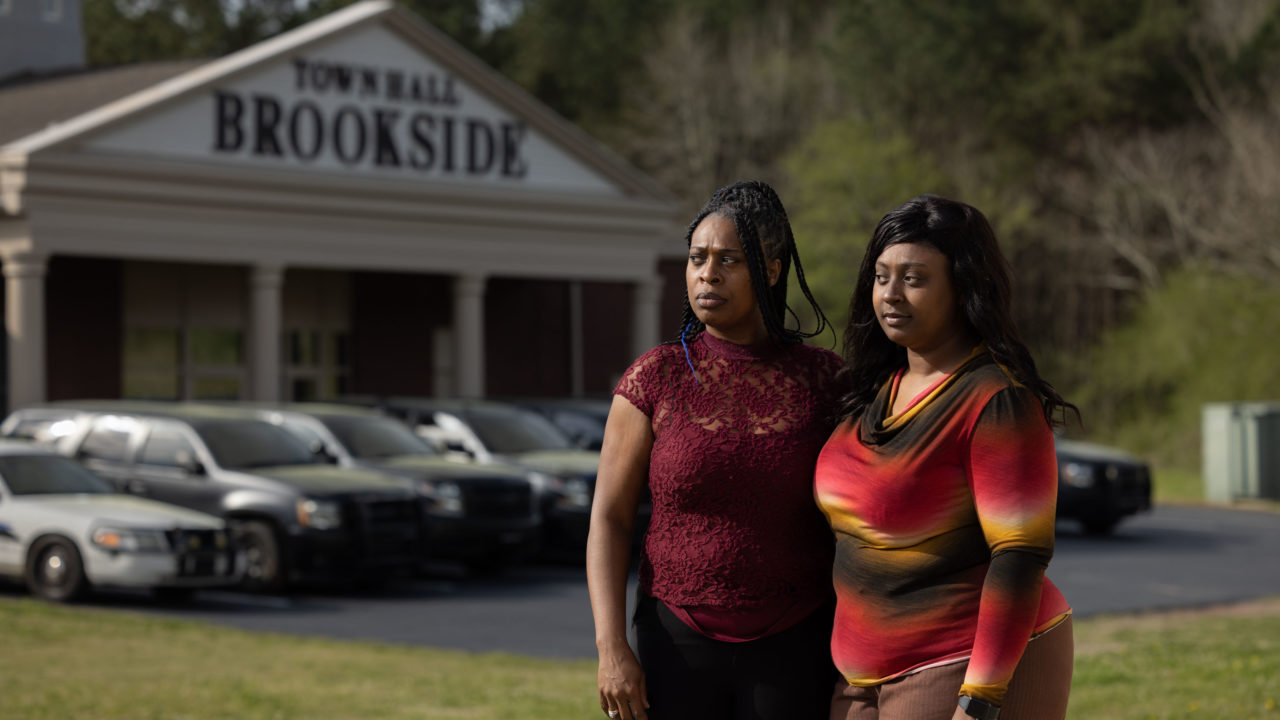
BIRMINGHAM, Ala.—A federal court granted preliminary approval of a class-action settlement in the Institute for Justice’s (IJ) policing-for-profit lawsuit against the town of Brookside, Alabama. Class members will soon be able to submit claims for compensation and the additional relief obtained by the settlement.
The case arises from Brookside’s adoption, in 2018, of an aggressive policing system designed to generate revenue and enrich the town at the expense of thousands of drivers. In just a few years, a handful of officers managed to increase police-generated revenue by well over 600% and squeeze nearly $2 million dollars from unsuspecting drivers. The system made national headlines. After nearly four years of litigation, Brookside agreed to a class-wide settlement that, as the court recognized, achieves meaningful monetary compensation and significant systemic reforms.
“The court has preliminarily approved a settlement that achieves two ambitious goals,” said IJ Attorney Jaba Tsitsuashvili. “First, it compensates people who were impacted by Brookside’s aggressive towing and ticketing policies, to the tune of $1.5 million in direct compensation. Second, it entrenches meaningful systemic reforms, by severing the link between Brookside’s policing and its revenue. This is the justice that the community deserves. We look forward to final approval after the settlement notice process.”
The settlement reaches two classes of individuals who will be able to submit claims for compensation and additional relief. The first class encompasses individuals who paid for the release of cars towed on the orders of the Brookside Police Department between March 1, 2018 and August 1, 2022. Of the financial settlement, $1 million is allocated to that class. The remaining $500,000 is allocated to individuals who were charged with offenses in Brookside’s municipal court during the same time period.
The town has also agreed to substantial systemic changes designed to prevent a re-emergence of its policing-for-profit scheme. These include:
- Brookside will permanently repeal its fee to retrieve towed cars, severing the town’s financial incentive to tow.
- Brookside will remove the Brookside Police Department from Interstate 22 for 10 years (unless necessary to respond to an emergency).
- Brookside will keep 0% of the revenue generated by its policing and its code enforcement for 5 years. After that, it will keep only 1% for another 10 years. Finally, it will keep only 2.5% for another 15 years. In total, that’s a 30-year obligation for the town to sever the link between policing and revenue.
- Brookside will implement a slew of transparency measures designed to ensure compliance with these obligations and provide IJ the documents to track those obligations for 10 years.
Finally, the town has agreed to provide class members an acknowledgment that Brookside’s “policy of aggressive policing likely interfered with the Town’s obligation to administer justice equally under law, undermined the public’s trust in the justice system, and raised serious constitutional concerns under the Due Process Clause of the Fourteenth Amendment.”
The named plaintiffs in the case are Brittany Coleman, Brandon Jones, Chekeithia Grant, and Alexis Thomas, four drivers who had their cars towed and were hauled into Brookside’s municipal court. They brought the case to vindicate their own rights and to ensure that no one else would face a policing system whose incentives were warped away from doing justice and toward generating money.
“Police are supposed to protect and serve, not ticket and collect,” said Chekeithia Grant. “When that gets flipped around, people suffer. We brought this case to remind Brookside of that, and to get the town on the right track. This settlement should do that. And it should be a warning to other towns.”
Added Brittany Coleman: “We hope this will show other towns in Alabama and across the country that their police departments are not supposed to treat people like ATMs.”
“Systems that permit policing for profit inevitably result in abuse,” said IJ Senior Attorney Sam Gedge. “The court has preliminarily approved a settlement that compensates those impacted by Brookside’s system and keeps it from recurring.”
With the court’s preliminary approval of the settlement, individuals who appear to be class members will receive notices explaining their rights and how to submit claims for compensation and additional relief, or opt out of the settlement. Individuals who would like to ensure they receive notice can contact Institute for Justice Attorney Jaba Tsitsuashvili at [email protected].
After the claims submission process, IJ anticipates seeking final approval from the court.
Bill Dawson of Dawson Law LLC is the local counsel partnered with IJ in this lawsuit.
More on Rule of Law
Rule of Law
Supreme Court Declines to Hear Denver Man’s Case to Revive Fourth Amendment’s Warrant Requirements
Rule of Law
Victory! Court Rejects Qualified Immunity in Louisiana Motorists’ Case, Allowing Fourth Amendment Claims of an Unconstitutional Traffic Stop to Continue
Rule of Law
