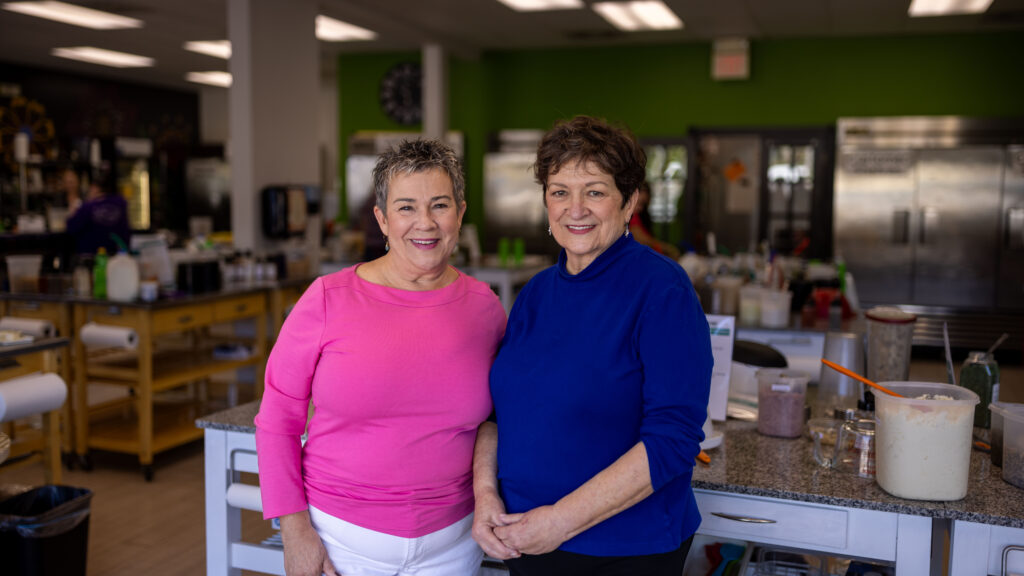
Institute for Justice Applauds Virginia Governor for Signing Bill Expanding Home Food Sales

RICHMOND, Va. –Yesterday, Virgina took a major step in expanding economic freedom to help thousands of cottage food producers grow their business across the state with the signing of HB 402 by Delegate Callsen Previously, cottage food producers were only allowed to sell their products from their home, a farmers market, or an event that lasted for a consecutive 14 days. Additionally, they were allowed to advertise online but could not accept online orders or accept electronic payments. The producers were also required to list their physical address on their labeling, which created safety concerns. HB 402 will allow cottage food producers to sell from any location within the Commonwealth, provided they are physically present at the time of the transaction; ship or deliver their products through a third party within the Commonwealth; accept online orders and electronic payments; and use a P.O. Box instead of a physical address on their product labeling.
“HB 402 expands opportunity for Virginia’s cottage food producers by removing unnecessary barriers that limited when, where, and how they could sell their products,” said Courtney Fontaine, legislative policy associate at the Institute for Justice (IJ). “For many Virginians, cottage food businesses are not hobbies, they are meaningful sources of income and pathways to entrepreneurship. This law gives producers greater flexibility while giving consumers more access to homemade goods across the Commonwealth. IJ is proud to stand with the producers whose advocacy made this reform possible.”
Across the country, overly restrictive regulations are making it harder for food entrepreneurs to earn a living and serve their communities. Since 2013, IJ has been at the forefront of the fight for the rights of food entrepreneurs and consumers against these needless restrictions. IJ’s National Food Freedom Initiative has a particular focus on eliminating restrictions that prevent people from making homemade food for sale.
“Over 200 activists came together to work towards a better Virginia by expanding economic freedom and local food access, said Sydney Travis, activism coordinator at IJ. “This bill is a testament to their hard work and the hard work of Virginia’s political leaders who listened to them.”
Research conducted by IJ shows that homemade foods are also resoundingly safe. IJ contacted the seven states with the broadest homemade food laws (California, Iowa, Montana, North Dakota, Oklahoma, Utah, and Wyoming) to request data on the number of complaints and confirmed cases of foodborne illness that could be traced to a food product sold under states’ homemade food laws. Each of these states’ homemade food laws allow the sale of not just shelf-stable foods (like breads, cakes, and jams), but also perishable foods (like tamales, pizza, chicken sandwiches, and various cultural street foods). The results showed that not a single state has found a foodborne illness to be caused by food sold under its homemade food law. This was true even though some of the states, like Wyoming, have had laws in place for almost a decade.
IJ’s National Food Freedom Initiative is a nationwide campaign that brings a variety of legal challenges and legislative efforts to laws that interfere with the ability of people to buy, sell, grow or advertise different foods. As the nation’s leading experts on home kitchen laws, IJ has helped change the law in more than 20 states.
# # #
To arrange interviews on this subject, journalists may contact Phillip Suderman, IJ’s Communications Project Manager, at [email protected] or (850) 376-4110. More information on the subject is available at: https://ij.org/issues/economic-liberty/homemade-food/
More News
Immunity and Accountability
Supreme Court Declines to Hear Denver Man’s Case to Revive Fourth Amendment’s Warrant Requirements
Eminent Domain
Brentwood’s Arguments About its Blight Designation and Eminent Domain Don’t Hold Up