Public Interest Law Firm Calls on Arkansas City to Remove Surveillance Camera from in Front of Innocent Family’s Home, Not Renew Contract with Camera Company

ARLINGTON, Va.—Today, the Institute for Justice (IJ) sent a letter to city officials in Greers Ferry, Arkansas, demanding they remove a license plate reader camera that was installed directly in front of the home of Charlie and Angie Wolf. The letter also calls on city officials to not renew their contract with the automated license plate reader company Flock Safety when the initial term expires.
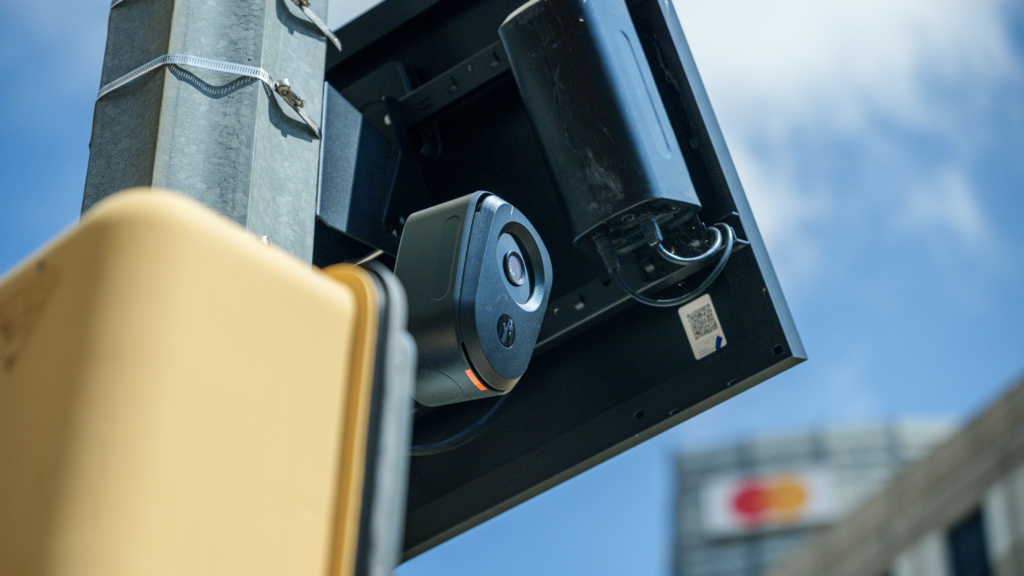
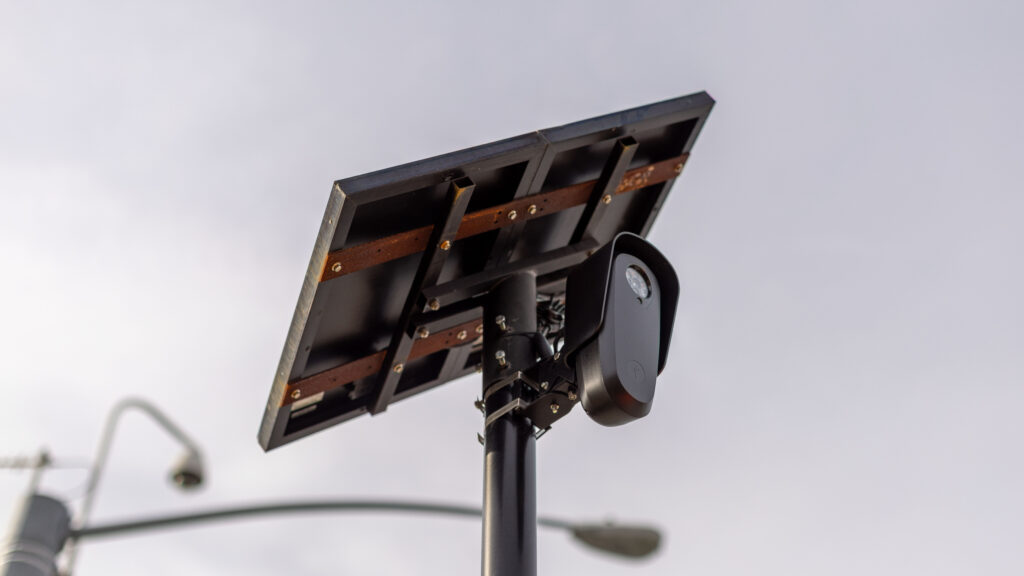
Last year, the city of Greers Ferry entered into a contract with Flock Safety to install five “Flock Safety Falcon” license plate reader cameras around the city. These cameras photograph every vehicle that drives by and analyze the license plate number and vehicle features. From there, the cameras upload the photos to a server where the technology can analyze a vehicle’s trends, for example, how often a certain vehicle is spotted at a certain location.
“The Wolfs cannot enter or leave their own driveway without the city’s camera capturing a picture of their movements,” said IJ Senior Attorney Joshua Windham, who co-directs IJ’s Project on the Fourth Amendment. “Simply put, the city has put the Wolfs under a state of constant surveillance, where they’re effectively being treated as criminal suspects, even though they’ve done nothing wrong.”
After Charlie retired from two decades as a police officer and Angie retired from her career as a teacher, the couple moved to Greers Ferry, hoping to find a quiet, peaceful life. In May 2025, the city installed the cameras and put one of them directly across from the Wolfs’ driveway, facing their property. As positioned, the camera captures their driveway and a good portion of their front yard. After the camera was installed, Charlie reached out to the police chief to express his concerns and was told “it’s not moving.” The following month, the couple sent a letter to city council raising Fourth Amendment concerns and asking officials, once again, to move the camera. Then, in July, Charlie appeared before the city council to reiterate his concerns. At that meeting, city officials doubled down on their stance. City Attorney Blake Spears told Charlie: “If you want the camera moved, my suggestion would be to get a court order,” and Police Chief Kallen Lacy added: “We have no plans to move the camera.”
“Every time me, my family, friends, children or grandchildren come to, leave, play in the front yard or try to enjoy our private property, we are being photographed and added to a database without consent or violation of any law,” said Charlie.
IJ’s letter argues that Greers Ferry’s use of the Flock cameras poses two distinct Fourth Amendment concerns:
- The placement of a camera directly in front of the Wolfs’ home amounts to long-term surveillance that can reveal their comings and goings. Two state supreme courts have ruled that placing a surveillance camera in front of a home for months without a warrant is unconstitutional. Making matters worse, Greers Ferry’s camera is located in front of their home for an indefinite period.
- Even if the camera wasn’t located directly in front of the Wolfs’ home, the decision to place several Flock cameras throughout the city may still violate the Fourth Amendment. In Carpenter v. United States, the United States Supreme Court ruled that using cell phone location data to retrace a person’s past movements was a search that requires a warrant. Using cameras to capture the movements of every person who drives through the city is also a search that requires a warrant under the Fourth Amendment.
As part of its Project on the Fourth Amendment, IJ filed a first-of-its-kind federal lawsuit against the city of Norfolk, Virginia over its use of automated license plate readers. In February 2025, a judge ruled the lawsuit against the city could move forward, saying, “a reasonable person could believe that society’s [privacy] expectations, as laid out by the Court in Carpenter, are being violated by the Norfolk Flock system.”
More on License Plate Readers
License Plate Readers
The IJ Database of ALPR Abuse
License Plate Readers
Police Have Reportedly Used License Plate Readers to Stalk Romantic Interests Dozens of Times in Recent Years
License Plate Readers
Public Interest Law Firm That Uncovered Federal Border Surveillance Scheme Applauds Senator Markey for Sounding Alarm
Related Letters and Statements
Greers Ferry License Plate Reader Letter
Greers Ferry, Arkansas