U.S. Supreme Court Rules in Favor of Property Rights—Twice
Washington, D.C.—Today, the U.S. Supreme Court ruled in favor of property rights in two major cases: Horne v. Department of Agriculture and City of Los Angeles v. Patel.
Horne v. Department of Agriculture
In this case involving the USDA’s annual seizure of raisins from raisin farms, the Court ruled that the Fifth Amendment’s requirement for the government to pay just compensation when it takes a person’s property applies to personal property, not just land. The Supreme Court stated, “The Government has a categorical duty to pay just compensation when it takes your car, just as when it takes your home.”
“Today, the U.S. Supreme Court held that it is a taking when the government takes your things,” said Robert McNamara, senior attorney at the Institute for Justice, a nonprofit civil rights law firm that fights for property rights. “The most remarkable thing about the decision is that the Supreme Court needed to say this in the first place.”
The Institute for Justice submitted an amicus brief to the Court in this case with Michael Berger, a leading property rights attorney at Manatt, Phelps & Phillips.
City of Los Angeles v. Patel
The Supreme Court ruled that a law allowing for inspection of hotel records without a court order was unconstitutional. Unlike some past rulings on the issue, today’s decision made it clear that unconstitutional inspections can be challenged on their face, rather than waiting for the law to be enforced.
Although today’s decision addresses a technical detail of Fourth Amendment jurisprudence, it has wide ranging implications for landlords and tenants. The path is now clear for individuals to challenge ordinances allowing illegal administrative searches. Although this case concerned searches of hotel records, some of the most common searches are inspections of rental homes. Now, if a tenant objects to an inspection of his or her home, the government must get a warrant to do it. That has been the law for almost 50 years. Today’s ruling means that tenants and their landlords can challenge systems that allow for warrantless searches without having to wait for an actual inspector knocking at a tenant’s door.
“Countless cities across the country have unconstitutional rental inspection laws that are enforced every day,” said IJ Attorney Anthony Sanders, who authored an amicus brief in the case. “It is now clear that tenants do not have to wait for cities to be at their front door before going to court to strike down these laws. That means more tenants and landlords will be able to stand up for their property rights and challenge ordinances allowing for warrantless, illegal searches.”
IJ has protected the rights of property owners, tenants and landlords in various state and federal courts across the country. IJ represented Susette Kelo and other homeowners in the infamous Kelo v. City of New London, which was decided 10 years ago tomorrow, on June 23, 2005.
More on Private Property
Private Property
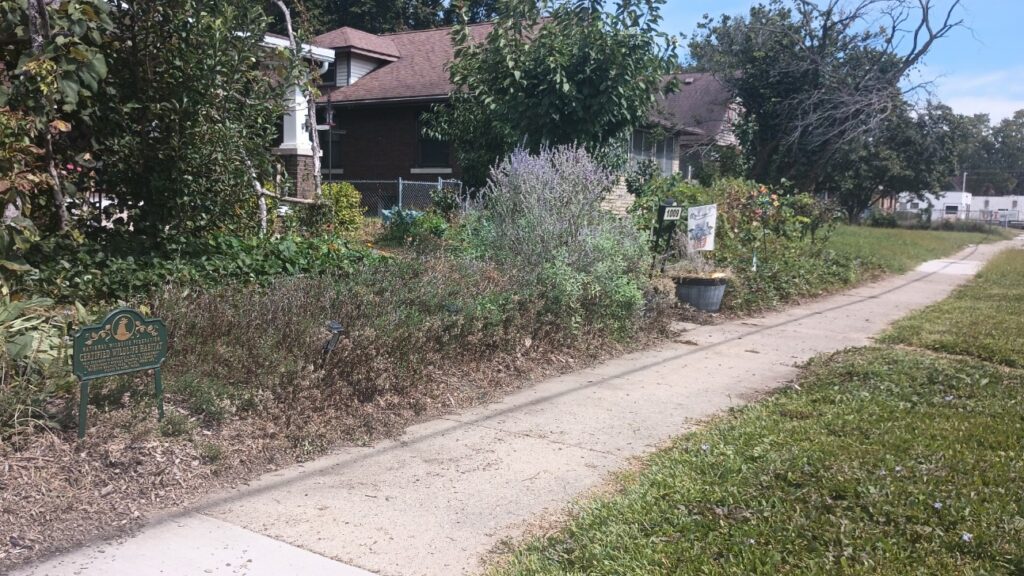
Victory! Danville Confirms Award-Winning Garden Complies with Local Code After IJ Letter

Private Property
Federal Court Orders DHS to Stop Detaining People with Valid Identification and Halts Warrantless Construction Site Raids

Private Property