Dunedin Punishes Man who Stood Up Against Outrageous Fees
After adjusting his fees downward, Dunedin is attempting to make Jim Ficken pay its legal fees
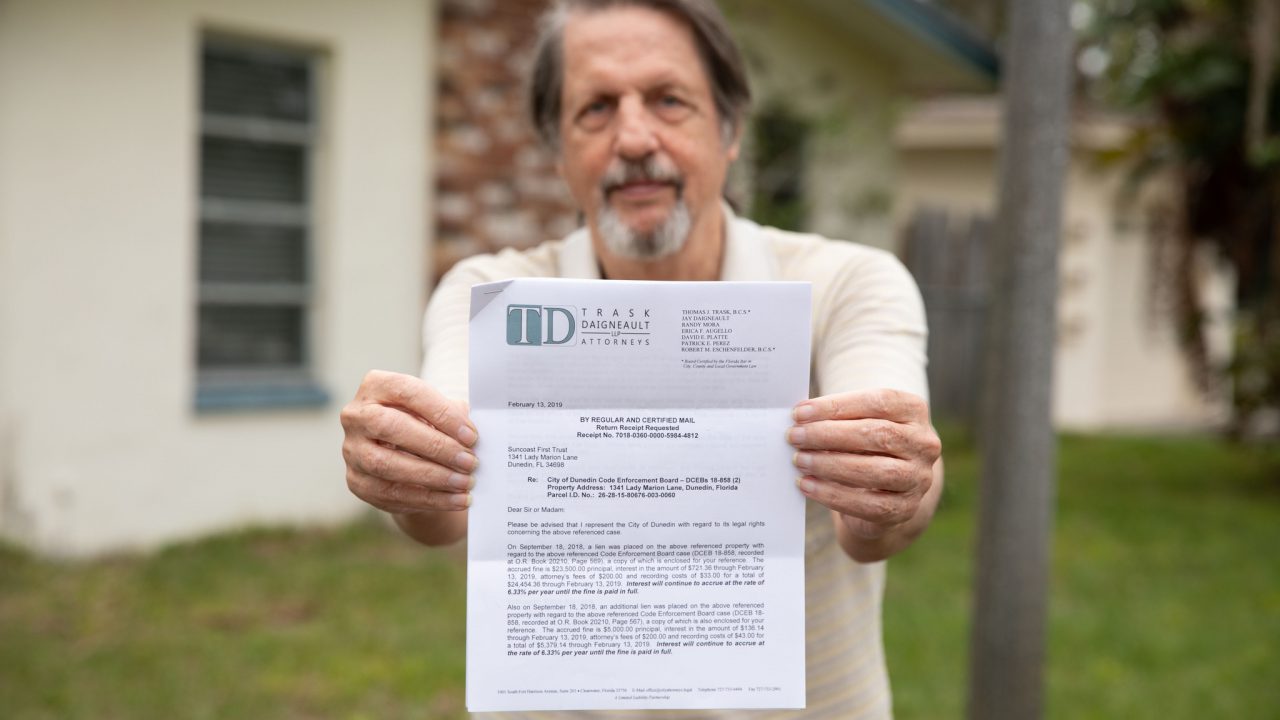
DUNEDIN, Fla.—Jim Ficken, a Dunedin, Florida, homeowner who unsuccessfully battled City Hall after he incurred over $30,000 in fines for tall grass, is now facing more financial penalties from city officials, this time in the form of an illegal demand that he pay the city’s legal bills.
It all began when Jim filed his lawsuit in 2020. The city suddenly found itself in the national spotlight after investigative reporting revealed that numerous homeowners were facing ruinous fines (and foreclosure) for trivial violations. In response, the city revamped its controversial code-enforcement apparatus to ensure that trivial violations, like Jim’s, did not skyrocket into the tens of thousands of dollars or more.
Jim’s lawsuit might never have been filed if the city’s fine-reduction process existed at the time. And after Jim’s appeal was rejected by the 11th U.S. Circuit Court of Appeals, he availed himself of that process. Jim “succeeded” in securing an 80% reduction, which is what the city typically provides for small violations that were quickly corrected. But after giving Jim the reduction it owed him, the city tacked on an additional $25,000—apparently to cover its legal bills in Jim’s case against the city. On Friday, Jim submitted his formal appeal to the city’s demand, arguing that the city’s attempt to recover legal fees as part of an “administrative fee” is contrary to federal law and United States Supreme Court precedent.
“Jim had a legitimate case against the City of Dunedin for its imposition of excessive fines against him, and because of that, there was no basis to go after him for legal fees—either in the underlying proceeding or some other city-created process like a fine reduction,” said IJ Senior Attorney Ari Bargil, who represented Jim in his case against the city. “That he was ultimately unsuccessful in his case does not matter. Federal law is extremely clear on this point. Cities cannot invent creative ways to seek legal fees or punish citizens who stand up for their rights, regardless of whether they are ultimately successful in court.”
Federal statutes provide the exclusive basis for seeking attorneys’ fees in a civil rights action. And the Supreme Court has said that state and local governments cannot override those laws by crafting their own bases for legal fees. The city’s attempt to stick Jim with the bill for his legitimate lawsuit challenging the city’s steep fines is thus improper.
More on Private Property

Private Property
Swim Instructor Appeals to South Carolina Supreme Court After Columbia Banned Her Backyard Business

Private Property
Animal Sanctuary’s Fight to Stay Open Ends After North Carolina Supreme Court Rejects Appeal

Private Property