
Albuquerque Bookstore Owner Partners with IJ to Defend Right to Provide Safe, Private Shelter
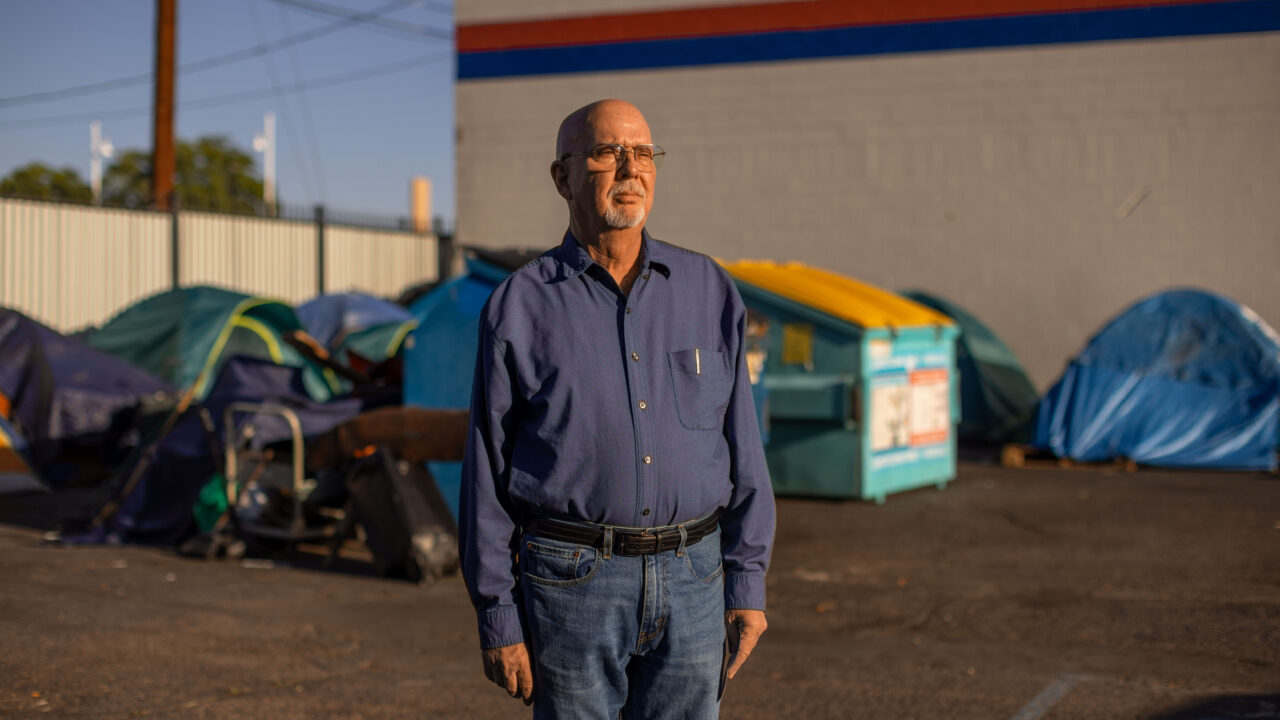
ALBUQUERQUE, N.M.—Tomorrow, the Institute for Justice (IJ) will announce that it has partnered with Gil Kerley, owner of Quirky Used Books & More, to defend his constitutional right to use his private property to offer a safe, clean place for a small number of unhoused neighbors to sleep at night. The lawsuit, which will have its first hearing on August 14, comes as the city of Albuquerque debates amendments to its Safe Outdoor Spaces (SOS) program that would make it significantly easier for private property owners, faith groups, and nonprofits to provide lawful, dignified overnight shelter. If passed, the reforms would position Albuquerque as a national leader in partnering with landowners to address its homelessness crisis.
“Albuquerque faces a choice,” said Diana Simpson, a senior attorney at the Institute for Justice. “The city can pass commonsense reforms and become a model for how private charities and property owners can help people in need or it can continue down the road of fines and red tape that punish people like Gil for doing the right thing—burdens that are not only counterproductive but, as our lawsuit explains, fundamentally unconstitutional.”
Press Conference Details
What: Press conference announcing lawsuit prior to Land Use, Planning, and Zoning committee hearing to debate Safe Outdoor Space amendments.
When: August 13, 2025 at 4:15 P.M. MDT
Where: 1 Civic Plz NW, Albuquerque, NM 87102
Court Hearing Details
What: Hearing on Motion for Certification
When: August 14, 2025 at 9:00 A.M. MDT
Where: Zoom – https://us02web.zoom.us/j/86420782079?pwd=ZHByNlc4VGtlUXNqemdqeGZ2UXluQT09
Gil’s case began during the pandemic, when he allowed a handful of people to pitch tents in the back of his bookstore’s parking lot after seeing that many had nowhere safe to sleep. He kept the area orderly, provided access to restrooms and water, and did his best to ensure that neighbors were not burdened by noise or trash. But after code enforcement tickets and a hearing earlier this year, the city ordered him to remove the tents and fined him $1,500. He appealed that order, asserting that the city’s enforcement violates the inherent rights and due process guarantees of the New Mexico and U.S. Constitutions, which protect the longstanding right of owners to use their property peacefully to help those in need.
Gil’s case arises against the backdrop of the city’s homelessness crisis. Recent data shows that roughly 2,740 people experience homelessness in Albuquerque, with nearly half unsheltered. Though the city has some shelters, they often fill or are otherwise insufficient for the city’s homeless population. Following last year’s U.S. Supreme Court decision in Grants Pass v. Johnson, Albuquerque enacted a public camping ordinance criminalizing camping on public land. That makes lawful private options even more important.
The fines against Gil arrive as the city is openly acknowledging that its current SOS rules are too onerous to work. For three years, the program has been bogged down by costly requirements—like 24/7 staffing and extensive service mandates—that almost no small operator can meet. City officials have proposed reforms that would streamline requirements so that more private, well-run spaces can open across the city.
If the city adopts those changes, Gil will promptly seek a permit to bring his operations into compliance and to continue providing a safe, stable place for a limited number of people to sleep. His lawsuit will proceed until he’s authorized to have a few tents on his property for those in need, whether by permit or court order in his pending appeal.
“This case is about an unavoidable human reality: sleep,” said IJ Litigation Fellow An Altik. “Albuquerque has made it illegal to sleep in public—and now it’s punishing people for allowing sleeping on private property as well. Criminalizing sleep in both public and private places creates an impossible situation when shelters are full and people simply need a safe place to rest.”
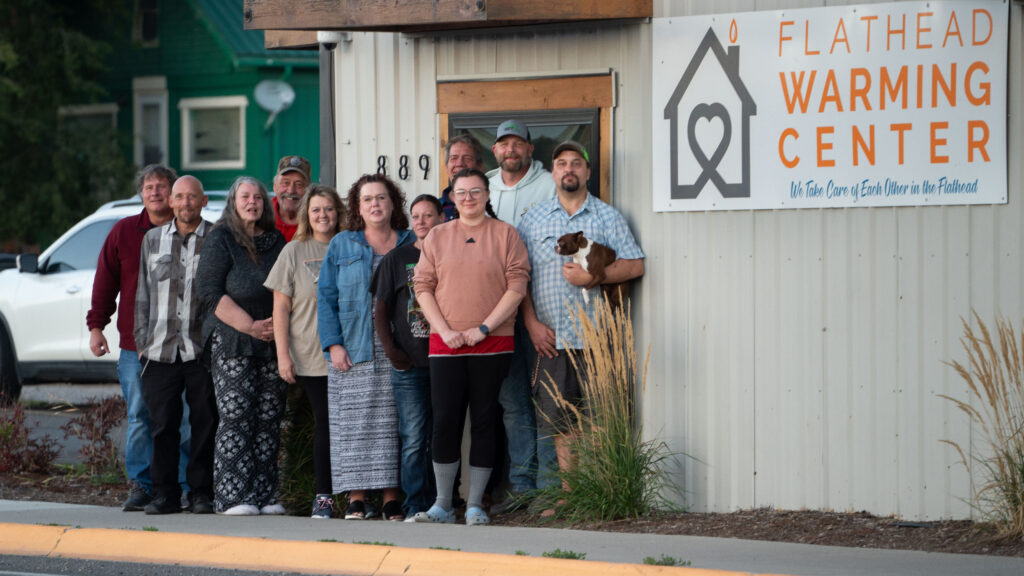
Kerley’s case is part of IJ’s Zoning Justice Project, a nationwide initiative to protect the freedom to use private property to solve public problems. As part of this work, IJ has stood up for warming centers, shelters, and other community-led solutions when red tape or zoning rules blocked compassionate, lawful help.
More on Zoning Justice Project
Zoning Justice Project
Across the Country, Zoning Abuse Hurts Those in Need and Lakeland, Florida, Is Up Next

Zoning Justice Project
Victory: Kansas City Places Moratorium on Mandatory Parking Minimum Rules

Zoning Justice Project