
Massachusetts Families File Appeal to Supreme Court Challenging Unconstitutional Conditions for Special Education Services
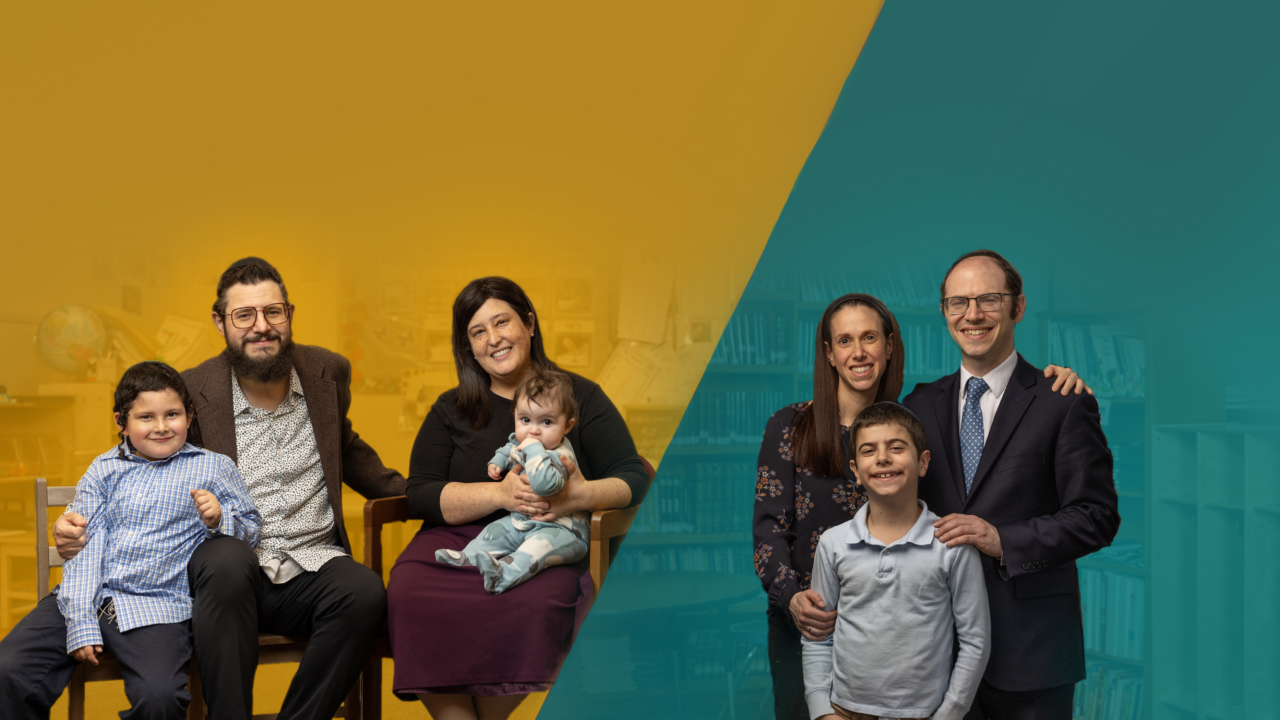
BOSTON—Can the government withhold aid from children because of their parents’ exercise of a constitutional right? That’s the question two Massachusetts families are asking the United States Supreme Court to address in a newly filed petition for certiorari. A Massachusetts regulation forces parents to choose between sending their children to schools they have a constitutional right to select and receiving special education services that state law guarantees them. Ariella and David Hellman, and Josh Harrison and Miriam Segura-Harrison—parents of children with special needs—are fighting to change that. They are joining the Institute for Justice (IJ) and the Pioneer New England Legal Foundation (PNELF) in asking the U.S. Supreme Court to hear their case.
“Massachusetts law entitles every child with special needs to services on equal terms—not just the ones enrolled in schools the state prefers,” said IJ Educational Choice Attorney David Hodges. “The state made that guarantee. It’s time to honor it.”
Massachusetts law guarantees special education services to all children with special needs, regardless of whether they attend public or private school. What that means is disabled children must be educated alongside nondisabled children to the maximum extent appropriate, and they may only be removed from their regular educational environment when their disability demands it. Yet even though Massachusetts law entitles all children to the services on equal terms, a state regulation makes access to services practically unobtainable for children whose parents have exercised their constitutional right to send them to private school. The regulation bars these children—and only these children—from receiving services in their classes, their schools, and even on their school’s premises. And the only reason why they are subject to this condition is because their parents have exercised their fundamental, constitutional right to enroll them in a private school. IJ argues that this is an unconstitutional condition under the landmark U.S. Supreme Court case Pierce v. Society of Sisters, which held that parents have a fundamental constitutional right to direct the education and upbringing of their children, which includes the right to send their children to a private school.
But in March, the 1st U.S. Circuit Court of Appeals upheld a lower court ruling that dismissed a lawsuit brought by the families. Although the court acknowledged that the Hellmans and Harrisons had properly alleged that the regulation infringed their constitutional right to send their children to a private school, it also held that this right is not entitled to the same level of protection as other constitutional rights. In the First Circuit’s view, the state is perfectly free to impose “indirect burdens and penalties” on any parent who exercises that right by cutting the parent’s children off from otherwise available education benefits. IJ’s petition argues that just as the government may not condition the availability of public benefits on the surrender of other constitutional rights, so too may it not force parents to forgo their right to select private education for their children in order to obtain special education benefits to which their children are statutorily entitled.
“Helping children is a priority we can all get behind, no matter which school they choose to attend,” said Ariella Hellman. “The state made us and our children a promise. The Supreme Court should ensure they follow through.”
“Children who need help deserve it, no matter where they learn,” said IJ Senior Attorney Renée Flaherty. “To essentially take away these services simply because their parents exercised a fundamental, constitutional right is both harmful and unconstitutional.”
# # #
IJ is the nation’s leading law firm defending educational choice programs and expanding educational access and opportunity. Since its founding in 1991, IJ has successfully represented parents in educational choice lawsuits in numerous state supreme courts, intermediate courts of appeal, and trial courts, as well as four times at the U.S. Supreme Court (Zelman v. Simmons-Harris, Arizona Christian School Tuition Organization v. Winn, Espinoza v. Montana Department of Revenue, Carson v. Makin). IJ is currently defending choice programs in Ohio, Tennessee, Utah, Alaska, and Wyoming alongside EdChoice Legal Advocates as part of the Partnership for Educational Choice.
PNELF, which serves as consulting counsel in this case, is a nonpartisan, public interest law firm that defends and promotes educational options, accountable government and economic opportunity across the Northeast. PNELF achieves its mission through legal research, amicus briefs, and litigation.
To arrange interviews on this subject, journalists may contact Phillip Suderman, IJ’s Communications Project Manager, at [email protected] or (850) 376-4110. More information on the case is available at: https://ij.org/case/massachusetts-school-choice/
More News

4th Amendment Project
Institute for Justice Calls Flock Safety’s Proposed Reforms ‘Window Dressing’
4th Amendment Project
Public Interest Law Firm Releases New Page Tracking License Plate Reader Abuse Nationwide

Private Property