A Caveman Goes to Court

Abigail Van Buren, the beloved author known as Dear Abby, is warmly remembered for her commonsense advice to readers on marriage, parenting and other relationship issues. But was her column also a 50-year crime spree?
North Carolina would seem to think so. The North Carolina Board of Dietetics/Nutrition sent diet blogger Steve Cooksey a 19-page print-out of his online writings—including his Dear Abby-style advice column—with red-pen comments in the margin indicating what Steve may and may not say without a government-issued dietitian’s license. In a nutshell, North Carolina contends that Steve can make general statements like “avocados are good for you,” but that it is a crime to offer personal advice such as “you should eat avocados” in response to a reader question.
Steve has been thrust into this censorship dispute because he decided to share his dramatic transformation to help others. Three years ago, Steve was an obese couch potato. He was rushed to the hospital in a near-diabetic coma and diagnosed with Type II diabetes, a result of his sedentary lifestyle and junk-food diet. Doctors told him he would be on diabetes drugs forever.
Steve decided to move forward by leaping back in time. He adopted the paleolithic diet of our Stone Age ancestors—meats, eggs, fish, veggies and nuts, but no sugars or agricultural starches. Steve lost 80 pounds, stopped needing insulin and other medications, and brought his diabetes under control. He became an advocate for paleolithic eating, and started a blog (www.diabetes-warrior.net).
Steve’s blog became so popular that he started a life-coaching service to give the same advice for a small fee that he had been sharing for free. He also started a free Dear Abby-style advice column, where he would respond to questions sent in by readers. Unfortunately for Steve, it wasn’t long before the state board found out about what he was saying.
The state board became involved after Steve attended a diabetes seminar at a local church. The head of diabetic services at a local hospital advocated the standard high-carb/low-fat diet for diabetics. Steve expressed his opinion that a paleolithic diet is best. Others expressed different views. A few days later, someone filed a complaint with the state board alleging that Steve was offering dietary advice without a license.
It is hard to believe that an American can come under investigation for offering an opinion at a church seminar and have his personal writings examined by a bureaucratic censor wielding a red pen, but that is just what happened. These peculiar circumstances are the result of uncertainty over what occurs when free speech collides with occupational licensing.
For years, the U.S. Supreme Court has said that protecting speech is a central value—perhaps the core value—of the Constitution. The Supreme Court has also said that there are virtually no constitutional limits on the government’s power to restrict liberty through occupational-licensing laws. These principles are in direct conflict in Steve’s case. And North Carolina is not applying the law simply to Steve’s paid life-coaching service, but also to his free advice, whether in his advice column or in private emails and conversations.
As more and more occupations consist primarily of speech, and as the Internet makes it easier for laypeople to share valuable advice, there are going to be more conflicts between free speech and occupational licensing. There is an urgent need for the Supreme Court to settle this debate because over the past generation the intermediate courts of appeal have become less protective of speech in the form of advice even as the Supreme Court has grown more protective both of speech in general and advice in particular.
That is why Steve teamed up with the Institute for Justice and in May of this year brought suit against the North Carolina Board of Dietetics/Nutrition. Steve’s case is on the cutting-edge of free-speech law and aimed squarely at the gap between Supreme Court decisions and those of the lower courts.
We plan to keep Steve and millions of others free to discuss what food to buy at the grocery store, keep the Internet free as a forum for sharing advice and ideas, and keep the cuffs off of Jeanne Phillips, who took over the Dear Abby column from her mom. We’d hate to see her get arrested for practicing psychology without a license.
Jeff Rowes is an IJ senior attorney.

Also in this Issue

Liberty & Law
IJ Wins a Life-Saving Victory
Liberty & Law
IJ Fights CON Job in Virginia

Liberty & Law
IJ Leads the Fight to Protect Occupational Speech from Government Restrictions

Liberty & Law
Charity Navigator Ranks IJ Among Most Elite

Liberty & Law
Nevada Should Blush Over Makeup Artist Licensing Law
Liberty & Law
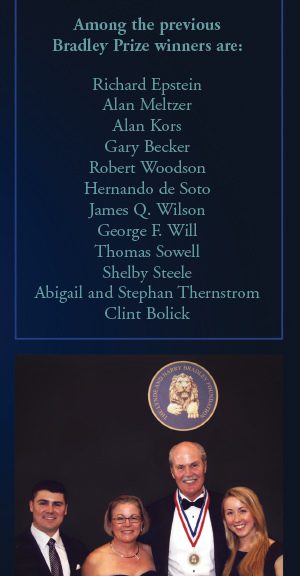
Chip Mellor: 2012 Bradley Prize Winner
Liberty & Law
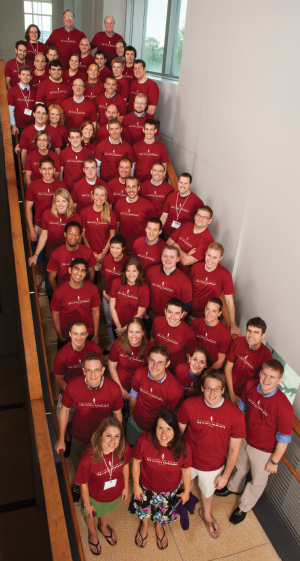
IJ’s Annual Law Student Conference Trains the Next Generation Of Public Interest Advocates

Liberty & Law
Monks and Their Supporters Head to Federal Appeals Court in Support of Economic Liberty
Subscribe to get Liberty & Law magazine direct to your mailbox!
Sign up to receive IJ's bimonthly magazine, Liberty & Law, along with breaking news updates about the Institute for Justice's fight to protect the rights of all Americans.