Law Enforcement Veteran Asks Supreme Court to Protect His Rights—and the Constitution
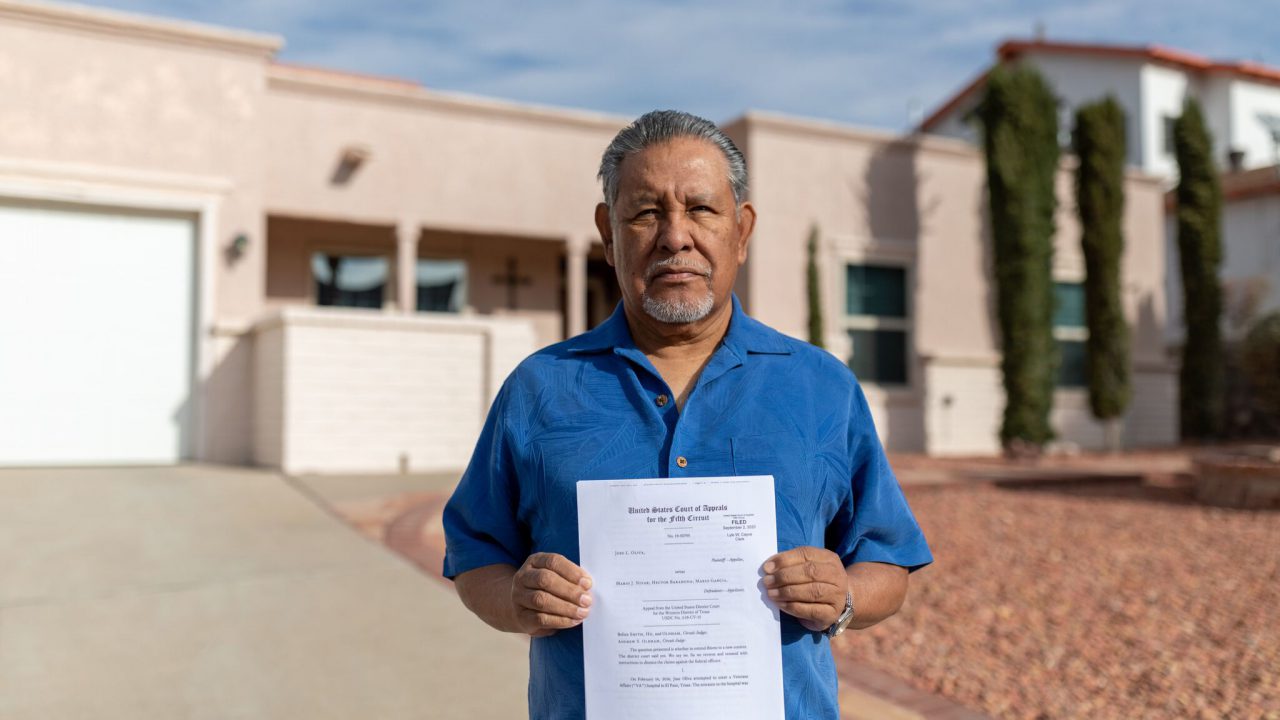
Jose Oliva, a 75-year-old Vietnam veteran and grandfather, spent his life serving his country. After years in the U.S. Air Force, he worked for more than three decades in law enforcement at federal, state, and local agencies. Now, he is fighting for his constitutional rights—and the rights of others like him—after he was violently assaulted by federal police officers.
In February 2016, Jose was on his way to a routine dentist appointment at the El Paso, Texas, Veterans Affairs hospital. As he had many times before, Jose got in line to go through security. After he placed his belongings into a plastic bin, a security guard and federal officer asked Jose for his ID. Jose pointed to the bin, where he’d just put the ID. Irritated by a perceived lack of deference, the officer came around the conveyer belt. When a second officer gestured for Jose to proceed to the metal detector, the first attacked Jose from behind, placing him in a chokehold and slamming him to the ground. Two other officers piled on.
The attack left Jose with shoulder damage that two surgeries could not repair and destroyed the gold watch he’d received in honor of his service in law enforcement. It also outraged his sense of justice. So he sued the officers for violating his constitutional rights. Predictably, they claimed qualified immunity—the court-created legal doctrine that shields most government officials from accountability in court, no matter how egregious their actions. Jose prevailed at the district court, but the officers appealed, and the 5th U.S. Circuit Court of Appeals held that, even if qualified immunity does not apply, Jose still can’t sue because his assailants happened to be federal, rather than state, officers.
The 5th Circuit is wrong. Federal officers are not above the U.S. Constitution, and Jose must be able to hold them accountable for violating his rights. If allowed to stand, this ruling means any federal official in Texas, Mississippi, and Louisiana—the three states within the 5th Circuit’s jurisdiction—is free from all meaningful constitutional oversight.
IJ is not about to let that happen. In January, we joined Jose in asking the U.S. Supreme Court to overturn the 5th Circuit’s ruling. This case is part of IJ’s Project on Immunity and Accountability and our fight to ensure that all Americans have a way to hold government officials accountable in court when their constitutional rights are violated.
To learn more about what qualified immunity, watch our video here.
Anya Bidwell and Patrick Jaicomo are IJ attorneys.
Also in this Issue
Liberty & Law
The Case for Abolishing Civil Forfeiture Has Never Been Stronger—or More Urgent
Liberty & Law
IJ’s Civil Forfeiture Work Seizes the Spotlight—and Secures Change

Liberty & Law
License to Zoom? As Therapy Moves Online, IJ Fights for the Right to Talk Across State Lines
Liberty & Law
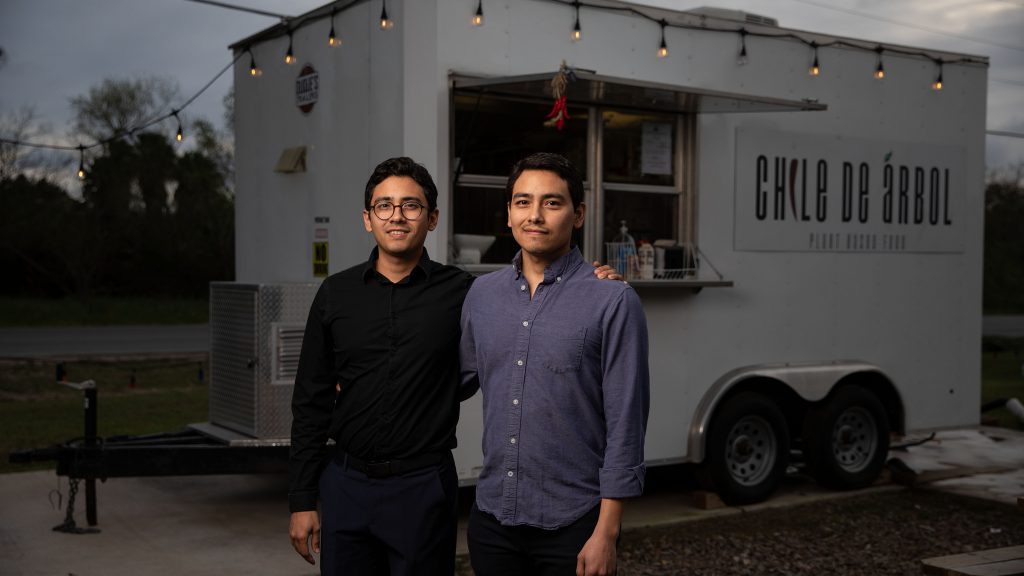
Victory for Food Trucks in South Texas
Liberty & Law
Shelter in Place — If Zoning Officials Let You
Liberty & Law
Big Apple Raises Revenue by Leveling Property Owners

Liberty & Law
IJ Soars In to Fight Outrageous Fines and Fees in Eagle, Wisconsin

Liberty & Law
Long-Awaited Victory for Virtual Veterinarian
Liberty & Law
Giving Smarter With Your IRA

Liberty & Law
Windy City Entrepreneurs Aim for the Sky in South Side Pitch Competition
Subscribe to get Liberty & Law magazine direct to your mailbox!
Sign up to receive IJ's bimonthly magazine, Liberty & Law, along with breaking news updates about the Institute for Justice's fight to protect the rights of all Americans.