New Case Challenges Unreliable Warrants

Warrants used to be a bulwark against government abuse. But since the 1960s, this bulwark has been steadily eroding. As a recent study concluded, it takes a magistrate under three minutes to read through a warrant application—and 98% of those applications get approved.
The consequences of such a light judicial touch can be devastating. Breonna Taylor was killed during a raid on her home pursuant to a warrant application that purported to rely on testimony of a postal inspector who claimed that Breonna was receiving packages from a drug dealer. The postal inspector was never examined by the magistrate who signed the warrant and later denied ever making such claims.
The burden on police officers is so low that they don’t even need to identify anything suspicious taking place to receive a warrant. In 2016, IJ’s civil forfeiture client Eh Wah was subjected to an arrest warrant based on a five-sentence affidavit that described a traffic stop with no suspicious activity. Still, a judge signed the warrant for felony possession of drug proceeds. As longtime readers of this publication may remember, those “drug proceeds” were money that Eh Wah’s band had raised to fund an orphanage in Thailand.
Watch the case video!
Despite all the evidence that warrants have become a shortcut to constitutional violations, the justice system continues to operate as though they are a meaningful check that absolves officials of all wrongdoing.
In Gonzalez v. Trevino, for example, the government based most of its U.S. Supreme Court argument on the fact that a magistrate signed a warrant for Sylvia Gonzalez’s arrest—conveniently ignoring evidence that the mayor jailed Sylvia not because she “misplaced a government document” but because she was critical of local officials. And the Supreme Court itself has stated that where a constitutional violation “involves a search or seizure pursuant to a warrant, the fact that a neutral magistrate has issued a warrant is the clearest indication that the officers acted in an objectively reasonable manner.”
In other words, once a warrant exists—no matter how anemic—courts can treat it as proof that all related government behavior was legitimate, undermining other constitutional claims.
As things stand now, the Court’s faith in the warrant process is misplaced. But warrants can still become a meaningful check if the courts enforce the text of the Fourth Amendment in its entirety.
The Fourth Amendment says that “no warrants shall issue, but [1] upon probable cause, [2] supported by oath or affirmation, and [3] particularly describing the place to be searched, and the persons or things to be seized.” While courts at least nod to the first and third requirements, a Supreme Court case called Jones v. United States allows judges to completely ignore the second one.
“Oath or affirmation” means that before signing a warrant, a magistrate must personally examine a witness to the crime and have them swear to the truth of what they are saying.
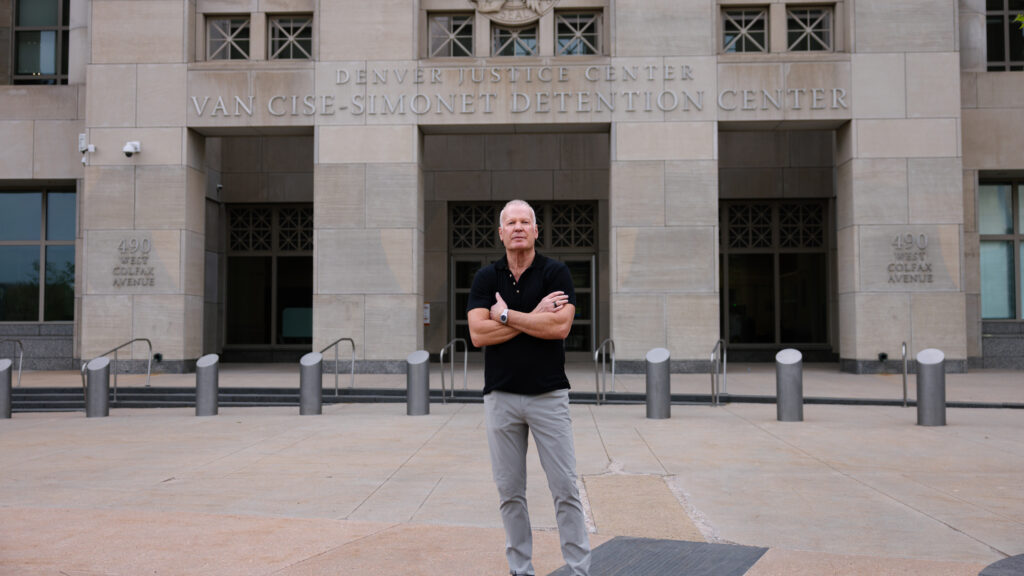
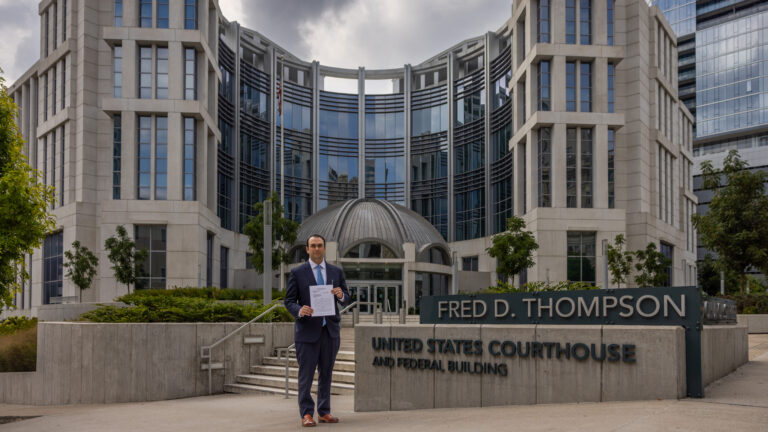
That’s where one of IJ’s newest cases, Mendenhall v. Denver, comes in. Michael Mendenhall was arrested and his office searched after a dodgy witness told a police officer that Michael threatened to hit him with a baseball bat. Michael insists he simply asked the man—who was sitting on Michael’s stoop and yelling at passing women—to leave. Yet the warrant was based on a game of telephone: A police officer relayed the story to a detective, who relayed the story to a judge, who then signed the warrant. Michael spent a night in jail before the charges were dropped.
The oath and affirmation requirement is not difficult to satisfy, especially in modern times. A magistrate can take witness testimony confidentially in chambers (or by Zoom), seal the individual’s testimony, conceal their identity through a pseudonym, or redact compromising information as needed. In Michael’s case, a signed affidavit would have sufficed.
We are now in the 10th Circuit after taking the case over from the University of Denver’s Civil Rights Clinic. Because Jones allows magistrates to issue warrants based on unsubstantiated hearsay, we know this issue can only be resolved by the high court. But we are hoping some members of the panel will urge the Supreme Court to overturn the precedent and require courts to again enforce the text of the Fourth Amendment’s warrant requirement.
Until now, IJ’s Fourth Amendment cases have focused on whether the government needs a warrant to conduct certain invasions of your property or privacy. But even when officials are required to get one, a warrant is no longer the robust line of defense against overreaching government that the Founders intended. So this case is the next step in a logical progression: The government must get a warrant—and that warrant must be more than a rubber stamp.
Anya Bidwell is an IJ senior attorney and co-leader of IJ’s Project on Immunity and Accountability.
Related Case

4th Amendment Project | Immunity and Accountability | Private Property
Federal lawsuit seeks to revive the Fourth Amendment's requirements for warrants
The Fourth Amendment requires that warrants be supported by "oath or affirmation" but that requirement means almost nothing today because of a decades old Supreme Court decision. Michael Mendenhall's case could revive the original meaning…
Also in this issue






Subscribe to get Liberty & Law magazine direct to your mailbox!
Sign up to receive IJ's bimonthly magazine, Liberty & Law, along with breaking news updates about the Institute for Justice's fight to protect the rights of all Americans.