Dallas Bar Owner Asks Supreme Court to Let His Suit Over Bogus Prosecution Move Forward
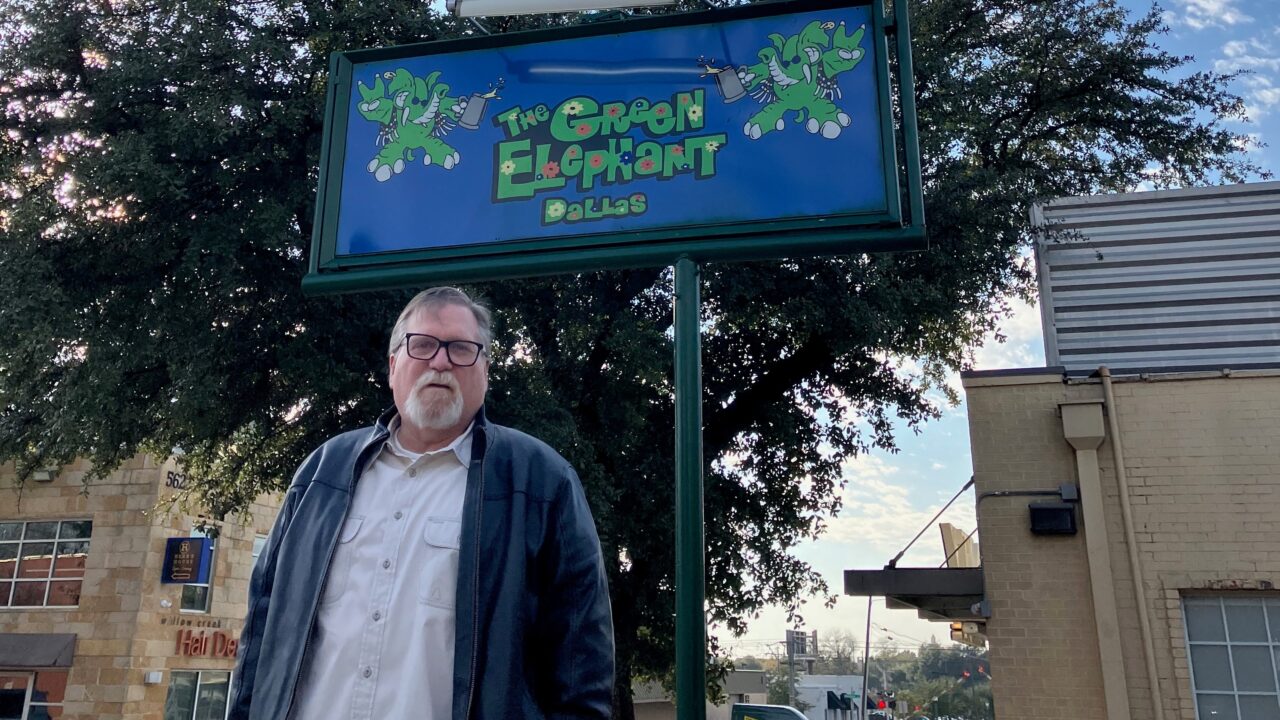
WASHINGTON—In a moment practically made for TV, the prosecution’s case fell apart on the stand. A Dallas detective admitted that he had been paid for years by a business that wanted Shannon McKinnon’s bar closed and had used evidence from that business to charge McKinnon with a felony. Dallas prosecutors dropped the case acknowledging that the detective’s tainted investigation was improper.
McKinnon, owner of the Green Elephant in Northeast Dallas, is asking the U.S. Supreme Court to let his lawsuit against former Dallas Police Department Detective Genaro Hernandez move forward. Hernandez’s self-motivated investigation put McKinnon through the peril of felony prosecution. McKinnon’s suit, being led at the Supreme Court stage by the Institute for Justice (IJ), alleges that Hernandez’s action violated the U.S. Constitution and a state-law tort for false arrest.
“The Institute for Justice is working with Shannon to get his life back on track,” said IJ Senior Attorney Anya Bidwell. “The district judge told Hernandez that he can’t take advantage of a state-law immunity at this stage, and Hernandez immediately appealed. The case should have moved to discovery instead of being stopped in its tracks because Hernandez lost on one of his defenses.”
McKinnon has owned the Green Elephant for decades, building it into a premier venue for underground and dance music. While it’s been loved by generations of SMU students, a real estate business located across the street doesn’t feel the same way. In August 2019, it saw an opportunity to get rid of its neighbor.
In August 2019, there were shots fired outside the bar. After the shooting, McKinnon called the police and recovered some shell casings that were promptly turned over. Neither McKinnon nor any of his employees were involved in the incident.
Detective Hernandez was not assigned to investigate the incident but had been tipped off to it by the real estate business, for which he had worked a side job for years. Hiding this obvious conflict, Hernandez first tried to get the relevant detectives to press charges against McKinnon and one of his security employees, who was also in law enforcement.
When that failed, Hernandez went directly to prosecutors. Using false statements, he convinced them to press felony charges for “tampering with evidence.” After years in court, McKinnon’s co-defendant’s case came to trial in 2022. That, again, was where Hernandez was forced to reveal that he had a financial relationship with the real estate company going back years.
“A Dallas detective tried to railroad me for a crime I didn’t commit,” said Shannon McKinnon. “Officers who violate constitutional rights should not get protection from courts. I hope the U.S. Supreme Court takes up my case and lets my fight for justice continue.”
False arrest and malicious prosecution violate the U.S. Constitution and Texas law, but Hernandez moved to dismiss McKinnon’s suit claiming immunity. When the district court denied immunity to the detective on the Texas law claims, he appealed to the 5th U.S. Circuit Court of Appeals. The Institute for Justice asks the Supreme Court to let McKinnon’s case move forward at the district court before appeals are considered.
“When officers with hidden, personal motivations target people for criminal investigation, they violate the Constitution,” said IJ Attorney John Korevec. “Lower courts have regularly let government officials delay and duck having to defend their conduct. The Supreme Court should stop lower courts from creating new hurdles for people to jump through when seeking justice.”
Through its Project on Immunity and Accountability IJ seeks to ensure that every right guaranteed by the Constitution has a remedy in an American court. IJ is currently helping people seeking accountability after being improperly detained in California, Arizona, and Florida. IJ recently settled a case that made its way to the Supreme Court and was on behalf of Texas councilwoman falsely arrested by her political opponents.
More on Immunity and Accountability

Immunity and Accountability
Attorney for Wrongly Detained US Citizen Responds to Homeland Security Post
Immunity and Accountability
Victory: Broward County Officers Not Entitled to Qualified Immunity for Arresting Innocent Woman in Case of Mistaken Identity
Immunity and Accountability
