Illinois Town Threatens to Destroy Award-Winning Garden, Violating State’s Right-to-Garden Law
The city of Danville is threatening to uproot an award-winning neighborhood garden, in violation of state law.
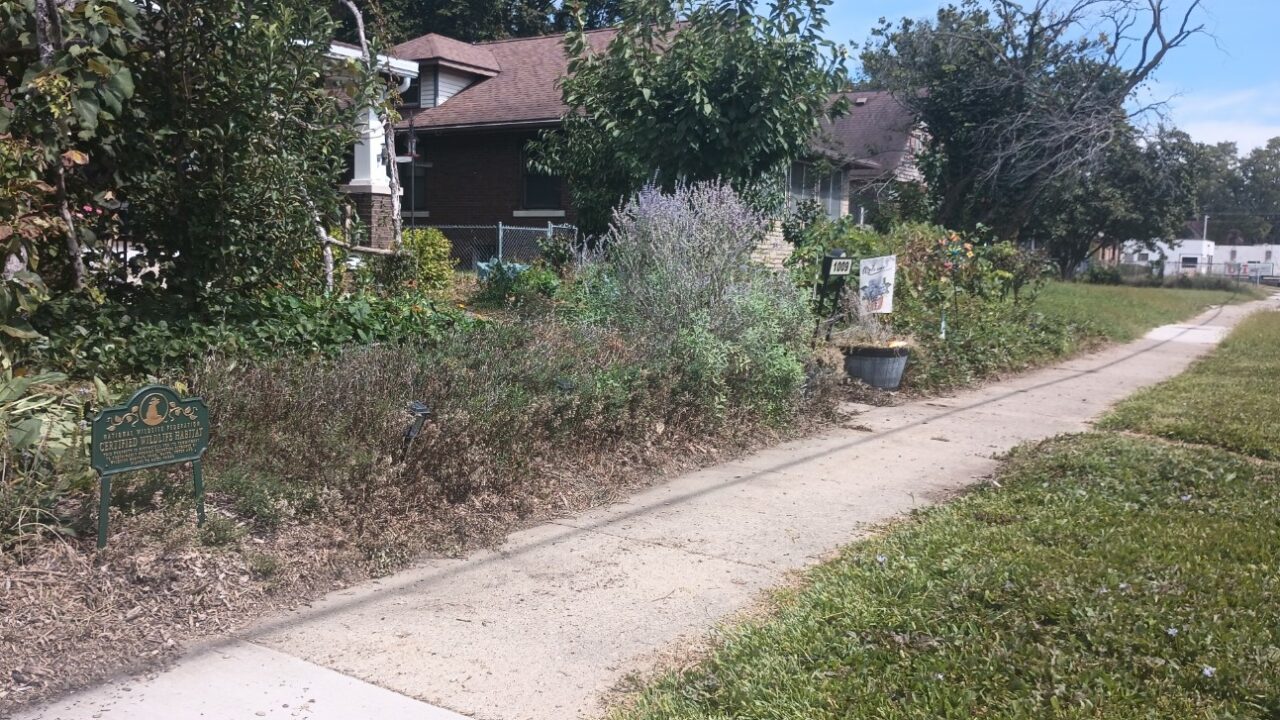
ARLINGTON, Va.—Jeremy Boggess and Kristi Church turned a hardscrabble corner of Danville, Illinois, into something the city itself honored: a working garden that feeds neighbors, shelters pollinators, and hearkens back to the cottage gardens that used to fill the lots of the historic homes in their community. In 2024, the garden won the Old Town Preservation Legacy Award, honoring their efforts to restore and preserve a piece of the neighborhood’s history.
Now Danville says it has to go. City officials have cited the property under an ordinance targeting overgrown vegetation and warn that if Jeremy and Kristi don’t tear out the garden themselves, city crews will enter their property, cut it down for them, and stick them with the bill.
That threat is illegal. In 2021, Illinois enacted the Vegetable Garden Protection Act (H.B. 633), which guarantees that “any person may cultivate vegetable gardens on their own property” and bars local governments from adopting ordinances that specifically regulate vegetable gardens. The Act defines a vegetable garden broadly, covering vegetables, herbs, fruits, flowers, pollinator plants, leafy greens, and other edible plants. Jeremy and Kristi’s property is full of all of them.
“Illinois law could not be clearer: residents have the right to grow food and plant native flowers and pollinator plants on their own land,” said Benjamin Marsh, an IJ Litigation Fellow and co-author of a letter IJ sent to Danville officials. “Danville doesn’t get to sidestep that guarantee by relabeling a garden as a weed problem.”
The garden is designed to give something back to a neighborhood that needs it. Danville is a high-poverty community, and Kristi’s property sits in a light-industrial pocket a half-block from a Salvation Army. Watching pedestrians walk past on their way to get food, Jeremy and Kristi planted a “snacking sidewalk”—strawberries, blueberries, and grapes that anyone is free to pick. Neighbors have thanked them for the fruit, and especially for the mustard and collard greens.
For Jeremy, a former educator who is disabled, the garden is also a restorative. After two traumatic brain injuries from rear-end collisions, he found that time in the garden eased his migraines and helped him stay active despite a limp from cerebral palsy.
“We forget how much nature contributes to our physical and mental health until it isn’t there,” he said. “We’re on a busy road with trains nearby, but the sound of crickets and cicadas and toads makes everything feel calm.” He estimates the plantings have cut surface wind speeds in the front yard by nearly half.
The back of the property is an ongoing native reforestation project, with hundreds of native plantings tended weekly to pull invasive species, clear blown-in litter, and cut back overgrowth.
No neighbor has complained to the family. The people who stop to talk say they love it.
In addition to being explicitly prohibited under state law, the village’s destruction of Jeremy and Kristi’s garden would violate their state and federal constitutional guarantees of substantive due process and equal protection and would amount to an unlawful taking.
IJ sent a nearly identical letter to the village of Millstadt, Illinois, earlier this year after officials there threatened to bulldoze botany instructor Laura Schaefer’s garden. Millstadt backed down immediately.
Illinois is one of only a handful of states that protect residential gardens by statute. In the past, IJ stood up for the rights of gardeners in Florida to grow their own food and developed the model legislation used to draft Illinois’ Garden Act as well as a similar law in Arkansas.
More on Private Property
Private Property
Federal Court Orders DHS to Stop Detaining People with Valid Identification and Halts Warrantless Construction Site Raids

Private Property
Clayton County Grants License to Salon Entrepreneur Who Brought Constitutional Lawsuit

Private Property
Connecticut Couple Files Appeal with Zoning Board After Town Doubles Down in Hiking Dispute
Related Letters and Statements
Danville, IL Garden Defense
Danville, Illinois