Illinois Village Orders Woman to Destroy Garden, a Violation of the State’s Right-to-Garden Law
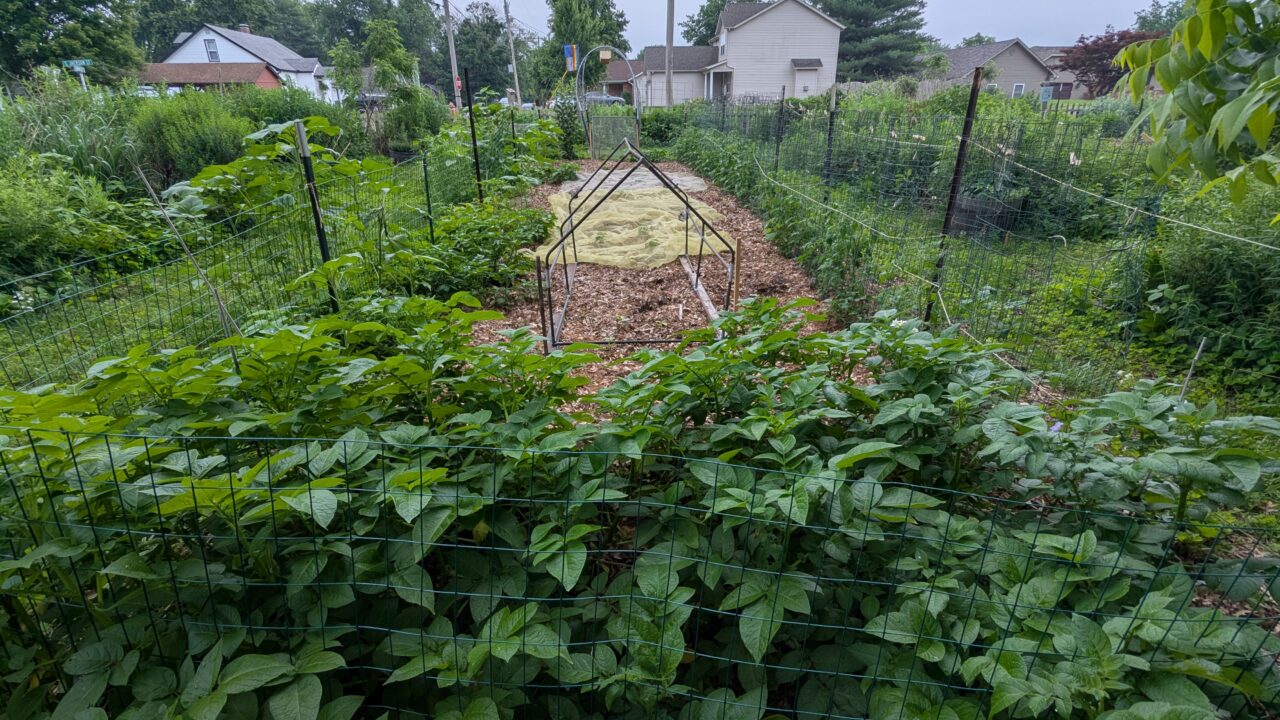
ARLINGTON, Va.—Laura Schaefer knows the difference between a weed and a desirable plant. A botany instructor with decades of experience, Laura has spent more than five years transforming a set of vacant lots into a flourishing oasis of native plants and vegetables in the village of Millstadt, Illinois. So she was shocked to receive a bright red citation in May claiming her garden violated a village ordinance against “high grass and weeds.”
That shock turned to horror when a village official told her that if she didn’t tear up her garden in seven days, village employees would go on her property and do it themselves, charging her $40 an hour to destroy everything she had built.
But Laura’s garden, like every vegetable garden in the state of Illinois, is protected by a 2021 law, the Illinois Vegetable Garden Protection Act (HB 633). This week, the Institute for Justice (IJ) wrote a letter to the village of Millstadt explaining that any enforcement action would be illegal under that law, and urging them to let Laura’s garden grow.
“As a Stage IV cancer survivor, my garden means everything to me—my health, my food, and my peace,” Laura said. “The thought of losing it is absolutely devastating.”
In 2019, Laura and her husband purchased a village block containing a home and several vacant lots. Over the years she has transformed the property into a flourishing showcase of native plants and heirloom vegetables—many of them species the state of Illinois actively encourages gardeners to plant. Neatly mowed paths connect the numerous subsections of the 0.5-acre plot, which Laura has mapped and meticulously documented.
“Illinois residents have the right to plant native species and grow their own food, for their own consumption, on their own property,” said IJ Attorney Ari Bargil, who co-authored the letter. “Laura Schaefer did exactly that. Thankfully, her garden is protected by both Illinois state law and the constitution. The government does not have the power to enter onto Laura’s private property, without a hearing, to destroy a harmless garden.”
In 2021, the Illinois General Assembly passed the Garden Act to “encourage and protect the sustainable cultivation of fresh produce at all levels of production, including on residential property.” It defines “vegetable garden” as “any plot of ground or elevated soil bed on residential property where vegetables, herbs, fruits, flowers, pollinator plants, leafy greens, or other edible plants are cultivated.”
The Act also prohibits municipalities from establishing regulations or ordinances that “specifically regulate vegetable gardens.” Millstadt’s municipal code, however, prohibits “rank vegetable growth over one-foot in height,” directly contravening the plain text of the Garden Act.
“As a botanist I know all of the plants in my garden,” Laura said. “They are neither ‘rank,’ nor are they ‘weeds.’” Laura regularly gives tours of her garden, and photos of it were included in a pamphlet distributed by the Illinois chapter of the Sierra Club.
In addition to being prohibited under state law, the village’s threat to destroy Laura’s garden violates due process guarantees and protections against illegal taking under the state and federal constitutions.
“Both the U.S. Constitution and the Illinois Constitution protect people from this kind of heavy-handed enforcement,” said Benjamin Marsh, an IJ litigation fellow and co-author of the letter. “The Constitution demands actual process, but what Millstadt has offered Laura is not even a pretense of it.”
IJ is a public interest law firm with a mission of protecting individuals’ constitutional rights. In the past, IJ has stood up for the rights of gardeners in Florida to grow their own food and developed the model legislation used to draft Illinois’ Garden Act.
More on Private Property

Private Property
Brentwood’s Arguments About its Blight Designation and Eminent Domain Don’t Hold Up

Private Property
Clayton County Grants License to Salon Entrepreneur Who Brought Constitutional Lawsuit

Private Property
Connecticut Couple Files Appeal with Zoning Board After Town Doubles Down in Hiking Dispute
Related Letters and Statements
Millstadt, IL Garden Defense
Millstadt, Illinois