Long Island Electrician Injured at Airport Teams Up with Public Interest Law Firm to Hold the Government Accountable
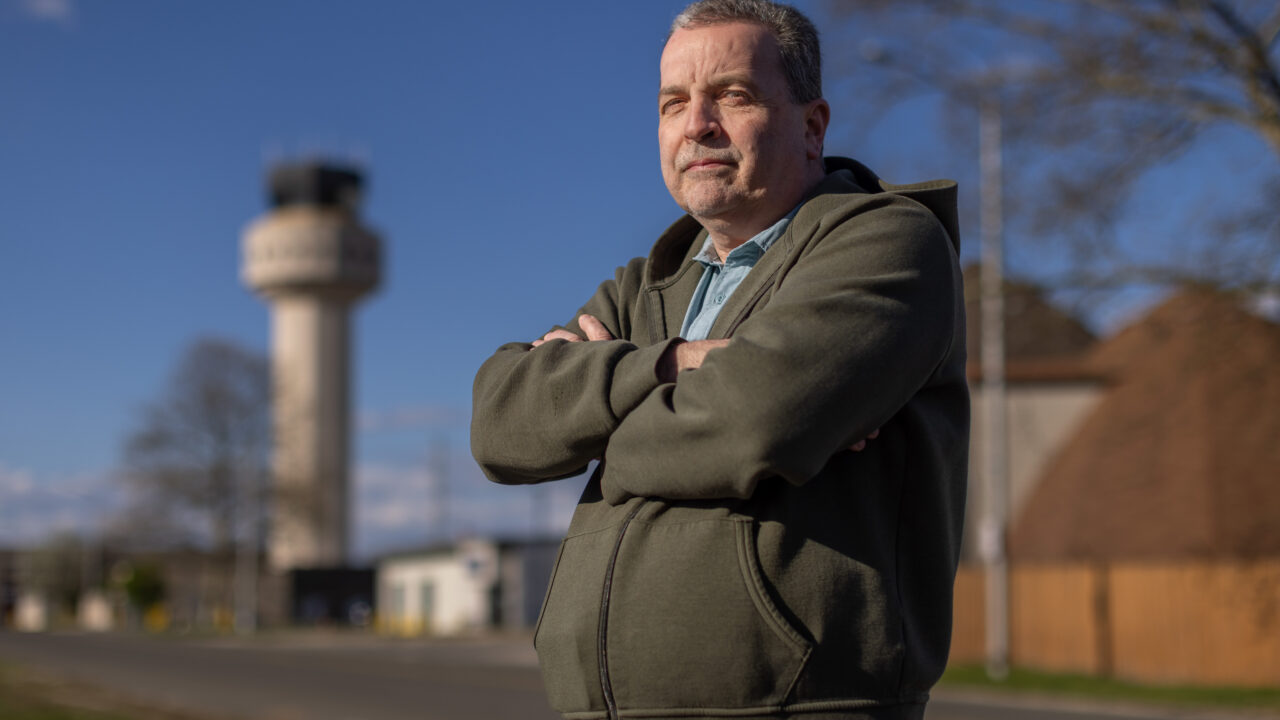
NEW YORK—In his first week on the job at Long Island MacArthur Airport, Gino Fiermonte was shocked and seriously injured. According to Gino, the accident happened because a Federal Aviation Administration (FAA) employee turned the power back on while he and his colleague were repairing a sign on the runway, causing an explosion.
Although nearly five years have passed since the accident, Gino still has not had his day in court. Today, Gino teamed up with the Institute for Justice (IJ), a nonprofit, public interest law firm, to clear away the obstacle that has prevented him from presenting his evidence to the judge—a Catch-22 manufactured by the government.
“The government shouldn’t be able to game the system to get worthy court cases thrown out,” said IJ Attorney Dylan Moore. “What is happening to Gino’s case is sadly typical: Plaintiffs file straightforward claims, and the government uses every trick in the book to prevent courts from considering the facts.”
As required by the Federal Tort Claims Act (FTCA), Gino filed a claim form with the FAA before he filed a lawsuit in state court, which named the FAA employee as a defendant. Months after the suit was filed, the government certified that the employee was working within the scope of her employment.
Under the FTCA, this certification transformed Gino’s lawsuit against the individual employee into a lawsuit against the United States. From there, the government could dispute whether the employee’s actions caused Gino’s injuries. If so, it must make Gino whole. And if not, the government should not be on the hook.
But rather than defend the FAA employee’s actions, the government tried to have Gino’s case thrown out. To do so, it claimed that Gino should have filed his lawsuit against the United States to begin with—even though Gino had no way to know that the government was the proper defendant until after the United States issued the employment certification.
Originally, the district court let the government get away with it, dismissing Gino’s FTCA lawsuit. Thankfully, the 2nd U.S. Circuit Court of Appeals revived Gino’s suit and asked the lower court to reconsider. Now IJ is taking Gino’s case pro bono to ensure that he can have his day in court.
“I was seriously injured and my coworker died, but what I thought would be a straightforward lawsuit has become a yearslong slog with no end in sight,” said Gino. “I’m grateful that the Institute for Justice is helping clear the way, and I hope that my success will make it easier for others to get justice.”
Gino is not alone in struggling to navigate the minefield of FTCA litigation.
Last year, IJ won a unanimous Supreme Court victory on behalf of an Atlanta family—the Martins—whose home was wrongly raided by an FBI SWAT team in 2017. Although the Martins’ case (like Gino’s) was revived, they may face years of additional legal battles before a judge finally considers whether their rights were violated.
“Thanks to a variety of protections and immunities, it’s already quite difficult to hold the government and its agents accountable” said IJ Senior Attorney Patrick Jaicomo. “Requiring victims of government harm to be mind-readers should not be added to the burden.”
Gino’s case is part of IJ’s Project on Immunity and Accountability, which seeks to hold government officials accountable for constitutional violations. IJ is using the FTCA to vindicate the rights of an Arizona grandmother who was wrongfully arrested by U.S. Marshals and another Atlanta-area woman whose home was mistakenly raided by a SWAT team on the hunt for a man who was already in jail.
More on Private Property

Private Property
Court Says Marion County Must Clearly State What Crime Was Committed Before Taking Money Seized at FedEx Hub

Private Property
Supreme Court Declines to Hear Los Angeles Business Owner’s Case Seeking Compensation After SWAT Team Destroyed Shop

Private Property
