National Law Firm Stands with Pinal County Education Entrepreneur to Protect Microschool
CONTACT: Phillip Suderman, [email protected], (850) 376-4110
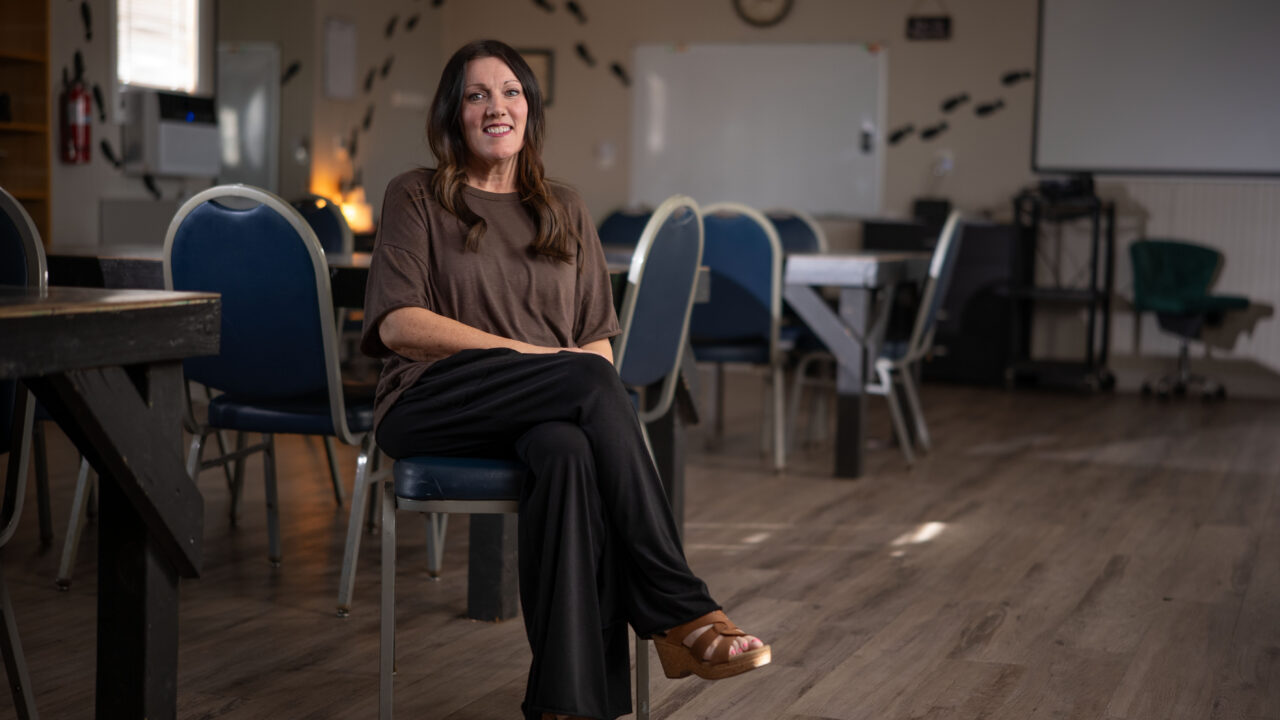
PINAL COUNTY, Ariz.—Karli Kemper has spent her professional life teaching. She has decades of experience working in public, charter, and private schools. She specializes in the arts and teaching children how to express themselves and grow through music and theater. Three years ago, Karli founded State 48, a microschool catering to children with special needs. It serves about 35 children from 2nd to 12th grade. But Pinal County wants to shut her down because itdoesn’t think Karli’s school is a “school.” That’s why the Institute for Justice (IJ), a national leader in defending educational opportunity, has partnered with Karli todefend her and her right to operate.
Karli’s home and school are on a 1.5-acre lot in rural Pinal County. The County’s zoning code allows for a “school” in this rural area. That’s why Karli’s family bought the land and spent the time building out school buildings and a small play area to accommodate her students.
But after State 48 opened, the County decided that sometimes a school isn’t a school. The County told Karli that “school” as used in the code meant only public or charter schools. Without a category specifically for microschools, the County deemed State 48 a private school, and under the County’s interpretation of its code, a private school is not a “school.” If Karli turned State 48 into a charter school, the County explained, she could continue operating, but otherwise, Karli would have to try to get a burdensome and discretionary “Special Use Permit” or shut down State 48 immediately.
“Pinal County has said the area Karli and State 48 operate in can have schools. And a school is a school no matter if it’s private or public,” said IJ Managing Attorney Paul Avelar. “Pinal County cannot stop Karli from operating or prevent parents who want their kids to learn from her and the staff based on an arbitrary definition that fails common sense.”
So far, the County isn’t budging. If Karli wants to know if her school is a “school,” she has to go through the County’s Board of Adjustment review process just to determine what the zoning code allows her to do on her own property. Meanwhile, the County’s Planning and Zoning Commission has voted to recommend denying her Special Use Permit.
It would make no sense if “school” did not include private microschools. But even if that is what Pinal County’s zoning code actually means, it violates the Arizona Constitution because zoning rules can’t be arbitrary, irrational, and discriminatory. It also violates the U.S. Constitution, which the U.S. Supreme Court has repeatedly held protects the right of parents to choose private alternatives to the public schools, as well as the right of private educators to provide their services to parents who want them. Yet, here, Pinal County is deliberately penalizing private alternatives to public education with its discriminatory interpretation of the term “school.”
“The Government shouldn’t be able to arbitrarily shut me down just because they want to redefine what a school is,” said Karli. “If it functions like a school, works like a school, and teaches like a school, it’s a school. State 48 is a school.”
The Institute for Justice is a nonprofit, public-interest law firm that litigates nationwide to vindicate individual liberties. Since IJ’s founding in 1991, it has been the nation’s leading courtroom defender of the right of parents to direct their children’s education, of private property rights, and of economic liberty: the right to earn an honest living free from irrational and arbitrary government regulation. Those three missions intersect in this case. The case is also a part of IJ’s Education Entrepreneurship Project, which is committed to protecting the right of entrepreneurs to offer meaningful alternatives to the public school system and of parents to access those alternatives for their children. By dismantling barriers to innovation, flexibility, and creativity in private education, it ensures that every parent can find the education that will best meet her child’s unique, individual needs.
# # #To arrange interviews on this subject, journalists may contact Phillip Suderman, IJ’s Communications Project Manager, at [email protected] or (850) 376-4110. More information on the case is available at: https://ij.org/case/pinal-county-microschools/
More on Education Entrepreneurship
Education Entrepreneurship
Texas City Hits Learning Pod with Cease-and-Desist in Violation of State Law
Education Entrepreneurship
Innovative Hybrid Homeschool Program Fights for the Right to Teach After Being Wrongly Labeled as a Childcare Center
Education Entrepreneurship
