Economic Liberty
Small Business Challenges Oklahoma’s Unconstitutional Restrictions on Casket Sales
Small business challenges Oklahoma’s unconstitutional restrictions on casket sales
- Case Name
- Caskets of Honor v. Oklahoma Funeral Board, et al.
- Status
- Active Cases
- Location
- Calvin, Oklahoma
- Date Filed
- February 4, 2026
The Case
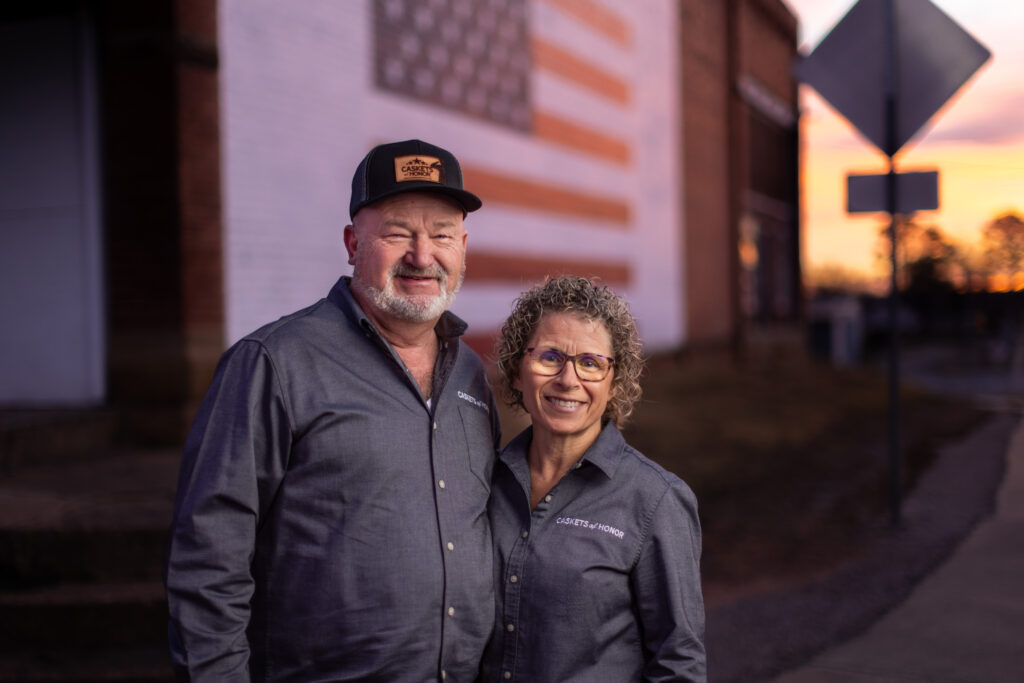
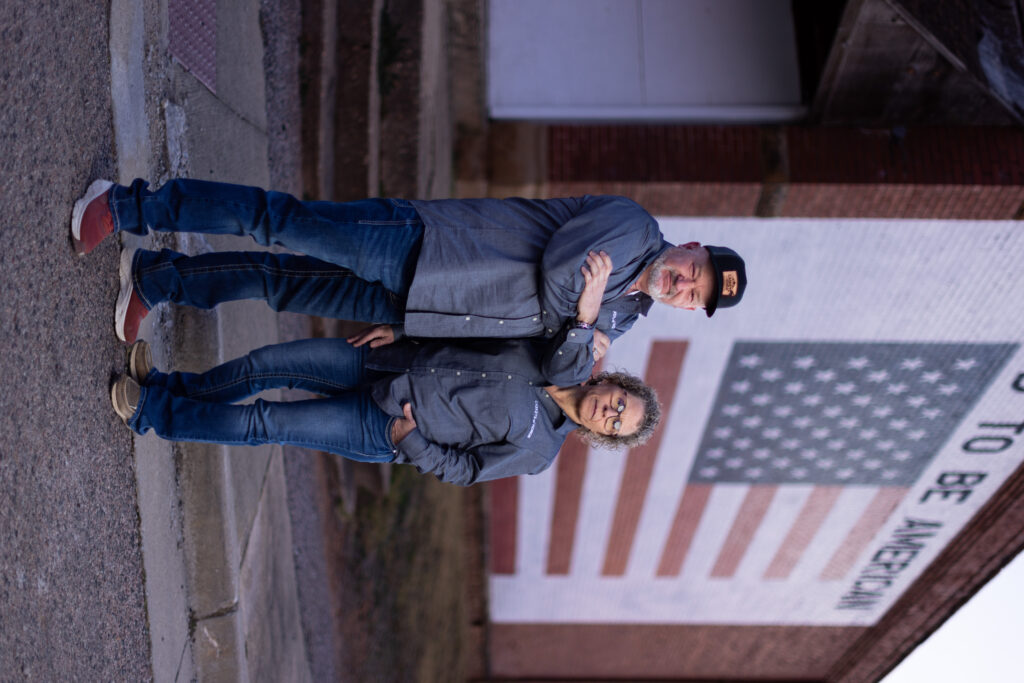
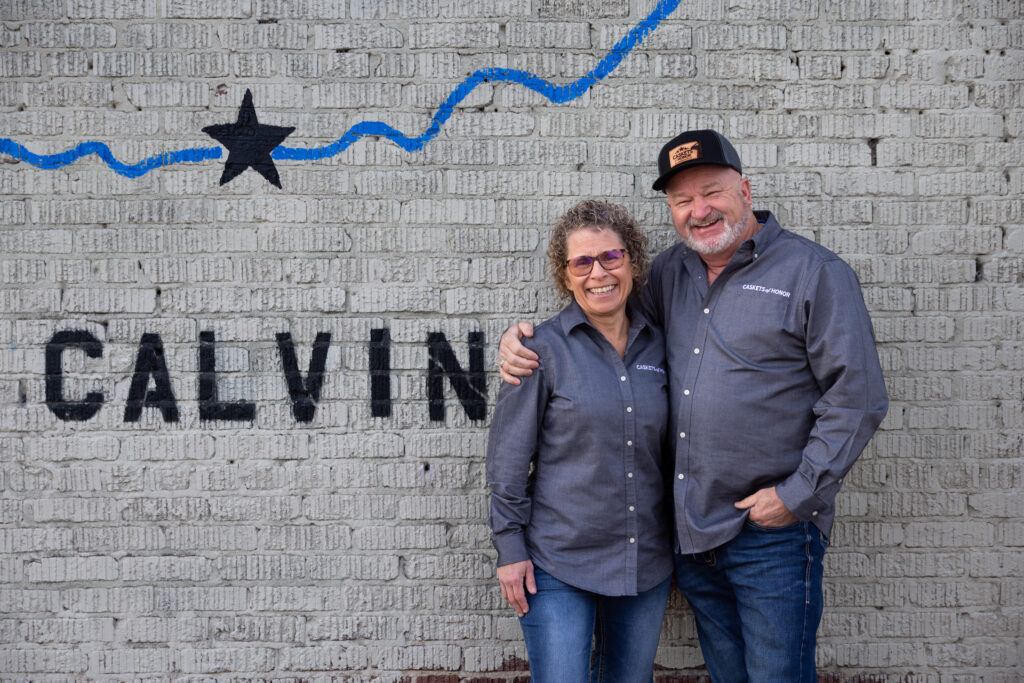
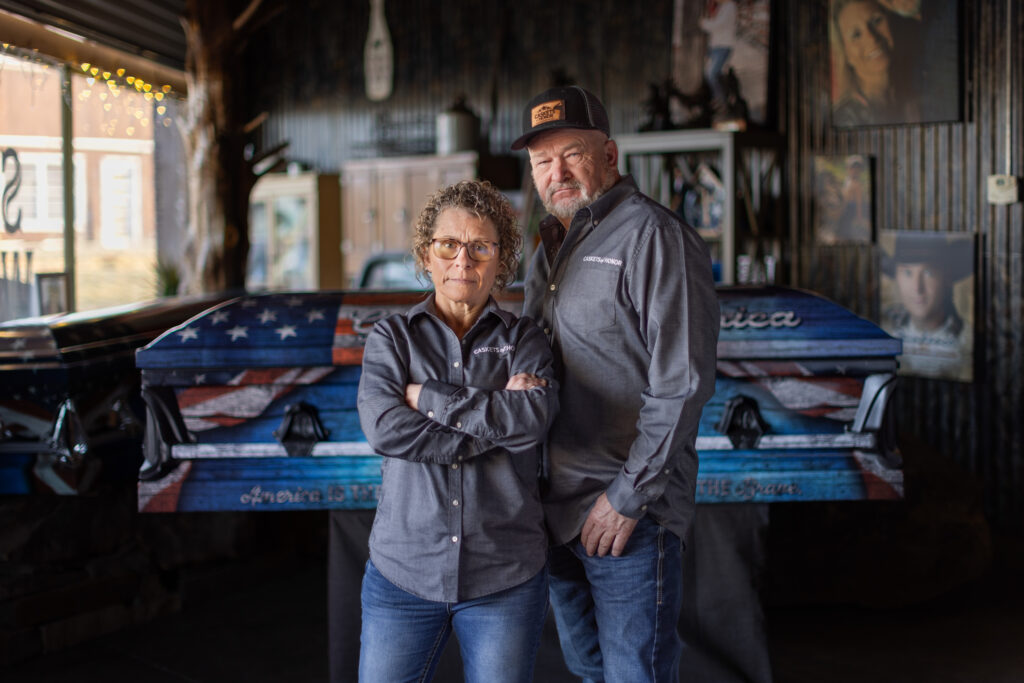
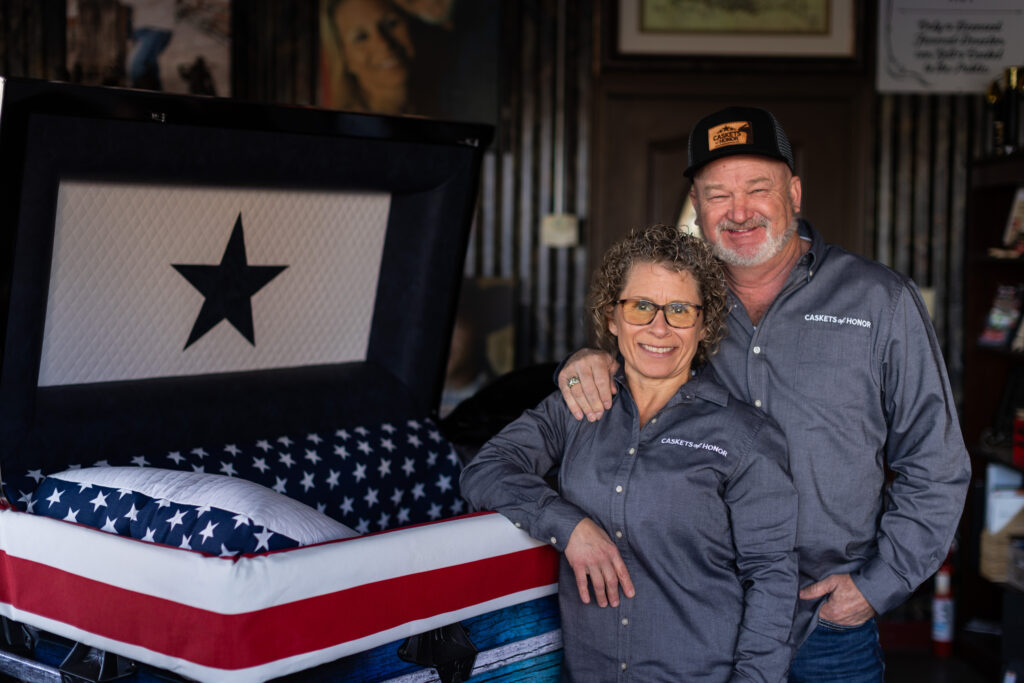
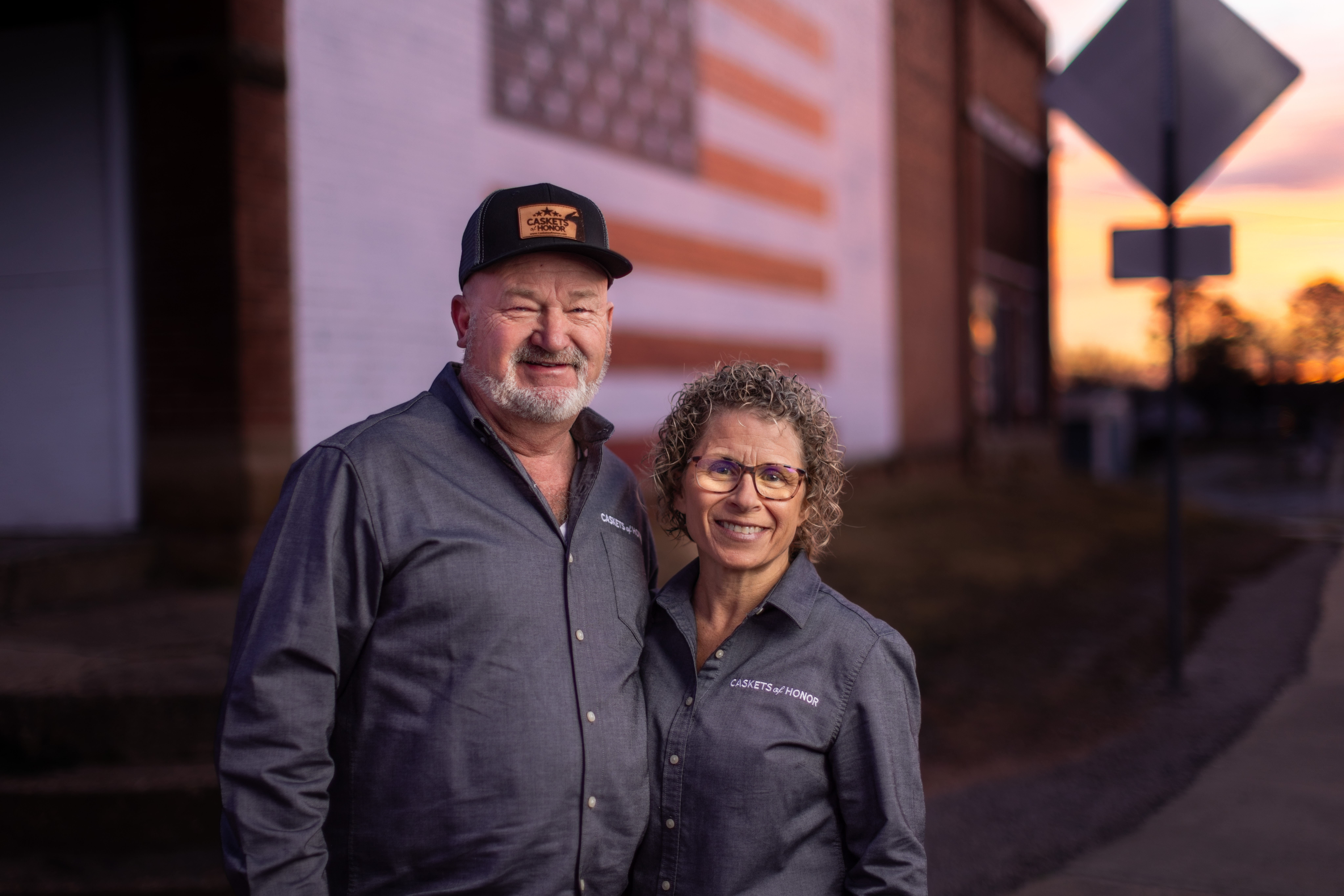
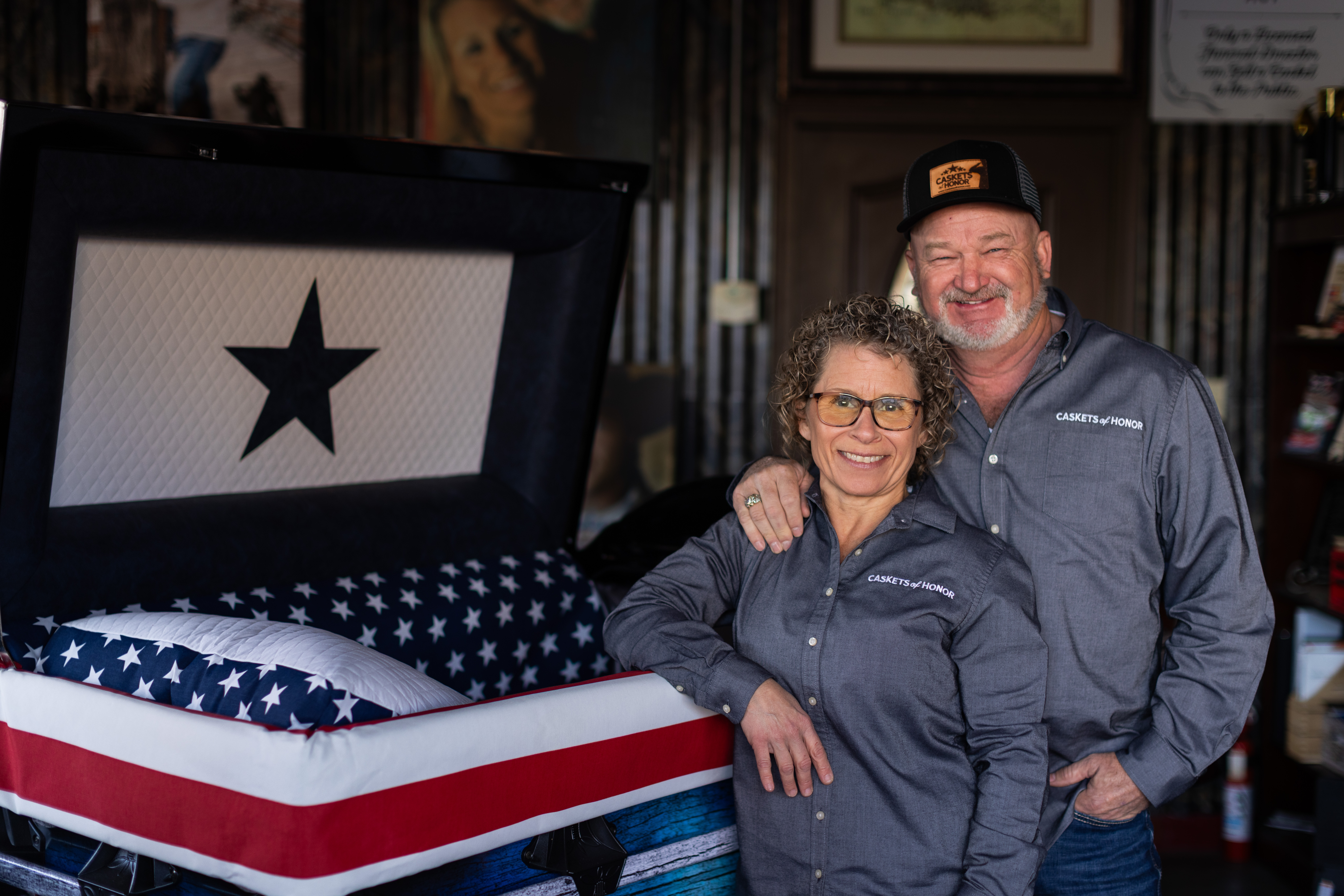
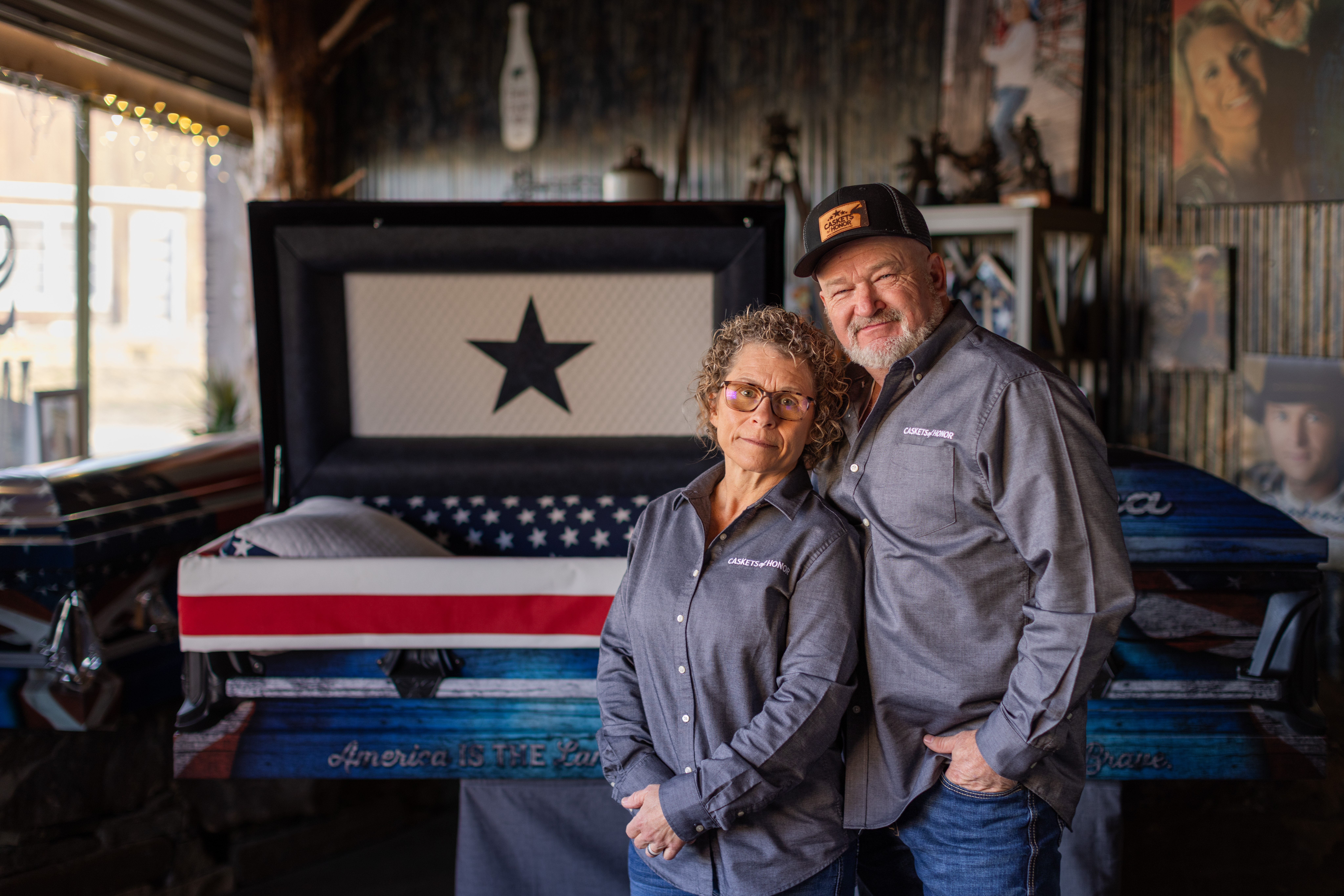
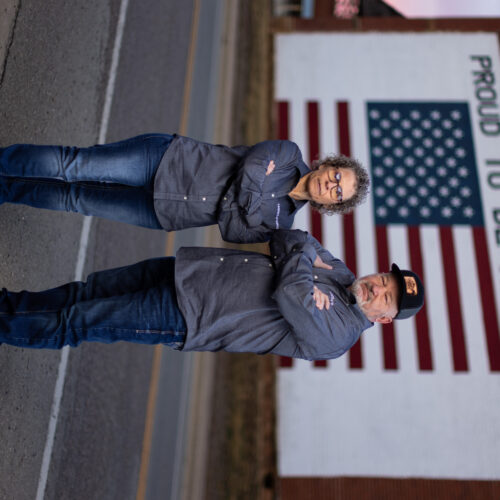
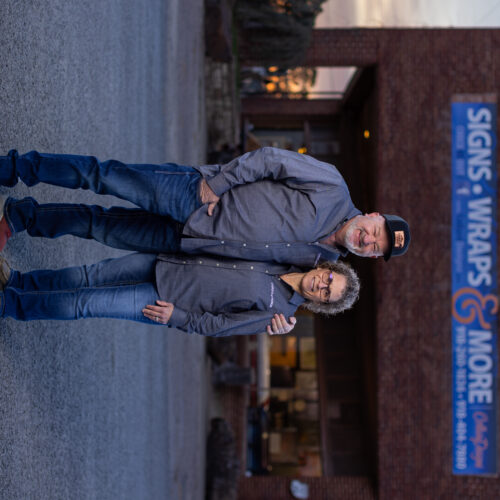
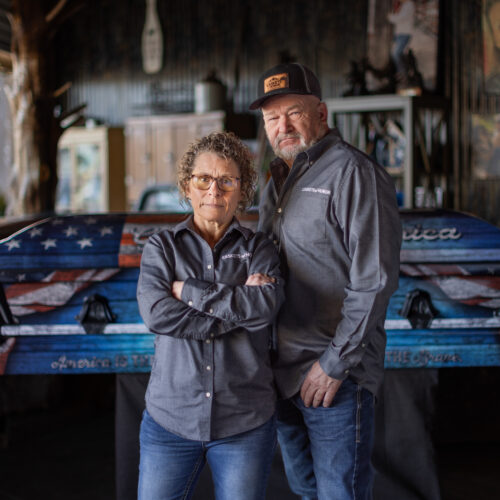
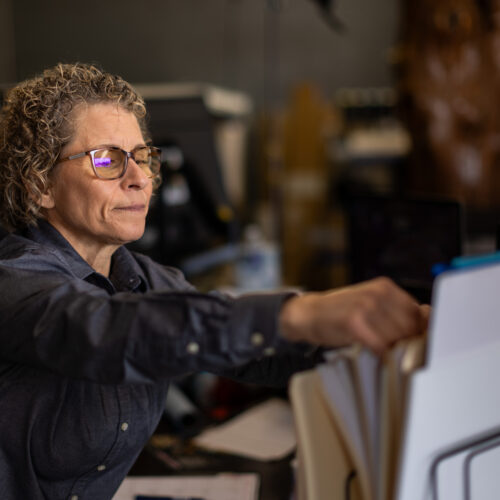
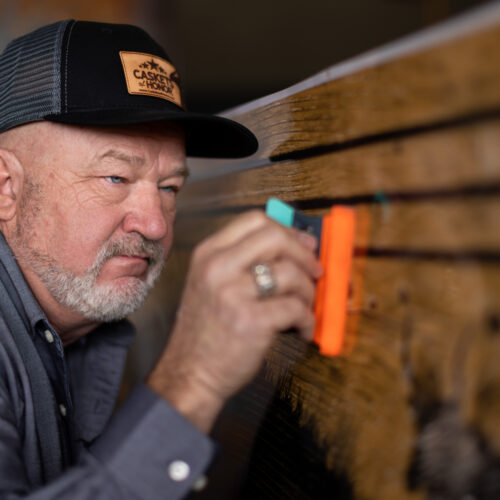
Married couple Candi Mentink and Todd Collard run Caskets of Honor, a small, family-owned casket company. Candi and Todd sell affordable caskets wrapped in vinyl graphic designs honoring the deceased person’s life. Candi and Todd sell the same caskets that funeral homes do—and even with their personalized designs, Candi and Todd strive to avoid the huge markups that funeral homes regularly charge for caskets. Customers all over the country choose Caskets of Honor for their loved ones because of the affordability and personal touch. And from their Calvin, Oklahoma workshop, Candi and Todd can prepare and ship caskets to customers in almost every state.
But not Oklahoma. Candi and Todd found out the hard way that their business made them criminals. Under Oklahoma law, it’s a crime for anyone but a state-licensed funeral director to sell caskets to the public. To become licensed funeral directors, Candi and Todd would have to spend two years in a mortuary science program (training in skills wholly unnecessary to selling a casket), complete a one-year apprenticeship under a funeral director, pass two exams on funeral directing, and pay thousands of dollars. And it doesn’t stop there. They would also have to convert their workshop in Calvin into a full-service funeral home—spending hundreds of thousands of dollars to build an embalming room, create a viewing area for human remains, and purchase a fleet of vehicles to transport human remains. None of these additions would be of any use to them.
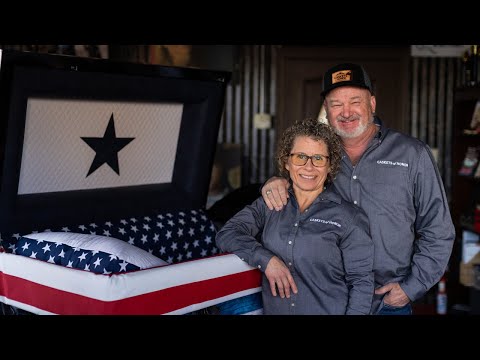
All of that to sell a box. But caskets serve no public health or safety purpose. Oklahoma doesn’t regulate casket design or the casket manufacturing process. It doesn’t even require a casket for burial. An Oklahoman can be buried in a cardboard box, a shroud, or nothing at all.
By banning Candi and Todd from selling caskets in the state, Oklahoma is doing only one thing: protecting state-licensed funeral directors from competition. That is an unconstitutional abuse of power. Licensing exists to protect the public—not to stifle honest competition. Oklahoma cannot prevent entrepreneurs like Candi and Todd from earning an honest living solely to protect the financial interests of the funeral industry. Almost every court across the country that has examined licensing restrictions on casket sales has struck them down as unconstitutional.
That’s why Candi and Todd teamed up with the Institute for Justice (IJ) to file a lawsuit under the Oklahoma Constitution against Oklahoma’s licensing requirements for casket sales. e (IJ) to file a lawsuit under the Oklahoma Constitution against Oklahoma’s licensing requirements for casket sales.
Case Team
Client
Attorneys

Renée Flaherty
Senior Attorney

Betsy Sanz
Attorney
Staff

Dan King
Assistant Director of Media Relations

Kendall Morton
Senior Paralegal & Assistant Director of Special Litigation Projects
Media Resources
Get in touch with the media contact for image resources, press releases, and interview requests.
Media Images

Case Documents
Case Summary
Candi, Todd, and Caskets of Honor
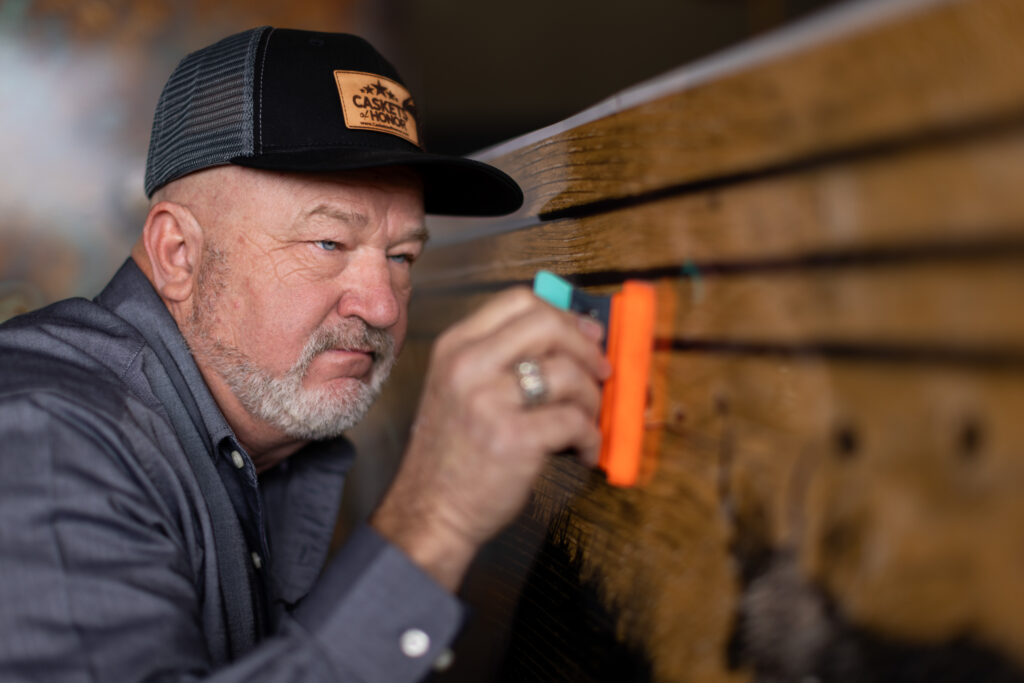
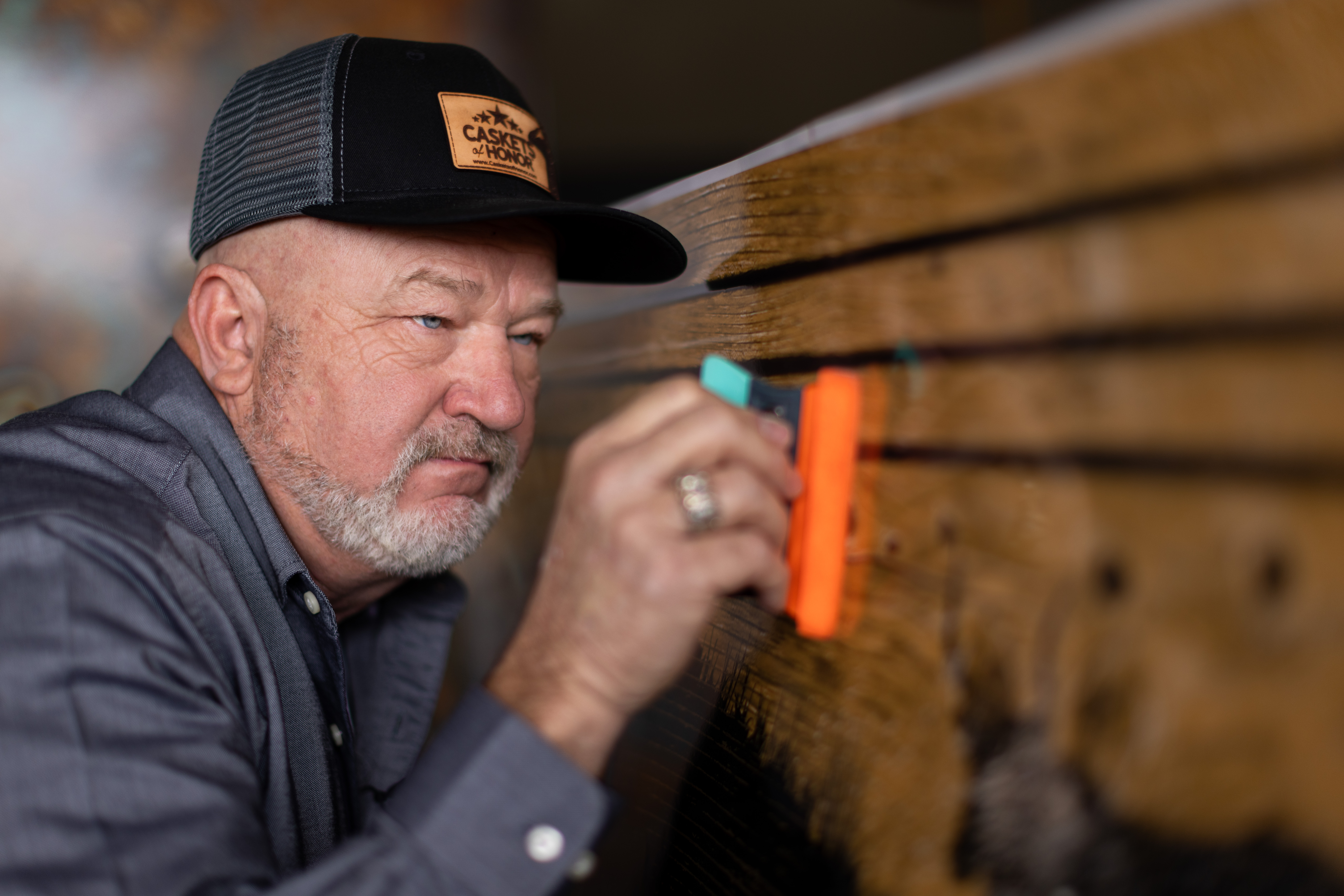
Candi and Todd started Caskets of Honor to offer a unique casket experience. Todd is a graphic designer by trade. Over time, he came to believe that the regular caskets used at most funerals could be more memorable. Todd came up with the idea to wrap a casket in a vinyl graphic design using a similar process used for commercial taxis and vans. Todd created original designs for caskets meant to honor the deceased person or highlight something memorable about them. The designs cover themes like religious faith, patriotism, military service, occupations (like firefighting), Native American heritage, sports fandom, and more.
Candi and Todd order the same caskets wholesale that Oklahoma funeral homes do. Originally, a customer could order a casket for their loved one either in-person at Candi and Todd’s workshop or online. The customer chooses a personalized theme honoring their loved one. Candi and Todd then wrap the casket at their workshop and ship it to the customer or the funeral home of their choice—typically within 48 hours. In the first few years of running Caskets of Honor, Candi and Todd invested more than $200,000 into their business.
Oklahoma Buries the Competition
Candi and Todd will sell a casket to a customer anywhere—in Texas, Florida, or even France. But they cannot sell a casket directly to a customer in Oklahoma. That’s because Oklahoma is one of only three states in the country that bans anyone other than a licensed funeral director from selling caskets to the public. Oklahoma gives funeral directors a legal cartel over casket sales even though it doesn’t require a casket for burial and doesn’t regulate casket design or manufacturing. And the state knows that caskets serve no public health or safety purpose. The Oklahoma Funeral Board admits that “there is no direct relationship between the protective features of the casket and the preservation of the body.” 1
The Oklahoma Funeral Board made sure to inform Candi and Todd that they were breaking the law. In 2021, Candi and Todd set up a booth at the Tulsa State Fair to promote Caskets of Honor. While many members of the public expressed interest in their caskets, the Funeral Board conducted a sting operation. A board investigator posed undercover as an interested customer and determined that Candi and Todd were trying to sell caskets without a license. Because Candi and Todd wanted to sell caskets to the public without being licensed funeral directors—and without converting their workshop into a funeral home—the board sought to impose more than $8,000 in fines on them.
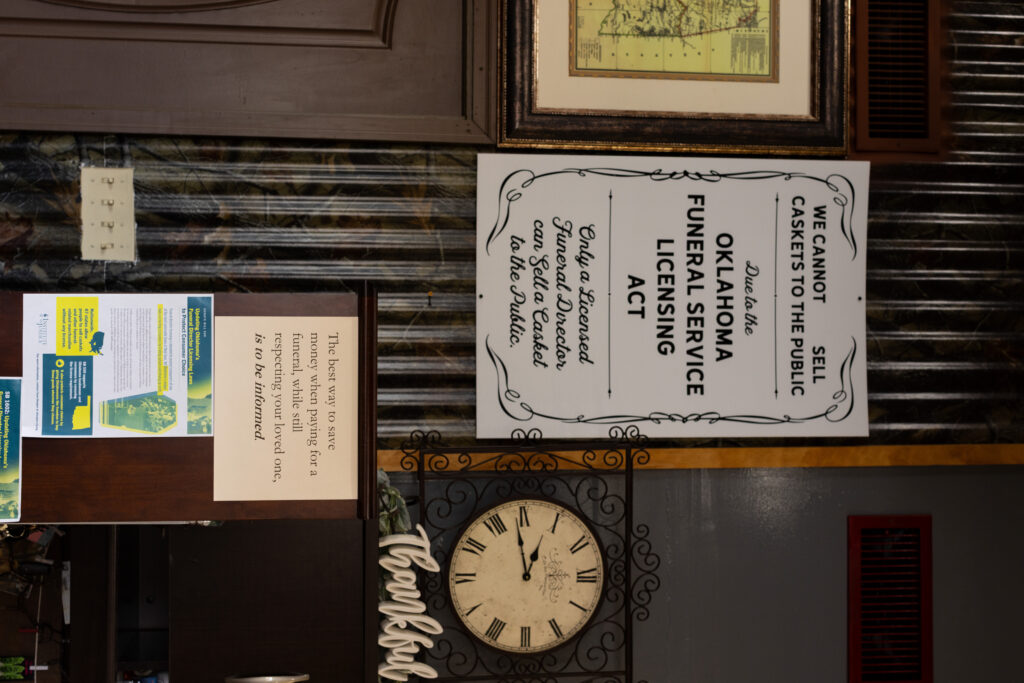
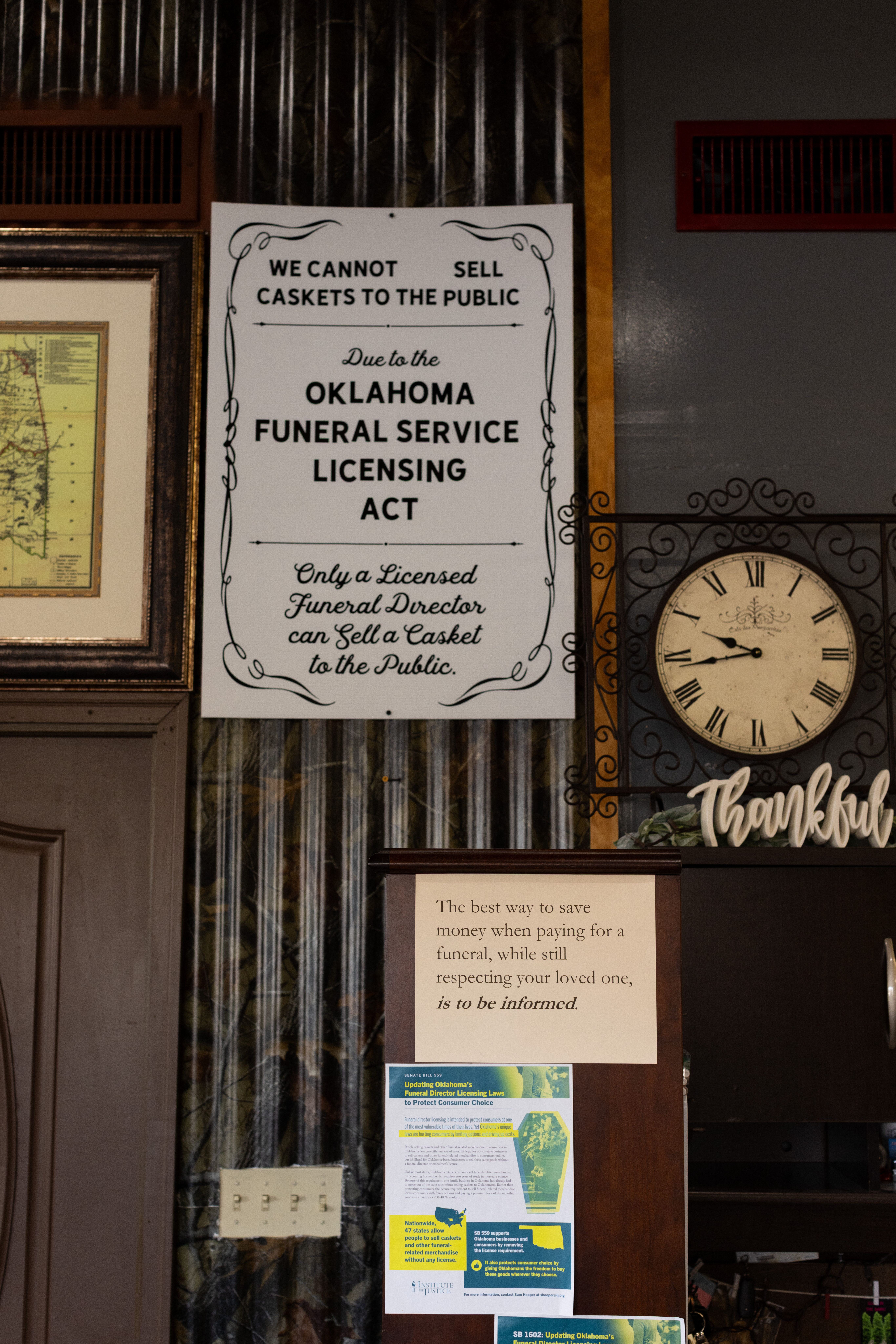
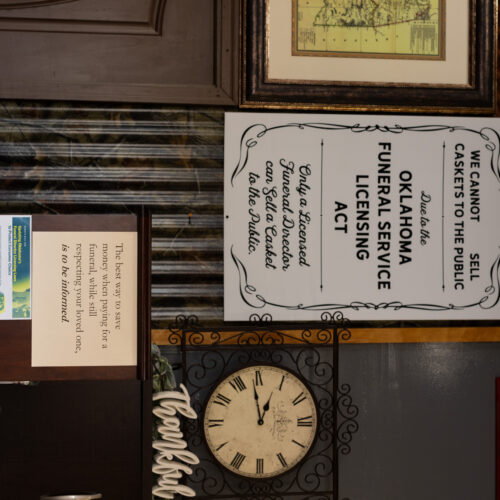
Candi and Todd were surprised to learn that their business was illegal. And they had no desire to become funeral directors, offer funeral services, or transform their business into a funeral home. They just want to sell caskets. To avoid devastating fines, they settled the Funeral Board’s case against them, agreeing to pay $4,700 in fines and costs to the board. The Funeral Board required Candi and Todd to stop advertising Caskets of Honor to the public and to only sell caskets to funeral homes, not individual consumers. To bring the point home, the board also required them to hang a sign in their workshop stating that they cannot sell their caskets directly to their fellow Oklahomans.
To continue running their business, Candi and Todd had to create a legal Rube Goldberg machine. They organized Caskets of Honor as a Texas company and started requiring all customers to order online. This means that their casket sales involve interstate commerce—the regulation of which is mostly reserved to the federal government. If Oklahoma wanted to come after Caskets of Honor again, it would also have to come after other out-of-state retailers that sell caskets online, like Walmart and Costco. But because the Oklahoma Funeral Board has banned Candi and Todd from advertising and selling caskets to Oklahomans out of their shop, they can barely sell any caskets in Oklahoma anymore. And they can’t expand sales to their fellow Oklahomans without risking devastating fines or even jail time.
Oklahoma’s Casket Cartel Harms the Public
Candi and Todd spent years urging the Oklahoma Legislature to change the law so they could compete with the funeral industry. Due to Candi and Todd’s efforts, lawmakers introduced bills in 2023, 2024, and 2025 that would have allowed people other than licensed funeral directors to sell caskets to the public. 2 But all three bills have failed. The only entities that have opposed the bills are the Oklahoma Funeral Board, the state regulatory body composed mostly of licensed funeral directors and embalmers, and the Oklahoma Funeral Directors Association, a private trade group that lobbies on behalf of the funeral industry.
That’s because the only people who benefit from Oklahoma’s laws are licensed members of the funeral industry. For many families, a funeral is the largest expense they will ever have after a home and a car. The casket accounts for the largest portion of these costs, routinely composing one-third or more of the total cost of a funeral including a burial. 3 And many funeral homes mark up the price of caskets many times what it costs them to buy. By giving funeral homes the exclusive right to sell caskets, Oklahoma law reduces competition and increases the costs Oklahomans must pay. Thanks in part to Oklahoma’s restrictions on casket sales, the average funeral in Oklahoma costs $5,671—18 percent higher than the cost in neighboring states. 4
Not only does banning Candi and Todd from selling caskets not protect consumers—there’s ample reason to believe that it harms consumers. Starting in the 1980s, the federal government has regulated the funeral industry due to its widespread anticompetitive practices. The Federal Trade Commission requires funeral homes to accept caskets provided by third parties and not charge customers extra for their use. 5 That’s because funeral homes protected their huge markups on caskets by charging fees when a customer wanted to buy from an independent seller, like Caskets of Honor. And the federal government has criticized state funeral boards, which are dominated by funeral directors, for needlessly outlawing competition against funeral homes. 6
Legal Claims
There is no legitimate reason why only funeral directors should be allowed to sell caskets to the public. A casket is just a box. It can be made of anything, including cardboard. Caskets serve no public health or safety purpose—which is why Oklahoma has no regulatory standards for them. Oklahoma doesn’t even require caskets for burial. And because Oklahoma’s licensing laws keep consumers from having more affordable options, they harm Oklahoma consumers.
Oklahoma’s licensing requirements for casket sales violate Candi and Todd’s right to earn an honest living. The Oklahoma Constitution protects every Oklahoman’s right to due process of law and the gains of their own industry. 7 Under these constitutional protections, a law that restricts a person’s freedom to earn a living in a lawful occupation must serve some actual public purpose, like advancing public health, safety, or welfare. Oklahoma cannot ban someone from doing business for an absurd or outright illegitimate reason—like protecting the profits of industry insiders at the expense of the public. The Oklahoma Constitution also protects every person’s right to freedom of speech. By banning Candi and Todd from advertising their business to the public for no legitimate reason, Oklahoma law violates their right to freedom of speech.
Courts overwhelmingly agree that giving licensed funeral directors a monopoly over casket sales is an unconstitutional violation of economic liberty. Four of the five federal courts to address this issue have struck down laws similar to Oklahoma’s. 8 The one court that has broken with the rest is the 10th U.S. Circuit Court of Appeals, which covers Oklahoma. In a challenge to Oklahoma’s laws, the 10th Circuit controversially held that the U.S. Constitution allows the government to restrict economic liberty solely for the private financial benefit of funeral directors. 9
That ruling left Oklahomans with less economic freedom under federal law than people in other parts of the country. But the Oklahoma Constitution protects economic liberty in a meaningful way. Candi and Todd are bringing claims under state law to vindicate the rights of entrepreneurs across Oklahoma. Their case gives the Oklahoma courts a chance to rule that restrictions on economic liberty must serve an actual public purpose—and cannot exist solely to confer exclusive privileges onto favored businesses.
Litigation Team
Candi and Todd are represented by IJ Senior Attorney Renée Flaherty and Litigation Fellow Matt Liles. The team is assisted by Adam Doverspike of GableGotwals as local counsel.
About the Institute
IJ is the nation’s leading defender of the right to earn an honest living. IJ has repeatedly defeated irrational and protectionist restrictions on who may sell caskets, including in similar cases in Alabama, Louisiana, and Tennessee.