IJ Takes North Dakota Ranchers’ Pipeline Fight To The Supreme Court
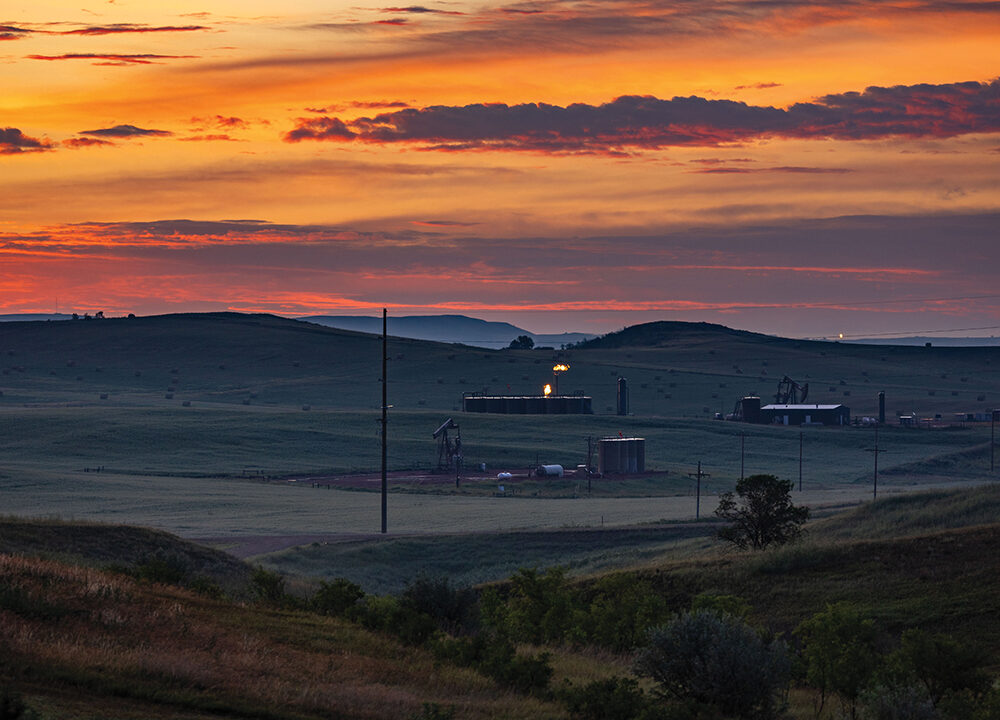
When a private company told Len Hoffmann and his neighbors that it wanted to build a pipeline across their North Dakota ranchland, they weren’t immediately worried. They aren’t opposed to development, and all of them had sold easements to oil companies to build pipelines in the past. They were used to the process, and they had a good sense of what the market rate for a pipeline easement was.
Then the pipeline company threw them a curveball: It wasn’t an oil company. It was a natural-gas company, which meant it had the federal government’s authorization to use eminent domain. And eminent domain, it said, meant it didn’t need to pay market price. So Len and his neighbors lawyered up, and after a few years of fighting, they won: Eminent domain requires the payment of “just compensation,” and so of course the market rate the oil companies had been paying mattered.
Winning that fight cost money—about $380,000. And under North Dakota law, property owners can’t be forced to pay the costs of their own compensation: If Len and his neighbors were forced to pay for the cost of winning the fight about market rates, they wouldn’t actually be getting fair value for their land—they’d be getting fair value minus $380,000. So the trial court ordered the company to pay those costs as well.
Then, another curveball. Once again, the pipeline company announced that it didn’t have to follow the rules because the federal government had authorized it to use eminent domain. But this time, the gambit worked: The 8th Circuit held that the federal statute swept aside state rules about just compensation. Even though every other court to consider the question has held that state law protections for property should still apply.
With the 8th Circuit’s ruling, it became an IJ case about something much bigger: whether courts should take seriously state law protections for private property.
Until that point, this was a case for private attorneys about how much compensation would make Len and his neighbors whole. But with the 8th Circuit’s ruling, it became an IJ case about something much bigger: whether courts should take seriously state law protections against eminent domain abuse.

Traditionally, private delegations of the eminent domain power (when they’re allowed) are read narrowly, to preserve as many preexisting property rights as possible. The 8th Circuit’s ruling here is the opposite: Once Congress authorizes eminent domain, it says, that means all state law rules, no matter how important, are off the table.
You can see the stakes just from the briefing in the case. The solicitor general of the United States filed a brief arguing that we’re wrong and that following state rules about compensation would threaten “the country’s economic competitiveness and national security.” (But of course, it wouldn’t: Pipeline companies already had to follow state law everywhere except the 8th Circuit. The country’s national security seemed fine with that.) Meanwhile, a dozen different state attorneys general filed a brief on our side, trying to shield state law’s traditional role in protecting property rights.
And at the heart of it, a group of North Dakota ranchers are doing what North Dakota ranchers do best: protecting their land. We at IJ are proud to protect it alongside them.
Robert McNamara is IJ’s deputy litigation director.

Also in this Issue

Liberty & Law
One Woman’s Fight Protects Property Owners Across Texas

Liberty & Law
A Plain Outlier: North Dakota Prefers Licensed Teachers Over Qualified Ones

Liberty & Law
What’s In A Name? Speakeasies Aren’t Illegal, But In Nebraska, Their Names Can Be

Liberty & Law
A Lot at Stake: IJ Battles Restrictive Zoning

Liberty & Law
Taking Out The Trash: Texas Entrepreneur Fights City’s Dumpster Monopoly

Liberty & Law
IJ Fights Pennsylvania’s Costly “Ghost Office” Requirement

Liberty & Law
A Victory For Fresh Starts In The Bluegrass State

Liberty & Law
Victory! An Illinois City Lets Garden Grow

Liberty & Law
Friends Of The Court, Foes Of Financially Driven “Justice”

Liberty & Law
IJ Makes Headlines
Subscribe to get Liberty & Law magazine direct to your mailbox!
Sign up to receive IJ's bimonthly magazine, Liberty & Law, along with breaking news updates about the Institute for Justice's fight to protect the rights of all Americans.