After Wrongly Raiding Woman’s Home, Government’s Response Only Raises More Questions
Updated lawsuit from Atlanta-area woman also demands the return of $15,000 in cash seized during raid.
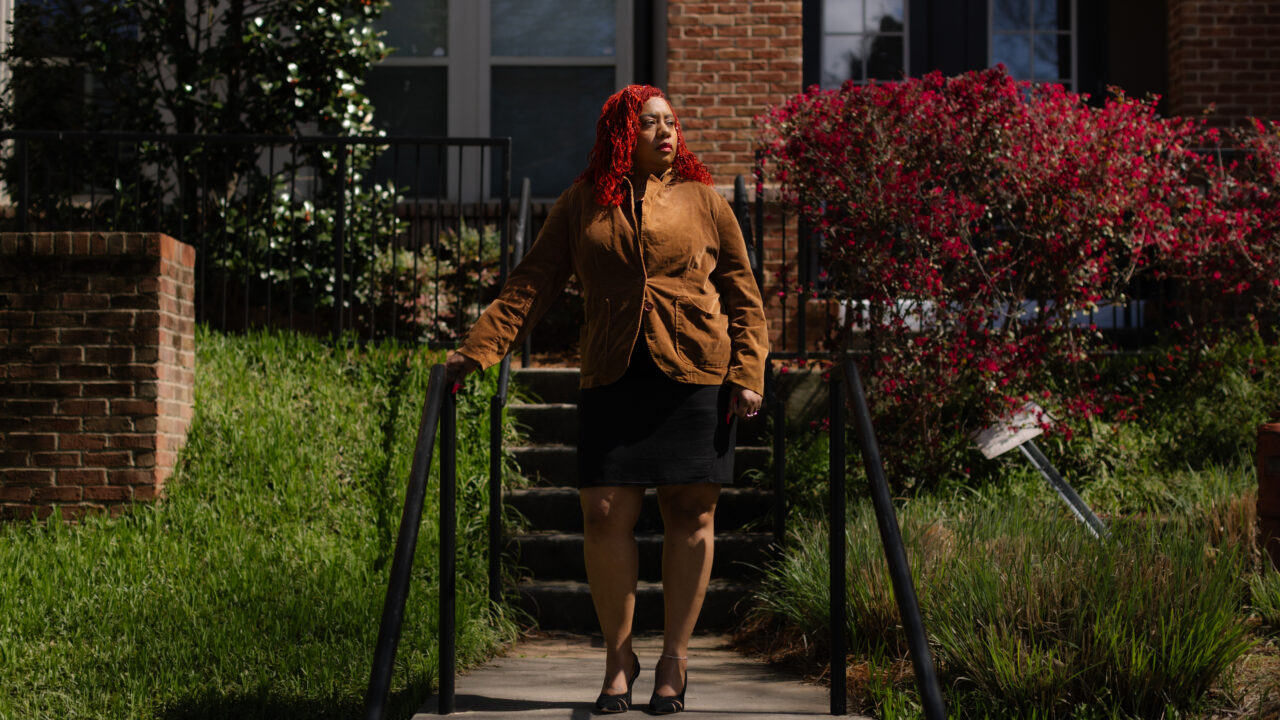
ATLANTA—Cathy George sued officers who wrongly raided her Sandy Springs, Georgia, home demanding answers for how this dangerous mistake happened. Months later, the few answers Cathy has received have only led to more questions. The Institute for Justice (IJ), which represents Cathy, recently updated her lawsuit to account for newly revealed facts, which also support her demand that $15,000 seized during the raid be returned to her.
“I sincerely hope my case will lead to justifiable answers as to why my home was raided,” said Cathy. “Two-and-a-half years later and thus far at every turn, there are more questions than answers. What is absolutely clear is the officers, most still unknown and unnamed, messed up royally, and nobody has answered for these errors. Without accountability, this will certainly happen again. Are you next?”
During the raid, Cathy was asked whether she knew a man named Joshua Smiley. She was shown a folder with a photo of Smiley—the same photo Cathy later recognized on a U.S. Marshals “15 Most Wanted” list. Cathy had no connection to Smiley and discovered after the raid that the man had been in custody for months.
Now, two and a half years after the raid on her home, the government has shared a warrant with Cathy: a warrant to search her address for another criminal suspect having no connection to Cathy, Joshua Stokes. Whether the officers were even trying to execute that warrant remains unclear.
First, it was obtained by a Georgia police officer, sought Stokes for a strictly Georgia crime, and was directed to Georgia peace officers; yet the United States, in connection to Cathy’s lawsuit, has claimed the operation was federal.
Second, the warrant directed officers executing the warrant to leave a copy with the person whose home was searched and to submit a warrant return to the court after the search occurred. If the officers were executing the warrant, they followed neither instruction.
Third, the newly disclosed warrant did not authorize officers to search for or seize anything other than the suspect, his cell phone, and an associated firearm. Yet officers seized $15,000 in cash that Cathy had withdrawn to pay bills and keep as emergency savings. Now with evidence that the court never authorized a search for her money, Cathy is demanding its return. So far, she has has not received even a receipt documenting the seizure, let alone an explanation of how she can get her money back.
“The warrant raises more questions than it answers,” said IJ Attorney John Korevec. “And it suggests the government’s errors were even worse than initially believed. It is important for Cathy’s lawsuit to proceed to discovery to uncover the answers she and the public deserve. Because if the government is allowed to continue to avoid accountability, these botched operations are going to keep happening, people’s rights are going to keep being violated, and innocent people are going to continue to be put into harm’s way. The public deserves better.”
Cathy’s lawsuit asserts claims against the individual officers and the United States—for Fourth and Fifth Amendment violations and torts under Georgia law. At one time, two of the officers involved in the raid had been deputized as U.S. Marshals, though it is unclear whether either one was working with the federal agency at the time of the raid. Still, the federal government is trying to shield the officers’ actions with federal immunity, adding to the complexity of Cathy’s lawsuit.
Another Atlanta-area family represented by IJ has been fighting to hold an FBI SWAT team accountable for wrongly raiding their home for nearly a decade. The Martins’ case was revived by the U.S. Supreme Court last year and was reconsidered earlier this year by an appeals court panel. The family is currently waiting for a decision.
More on Private Property

Private Property
Brentwood’s Arguments About its Blight Designation and Eminent Domain Don’t Hold Up
Private Property
Illinois Town Threatens to Destroy Award-Winning Garden, Violating State’s Right-to-Garden Law

Private Property