Atlanta Woman Sues Officers, U.S. Government for Wrongly Raiding Her Home in Search of Man Already in Jail
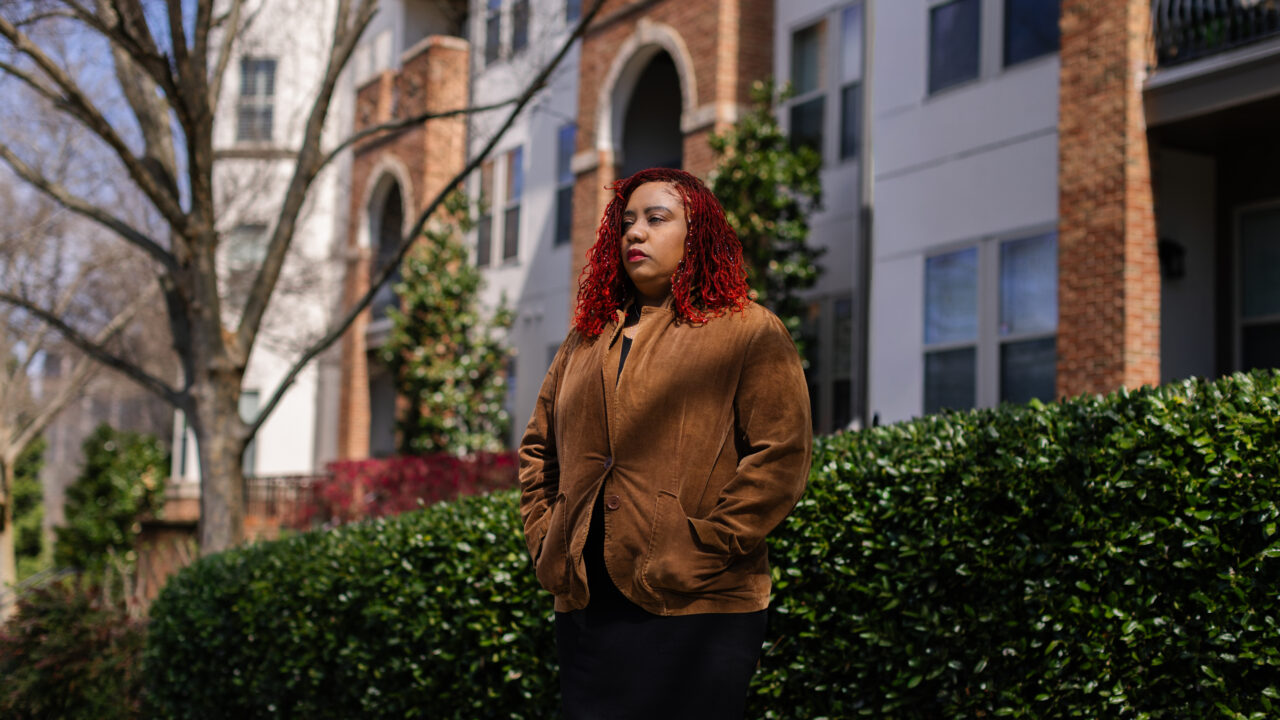
ATLANTA—Before the sun came up, Cathy George heard a loud pounding at her door. When she answered with her small, frightened dog in her arms, she found a heavily armed SWAT team of U.S. Marshals and DeKalb County sheriff’s deputies. After officers pulled her into the hallway and surged into her home, it became clear that they were searching for a man named Joshua Smiley.
But Smiley had been in jail for months, and the raid on Cathy’s home was both a terrible mistake and a violation of the U.S. Constitution and Georgia laws. Cathy is teaming up with the Institute for Justice (IJ) to move her lawsuit forward and hold accountable the officers and the United States government for unlawfully raiding her home and traumatizing her.

“It was unacceptable and illegal for officers to raid Cathy’s home looking for someone who was already incarcerated.” said IJ Attorney John Korevec. “The government owes her an explanation and an apology. The government does not get to barge through your door without reason—and walk away without consequence.”
In June 2023, the U.S. Marshals placed Joshua Smiley on its “15 Most Wanted” list. Smiley was wanted in connection with a homicide investigation in Alabama and a federal-bond violation in Indiana. He was arrested about a week later in Indiana.
But the officers never bothered to check to see if Smiley was already detained before they conducted the raid. Four months after Smiley’s arrest, on October 24, a team of U.S. Marshals and DeKalb County deputies carried out a planned raid on Cathy’s home. At the time, she lived in a secure condominium in Sandy Springs, a normally quiet north Atlanta suburb.
Cathy had no connection to Smiley. She had never met him, and he had no ties to her home or her condominium building. Cathy, for her part, had never in her life been in trouble with the law.
After she opened her door, officers held her for roughly 15 to 20 minutes while more officers ransacked her home in search of Smiley. As officers searched Cathy’s home, they repeatedly demanded to know where Smiley was and accused her of hiding him. Cathy explained that she had no idea who they were talking about.
After forcing Cathy to show them photos of her sons to confirm they were not Smiley, an officer told Cathy that “there’s been a mistake,” and handed her a business card. Then the entire team quickly exited, leaving Cathy’s home turned upside down. They did not show Cathy a warrant or give her any explanation of what had gone wrong.
“Innocent people should not have to pay the price for this kind of government error,” said Cathy. “I deserve answers for how something like this could have happened. If no one is held accountable, it will happen again. Are you next?”
Cathy’s lawsuit asserts claims against the individual officers and the United States—for Fourth and Fifth Amendment violations and torts under Georgia law. Because the United States Marshals Service denied her administrative claims, those claims have ripened into claims she now asserts against the United States government under the Federal Tort Claims Act (FTCA). As previous IJ cases demonstrate, navigating the FTCA and holding federal officers accountable is a difficult process. Cathy’s claims assert various theories for redress against the officers and the United States government.
“This was no ordinary law enforcement mistake,” said IJ Attorney Marie Miller. “There’s no excuse for the officers’ failure to verify whether the fugitive they sought was still at large. When government officers trample individuals’ rights like they did Cathy’s, there must be some path to vindication.”
Cathy’s case is part of the Institute for Justice’s Project on Immunity and Accountability, which seeks to ensure that government officials and employers are held responsible when they violate constitutional rights. And through its Project on the Fourth Amendment, IJ seeks to protect our right to be secure in our persons and property. When officers fail to verify basic facts—like whether the person they seek is still at large—and storm innocent persons’ homes, the victims should receive redress. The Institute for Justice represents other victims of wrong-house raids and mistaken identity, including a family in North Carolina, grandmothers in Arizona and Florida, and a teenager in Maine.
More on 4th Amendment Project

4th Amendment Project
Pottstown Residents File Second Lawsuit After Borough Tries to Circumvent Court Ruling with New Rental Inspection Law
4th Amendment Project
Do Flock cameras actually reduce crime? The jury is still out.
4th Amendment Project
