House Defunds Attorney General’s Expansion of Civil Forfeiture
Hundreds of members of Congress came together and voted to block an alarming expansion of government power.
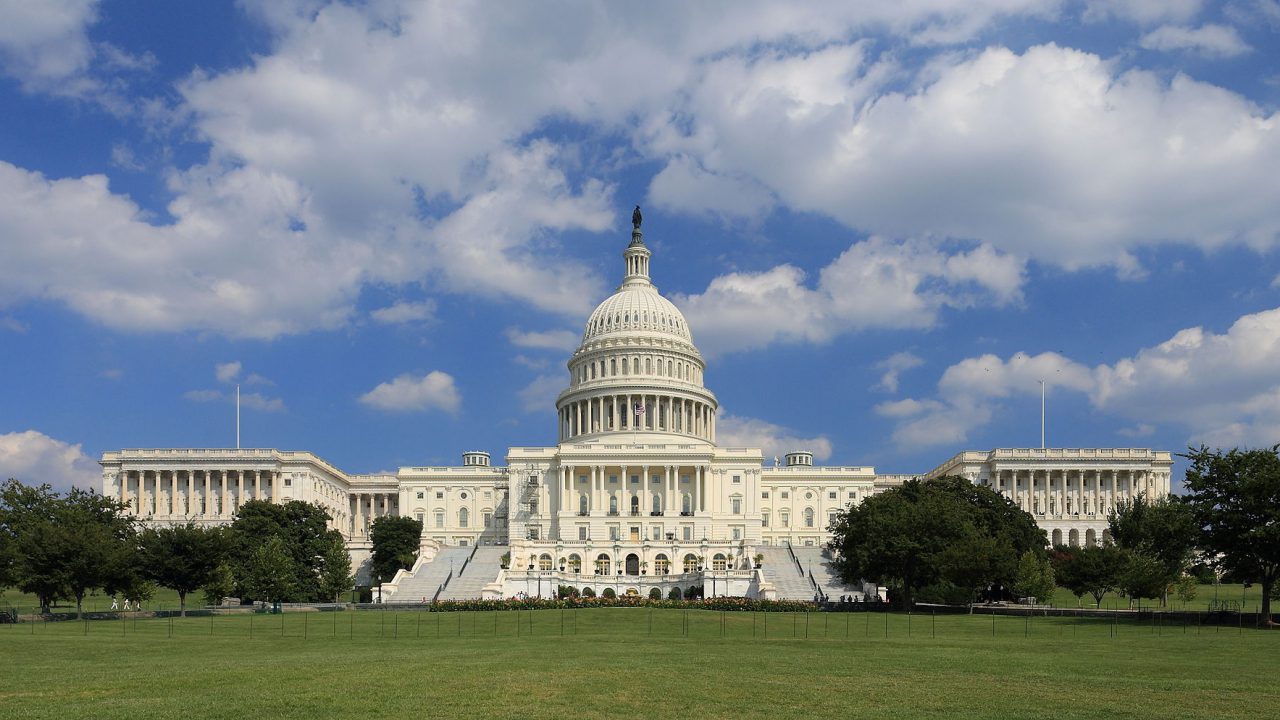
The U.S. House of Representatives unanimously approved three amendments late Tuesday that would defund a notorious federal forfeiture program that was recently restored by U.S. Attorney General Jeff Sessions.
“Civil forfeiture is one of the greatest threats to private property rights,” said Institute for Justice Attorney Robert Everett Johnson. “But today, hundreds of members of Congress came together and voted to block an alarming expansion of this government power.”
Sponsored by Reps. Justin Amash, Tim Walberg, and Jamie Raskin and co-sponsored by Reps. Steve Cohen, Jim Sensenbrenner, and Mark Sanford, the amendments address so-called “adoptive” seizures and forfeitures. Under the federal adoption program, state and local law enforcement can seize property without filing criminal charges, and then transfer the seized property to federal prosecutors for forfeiture under federal law. Local and state agencies can collect up to 80 percent of the forfeiture proceeds.
The Institute for Justice organized a coalition letter in support of the amendments, which was ultimately joined by twenty-four organizations spanning the ideological spectrum, and advocated strongly for their passage.
Adoptive seizures allow state and local law enforcement to circumvent safeguards enacted by state legislatures to protect property owners from civil forfeiture. In January 2015, then-U.S. Attorney General Eric Holder sharply curtailed the practice. However, in July, those limits were repealed by Sessions as part of a new policy directive to “increase forfeitures.”
But as part of a massive appropriations bill (H.R. 3354), which funds the Justice Department and other federal agencies, the newly adopted amendments would cut off funding to carry out the Attorney General’s order reviving adoptive seizures, effectively putting a stop to the practice through the next fiscal year. Two dozen organizations from all across the political spectrum, including the Institute for Justice, the American Conservative Union, the ACLU and the NAACP, endorsed the amendments.
“This is a welcome first step to rolling back federal forfeiture laws and we urge the Senate to pass the amendment,” Johnson added. “But it is no substitute for lasting, comprehensive reform. Fixing the nation’s forfeiture laws has earned widespread public and bipartisan support, and we urge congressional leadership to give federal reform bills swift consideration on the floor.”
The vote comes just days after the House unanimously approved a bill to stop the Internal Revenue Service from raiding the bank accounts of small-business owners with civil forfeiture. Meanwhile, Rep. Jim Sensenbrenner (R-WI) has reintroduced the DUE PROCESS Act, which would strengthen safeguards for innocent owners, while Sen. Rand Paul (R-KY) has sponsored the FAIR Act, which would abolish “equitable sharing” (which includes the adoption program) and bar federal agencies from retaining forfeiture proceeds.
Key Facts about Equitable Sharing and Civil Forfeiture
- According to a report by the Institute for Justice, adoptions accounted for more than a quarter of all seizures conducted through equitable sharing between 2000 and 2013.
- Since 2000, local and state law enforcement agencies have collected over $6 billion through equitable sharing, an audit by the Office of the Inspector General for the Department of Justice revealed in March.
- A recent poll by the Cato Institute found that 84 percent of Americans oppose civil forfeiture, while over 260 editorials have criticized the practice.
- In their 2016 party platforms, both the Republican and Democratic Parties condemned civil forfeiture and called for reform.
- Since 2014, 24 states have reformed their forfeiture laws, while eight states have enacted safeguards that address adoptions or equitable sharing.
More on Private Property

Private Property
Illinois Town Threatens to Destroy Award-Winning Garden, Violating State’s Right-to-Garden Law

Private Property
Federal Court Orders DHS to Stop Detaining People with Valid Identification and Halts Warrantless Construction Site Raids

Private Property