Retiree’s Construction of Dream Home Blocked by Nonsensical Zoning from City After Decades of Planning
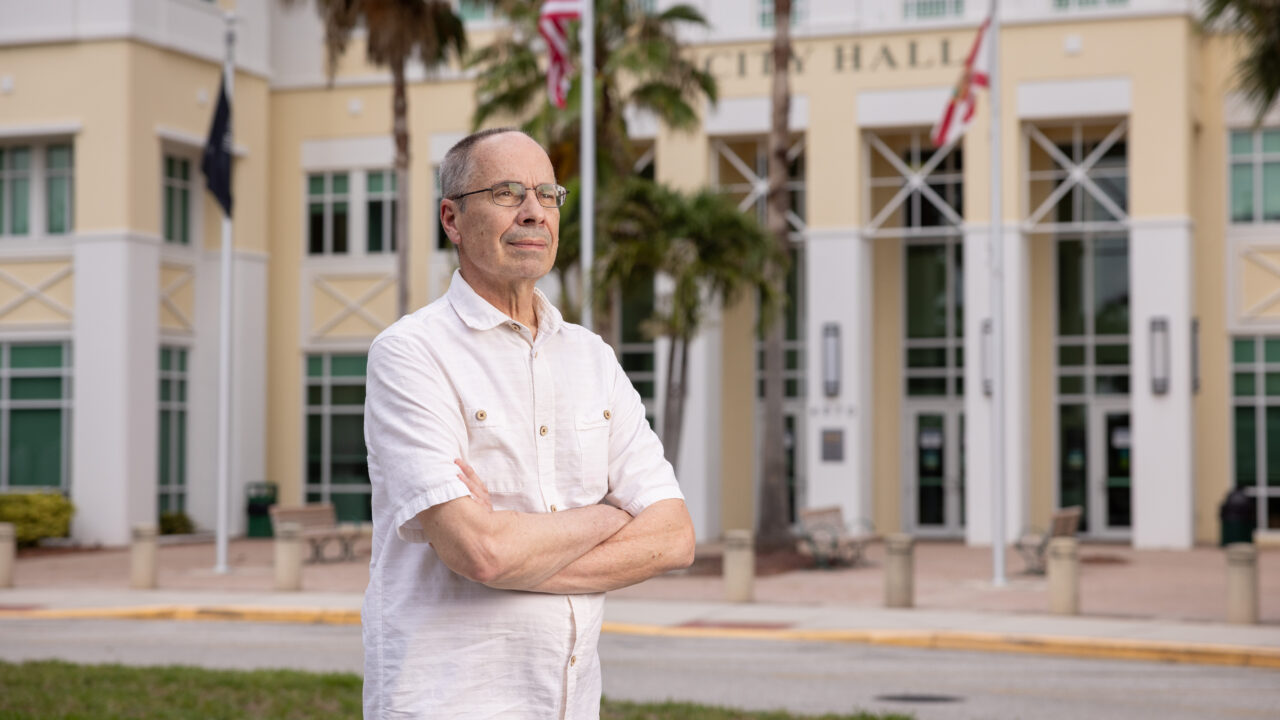
ARLINGTON, Va.—Art Yatsko has been working towards a dream for the last 20 years. Art lives in Rhode Island and dreams of escaping from the long, cold winters to warm and sunny North Port, Florida. And over these last 20 years Art has been making progress towards this dream—finding and then buying a plot of land in a neighborhood, saving money, and doing all his due diligence.
But just as Art was ready to begin construction, he was told he could no longer build a modest single-family home in his neighborhood—it had been rezoned, along with every other open lot of land in his neighborhood. Art should be free to build a home on his property that is just like the others in his neighborhood. With help from the Institute for Justice (IJ), he’s filed a lawsuit to stand up for the right to use his property in a manner fully consistent with its surrounding uses.
“Art’s envisioned home fits in perfectly with the rest of the community,” said IJ Attorney Katrin Marquez. “It shouldn’t be illegal for him to build a modest single-family home in a neighborhood of single-family homes.”
North Port sits on Florida’s west coast, roughly between Tampa and Naples. The city is heavily residential and its leaders are seeking to diversify the tax base by encouraging commercial development. But instead of just giving property owners more freedom to develop their property as they see fit, the city re-zoned neighborhoods like Art’s to ban single-family homes. So, while Art can now build a shooting range or a nightclub (or maybe get special permission to build a duplex), there is no legal path to build his dream home.
“I’ve been working on this for 20 years,” said Art Yatsko. “This was supposed to be my retirement, my reward for all the hard work I’ve put in. But instead, the city is saying I can’t build a single-family home in a neighborhood of single-family homes. That’s absurd.”
North Port’s plans are wildly nonsensical. Art’s neighborhood doesn’t have the infrastructure, capacity, or vacant space to accommodate the type of development that North Port is demanding. Under the new zoning Art could build a shooting range or a nightclub or ask for a special exemption for a duplex if he wanted a house – but not a single-family home like he had envisioned and what every other developed piece of land in the neighborhood already has on it. North Port’s prohibition on single-family homes lacks a substantial relationship to any government interest because all it does is forbid a normal, compatible use in favor of a wildly aspirational use that makes no sense. Owners like Art purchased their lots with the hopes of building houses to live in; they are not commercial real-estate developers.
“Local governments generally have the power to zone, but it’s not unlimited,” said IJ Senior Attorney Ari Bargil. “Properly done, zoning can prevent harms from potentially unsafe or toxic uses. But North Port can’t use zoning as a social-engineering tool—to impose its grandiose vision for commercial uses in Art’s neighborhood. That’s unconstitutional.”
Art is far from the only property owner to have their plans dashed by arbitrary zoning decisions. Since the Supreme Court blessed the practice a century ago, zoning has made the process of building practically anything a herculean task for everyday Americans. As in North Port, zoning is often used to ban property owners from building something new that is just like older properties in the neighborhood. Although, in most cases single family homes are favored over denser development or commercial uses.
IJ is a nonprofit, public-interest law firm that protects property rights across the country. As part of that mission, IJ’s Zoning Justice Project fights against arbitrary and abusive zoning restrictions that impair the right to use private property in productive and safe ways—including to address the housing crisis caused by restrictive zoning. In Georgia, IJ successfully defended a nonprofit that wanted to build small cottages to provide affordable housing. In Idaho, IJ is litigating on behalf of a resident who wants to live in a tiny home amid explosive growth in local housing prices. And in Minnesota, IJ is advocating on behalf of a couple who want to build a backyard cottage to provide an affordable place to live for struggling families.
# # #
To arrange interviews on this subject, journalists may contact Phillip Suderman, IJ’s Communications Project Manager, at [email protected] or (850) 376-4110. More information on the case is available at: https://ij.org/case/north-port-restrictive-zoning/
More News
Education Entrepreneurship
National Law Firm Stands with Pinal County Education Entrepreneur to Protect Microschool

Glendale Small Business Files Federal Lawsuit Challenging Seizure of Money by Federal Agents During Raid

Private Property
