Stiffed by a Pipeline Company Wielding Eminent Domain, Plains Ranchers Appeal to U.S. Supreme Court
WASHINGTON—Eminent domain allows the government to force people to hand over their land for a public use, but what happens when the government gives its power to private companies for their own use? A group of ranchers in North Dakota found out the hard way: After fighting for years to obtain a fair price for their land, they won—but then a federal appeals court told them that they would have to pay the cost of that three-year fight themselves, forking over a significant chunk of the sales price of their land.
North Dakota law says that’s not right—property owners are not supposed to foot the bill for protecting their land—but the court said that didn’t matter: Their land was being taken by a natural-gas company with a federal permit, so state law could not protect them. Every other federal court in the country has said otherwise, though, which is why today the landowners have teamed up with the Institute for Justice (IJ) to ask the U.S. Supreme Court to hear their case and ensure that property owners don’t get stiffed when the government comes for their land.
READ the cert petition.
“For four decades, federal courts have consistently held that private companies condemning land have to respect property owners state-law rights when it comes to compensation,” said IJ Deputy Litigation Director Bob McNamara. “The lower court’s decision in this case represents a huge wealth transfer from ordinary landowners to private utility companies.”
When a natural gas pipeline company with federal eminent domain power demanded property from ranchers near Watford City, North Dakota, the offered price was shockingly low—just over half the market price. The property owners didn’t object to the pipeline in principle, but they knew exactly what a fair price was for a pipeline easement since few pipeline companies have the power of eminent domain. The pipeline company said that didn’t matter—that it didn’t have to pay market rates because the government had given it the power to take the land—and so the ranchers went to federal court to determine the value.
Three years later, a federal judge unsurprisingly determined that the ranchers could use market prices to show the value of their land. The judge also ruled that the company had to pay the costs of the proceeding: North Dakota law says property owners should walk away from a condemnation with the value of their land—not the value of their land minus legal fees. But then something unusual happened.
Other federal courts nationwide say that state law should apply when determining how much a private pipeline company owes for the land it takes. But the 8th U.S. Circuit Court of Appeals took a different view and said that the company only had to pay for the land, regardless of North Dakota law. To get a fair price in court, the ranchers spent hundreds of thousands of dollars.
The 8th Circuit puts property owners in a Catch-22: accept a low-ball offer for their property or fight for a fair price out of their own pocket. This lose-lose situation doesn’t square with basic ideas of fairness or with how property owners are treated in every other circuit.
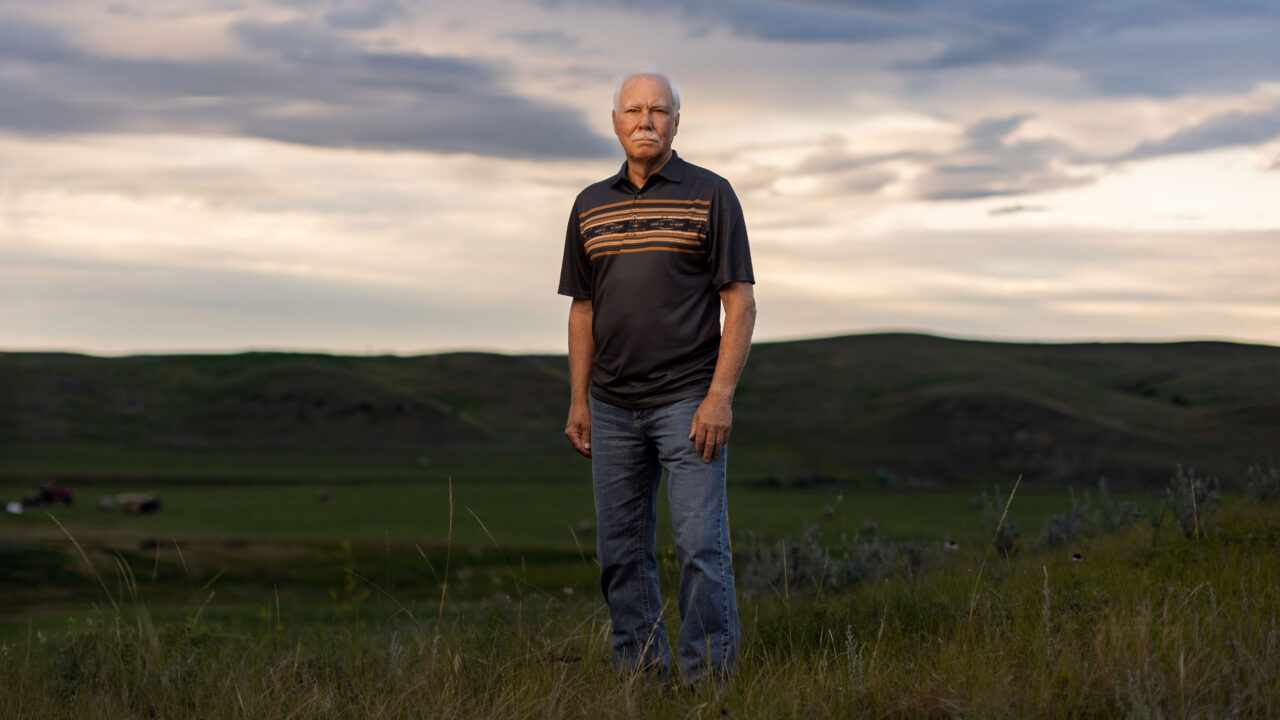
“Because of the appeals court ruling, companies with eminent domain power can bully landowners into taking property for half the price,” said Len Hoffmann, one of the ranchers who organized the lawsuit. “My neighbors and my family have cared for these properties for generations and we want to protect them for future generations. We shouldn’t have to hand land over for a penny less than its worth.”
Getting a fair value in eminent domain proceedings can be difficult without working through the courts. An investigative report showed that for federal eminent domain takings along the border, owners who negotiated without a lawyer could expect around a 30% increase from the initial to the final offer. But property owners who hired an attorney averaged an increase of over 200%.
“It costs money to litigate about eminent domain, especially when the company using eminent domain makes unreasonable demands,” said IJ Litigation Fellow Matt Liles. “North Dakota law recognizes that and says North Dakotans deserve to get that money back. Private companies shouldn’t be able to sweep that protection aside for their own private benefit.”
The Institute for Justice defends property rights nationwide and argued on behalf of homeowners in Kelo v. New London, a landmark U.S. Supreme Court case involving eminent domain abuse. Last year, IJ successfully argued at the Court on behalf of ranchers in DeVillier v. Texas. In that case, the state refused to compensate property owners after a transportation project flooded out their land. IJ is also currently defending property owners fighting abusive eminent domain actions in Missouri, Mississippi, and New Jersey.
More on Private Property

Private Property
Brentwood’s Arguments About its Blight Designation and Eminent Domain Don’t Hold Up
Private Property
Victory! Danville Confirms Award-Winning Garden Complies with Local Code After IJ Letter

Private Property