Supreme Court Declines to Hear Denver Man’s Case to Revive Fourth Amendment’s Warrant Requirements
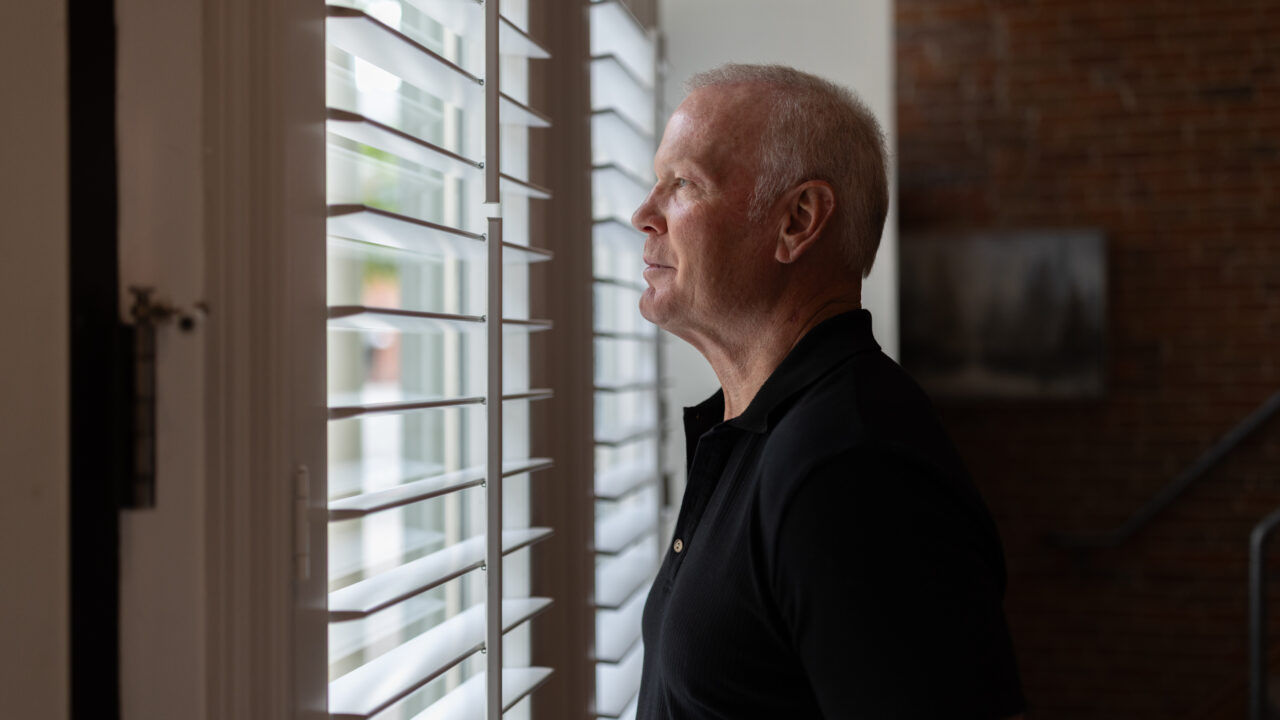
WASHINGTON—Today, the U.S. Supreme Court declined to hear the case of a Denver man who challenged the constitutionality of a warrant that led to his wrongful arrest. Michael Mendenhall’s townhome was searched and his property seized after the police used thirdhand information to get a search warrant. He was also forced to spend a night in jail. His case was appealed to the Supreme Court by the Institute for Justice (IJ).
The Fourth Amendment says that warrants must be “supported by oath or affirmation.” For much of American history, that meant that warrants required firsthand testimony from a witness. But a 1960 Supreme Court decision opened the door for authorities to use hearsay instead. IJ asked the Court to reconsider its ruling and restore the original meaning of the amendment.
“The Warrant Clause requires probable cause, particularity, and an oath or affirmation, and each of the three does its own constitutional work,” explained IJ Senior Attorney Anya Bidwell. “Courts enforce the first two. It makes no sense to treat the third, a sworn statement before a judge signs the warrant, as if it were not there.”
Michael’s story demonstrated how hearsay testimony can lead to the arrest of an innocent person. His townhome was searched and his commemorative baseball bat seized after the police used secondhand information to get a search warrant. He was also forced to spend a night in jail. The testimony of a single witness was passed like a game of “telephone” from a police officer, to a detective, and then to a judge. Days after his arrest, the charges against Michael were dropped. However, the police continue to hold onto Michael’s bat.
Michael filed a lawsuit over the violation of his Fourth Amendment rights, directly challenging Jones v. United States (1960), the Supreme Court decision that read the “oath or affirmation” section out of the Fourth Amendment’s text.
“I’m sad the Supreme Court won’t reconsider the bar for getting a warrant, but I hope my case has drawn attention to this problem,” said Michael. “The words in the Fourth Amendment were chosen carefully and with the intention to protect private property. What happened to me was wrong, but too often poorly considered warrants have been served with tragic results.”
Michael Mendenhall is not alone when it comes to facing serious consequences when police ignore the rush to get warrants. A joint amicus brief from Kenneth Walker, the boyfriend of Breonna Taylor, and Anjanette Young, a victim of a wrong-house raid in Chicago, was filed in support of Michael’s case.
In order to get a warrant for Taylor and Walker’s home, an officer fabricated a conversation with a postal inspector. The warrant that authorized the raid on Young’s home was obtained after an informant mistakenly identified her address as the location of a police target.
The Institute for Justice works to protect the U.S. Constitution through its Project on the Fourth Amendment and Project on Immunity and Accountability. IJ is representing families in Georgia, Indiana, and North Carolina whose homes were wrongly raided. IJ is also suing on behalf of women wrongly arrested in Florida and Arizona.
More on Rule of Law
Rule of Law
Court Denies Immunity for Judge Who Personally Jailed Two Innocent Kids, Upholds Damages
Rule of Law
Federal Court Grants Preliminary Approval to Settlement in Brookside, Alabama Policing-for-Profit Lawsuit
Rule of Law
