IJ Issue
Eminent Domain
Under the power of eminent domain, the government can take private property. IJ seeks to restore strict limits for when the government can use this power.

Based on the centuries-old honored principle that “a man’s home is his castle,” the Institute for Justice seeks to restore strict limits for when the government can use eminent domain.
In the United States, eminent domain is the power of the government to take away someone’s private property. But the Fifth Amendment places two strict limits on eminent domain. First, private property can be taken only for “public use,” or public works projects, like roads and bridges. Second, even if a property is taken for a public use, the owner must be paid “just compensation.”
Eminent domain was intended to be a narrow power and has rightly been called a “despotic” power of government, given its vast potential for abuse: It can destroy lives and livelihoods by uprooting people from their homes, businesses, and communities. For years, the Fifth Amendment to the U.S. Constitution and similar provisions in state constitutions greatly restricted this power.
Unfortunately, the U.S. Supreme Court wrote a blank check for local and state governments to abuse eminent domain in the now infamous Kelo v. New London decision. IJ represented Susette Kelo and other homeowners in New London, Conn., to save their homes from being demolished. But in a narrow 5-4 decision, the Supreme Court instead upheld the taking of their homes under the guise of “economic development.”
Grades for State Eminent Domain Laws
Since Kelo v. New London, 47 states have strengthened their protections against eminent domain abuse, either through legislation or state supreme court decisions.
- A
- B
- C
- D
- F
Click on a state to learn more about its grade.
State Constitutional Amendments Post-Kelo
After the U.S. Supreme Court handed down its decision in Kelo, 12 states responded by amending their state constitutions to stop eminent domain for private gain.
State Supreme Court Rulings against Kelo
Eleven state supreme courts have either strengthened protections for property owners or directly rebuked Kelo.
- Explicitly rejected Kelo v. New London
- Limited eminent domain for private gain
Kelo was the culmination of decades of judicial abdication. Starting in the mid-20th Century, the U.S. Supreme Court began to weaken constitutional protections against eminent domain by gutting the public use clause. In its 1954 decision, Berman v. Parker, the Court upheld the constitutionality of “urban renewal,” enabling the government to condemn so-called blighted property, even if the property ended up in the hands of private developers. Berman also upheld an expansive definition of public use, transforming the requirement to “public purpose.” In the Court’s eyes, the end use no longer mattered; the projects served the public purpose of renewal and revitalization.
Worse, the criteria to declare a property “blighted” were (and still are) often vague, enabling local officials to condemn any perfectly fine home or small business. No longer bound by the public use requirement, officials across the country could take property they deemed “blighted” based on increasingly vague criteria, give it to their developer friends, and wipe out entire neighborhoods of people they deemed undesirable.
Urban renewal proceeded to devastate vulnerable communities of color across the United States. Research by Dr. Mindy Fullilove identified over 2,500 urban renewal projects that forcibly removed more than 1 million Americans from 1949 to 1973. Among those forcibly removed, two-thirds were African American, who were five times more likely to be displaced.
Decades later, communities targeted by eminent domain for private development are still more likely to be communities of color, while residents are much more likely to live at or below the poverty line and have lower levels of income and education than surrounding neighborhoods.
Courts should have acted as a check on eminent domain. Instead, they significantly abdicated their role and often simply deferred to whatever claims of “public purpose” a legislature or administrative agency made, no matter how tenuous. With strong economic incentives and few judicial checks, abusing eminent domain for private gain grew.
Although much progress has been made, IJ continues to fight against abusive condemnations in states that have failed to reform their laws, protect homeowners against government officials who try to undermine those reforms and stand up for the rights of property owners who face condemnation by private interests like pipeline companies or property developers. Only when eminent domain is reined in will everyone’s home truly be their castle.
Frequently Asked Questions About Eminent Domain
What is eminent domain? Can eminent domain be used to take my property and give it to another private party?
Private Property Issues

Eminent Domain
Under the power of eminent domain, the government can take private property. IJ seeks to restore strict limits for when the government can use this power.

Ending Civil Forfeiture
Under civil forfeiture, people can permanently lose their property without a criminal conviction or even charges. This is one of the gravest abuses of power in the country today, and IJ aims to put a stop to it.

Other Property Rights Abuses
The right to own and use private property is a cornerstone of a free society. But rather than respect these rights, many local governments are…

Right to Shelter
Intrusive zoning laws are some of the biggest obstacles to creating affordable homes. Zoning regulates even the minutest detail of our lives and can be the difference…
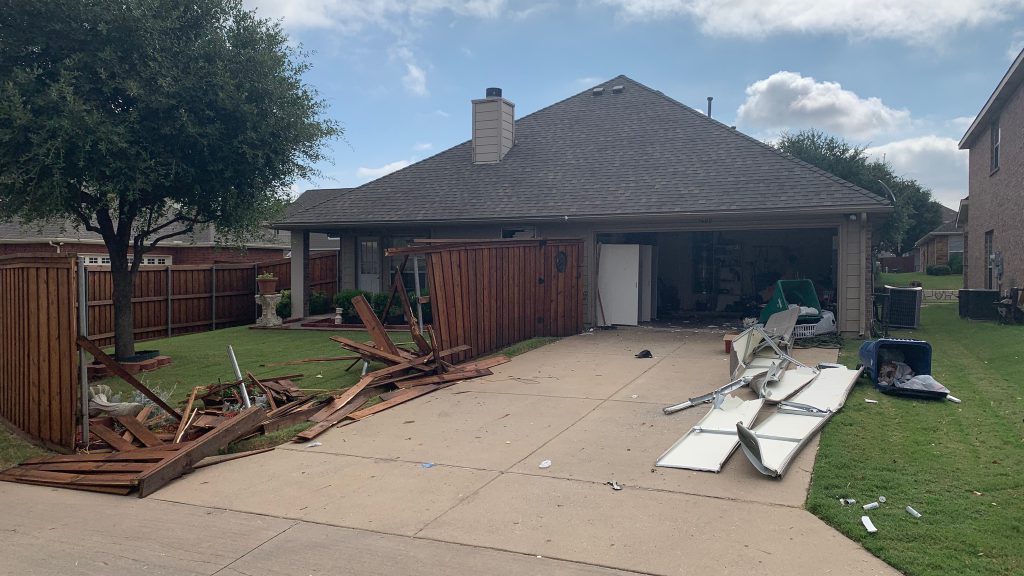
SWAT Destruction
IJ Ensures Americans Receive Just Compensation When the Government Takes or Destroys Their Property

Zoning
The local use of zoning was first blessed by the U.S. Supreme Court in its controversial 1926 decision in Euclid v. Ambler Realty. And since that decision,…
Eminent Domain Cases

Eminent Domain | Private Property
Stiffed by a Pipeline Company Wielding Eminent Domain, Plains Ranchers Appeal to U.S. Supreme Court
North Dakota ranchers fought a pipeline company with eminent domain power for the fair value of their land. But an appeals court said the company did not have to pay the ranchers' attorney fees. That places property owners in a Catch-22 when it comes to getting a fair price: accept a low-ball offer for their land or fight for a fair price out of their own pocket.

Eminent Domain | Private Property
Local Small Business Developer Sues South Carolina Town Trying to Take His Property
A native of James Island, South Carolina, wants to develop thoughtful properties in his hometown. The town took his land using eminent domain based on a pretext.
Eminent Domain | Private Property
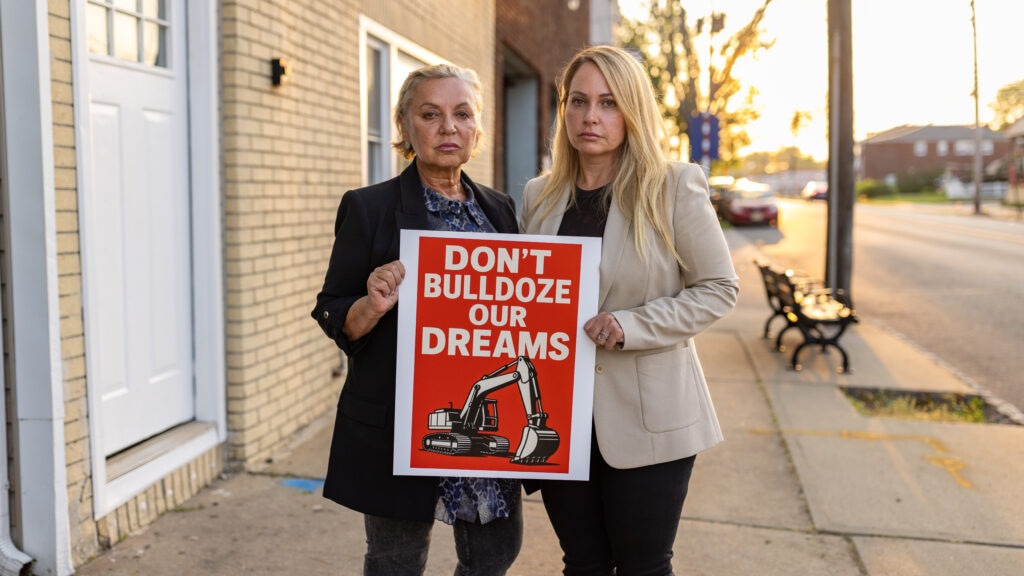
New Jersey Properties Blighted Just Because City Wants Them, Not Because Anything is Wrong With Them
Honey Meerzon and Luis Romero came from different backgrounds but have many things in common. Their parents both fled oppressive government regimes in search of a better life for their children.
Eminent Domain | Private Property
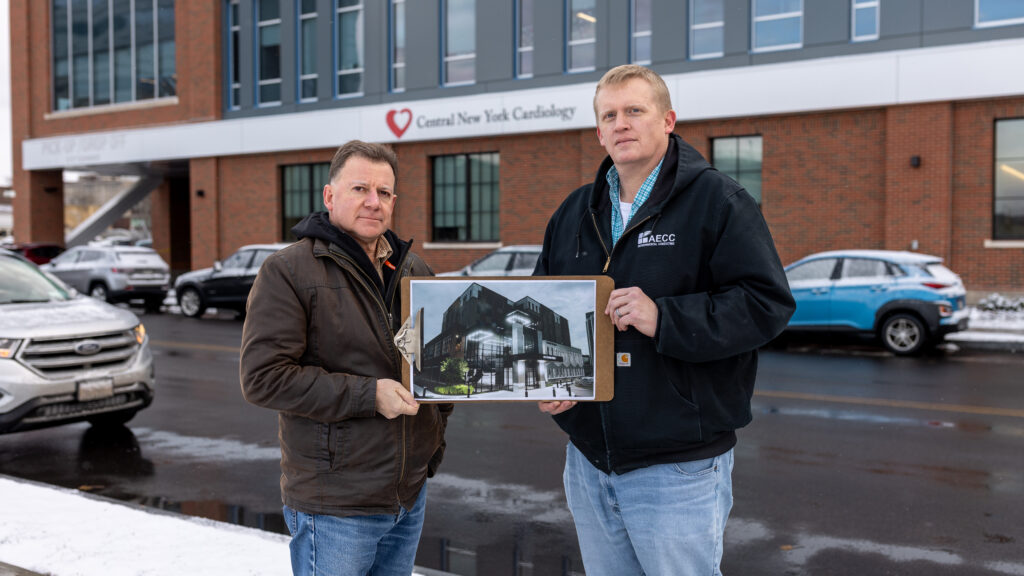
New Petition Asks Supreme Court to Overturn Infamous Kelo Eminent Domain Decision
Can the government take your property just to hand it over to your business competitor? That is the question New York developer Bryan Bowers asked the United States Supreme Court…

Eminent Domain | Private Property
Small Businesses Sue St. Louis Suburb to Save Their Locations From Bogus Blight Designation
A St. Louis suburb is trying to pave the way for a massive redevelopment by calling well-kept loved family businesses.
Eminent Domain News
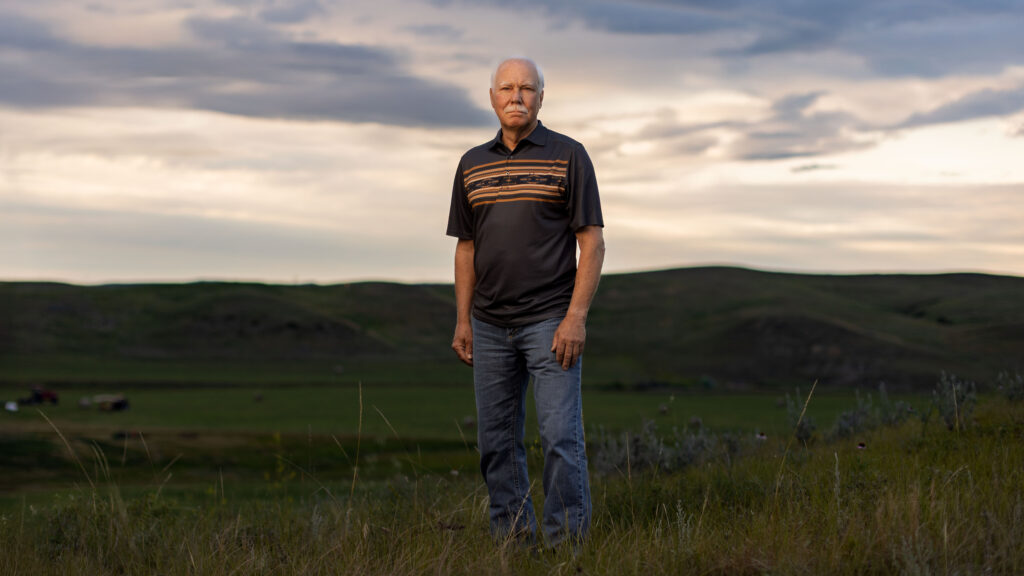
Support Pours in for Ranchers’ Supreme Court Battle with Pipeline Company Wielding Eminent Domain Power
ARLINGTON, Va.—With the U.S. Supreme Court poised to consider a case with massive implications for property owners across the country, support poured in for a group of North Dakota ranchers’ fight…
Ranchers’ Fight for a Fair Price from Pipeline Company that Took Their Land Heads to the US Supreme Court
WASHINGTON—The U.S. Supreme Court has agreed to hear a case from a group of North Dakota ranchers who fought for years to obtain a fair price for land a pipeline company…

Property Owners Ask Georgia Supreme Court to Hear Case Challenging Private Railroad’s Land Grab
ATLANTA—On Monday, a group of property owners in rural Sparta, Georgia filed a petition asking the Georgia Supreme Court to hear their case challenging a private railroad’s attempt to take their…
US Government Calls on Supreme Court to Take Up North Dakota Ranchers’ Eminent Domain Case
WASHINGTON—The U.S. Solicitor General supports the U.S. Supreme Court taking up the appeal of a group of North Dakota ranchers who are fighting for payment of attorneys’ fees after battling…
Victory! Court Vacates Bogus Blight Designation of Perth Amboy, New Jersey, Properties
Perth Amboy, N.J.—Today, Judge Benjamin Bucca Jr. vacated a blight designation by Perth Amboy, New Jersey, against properties owned by Honey Meerzon and Luis Romero. Blight designations are often used…

North Dakota Ranchers’ Appeal Will be Considered by the Supreme Court Friday
ARLINGTON, Va.—The U.S. Supreme Court will consider on Friday whether to hear the case of a group of North Dakota ranchers. The ranchers, who own property in McKenzie County, fought for…
Eminent Domain Legislation
Eminent Domain | Private Property
Eminent Domain Act
Despite mass public outcry following the U.S. Supreme Court’s infamous decision in Kelo v. City of New London, eminent domain for private gain continues to threaten homeowners and small businesses. While 43 states reformed their…
Eminent Domain Research
Eminent Domain | Private Property
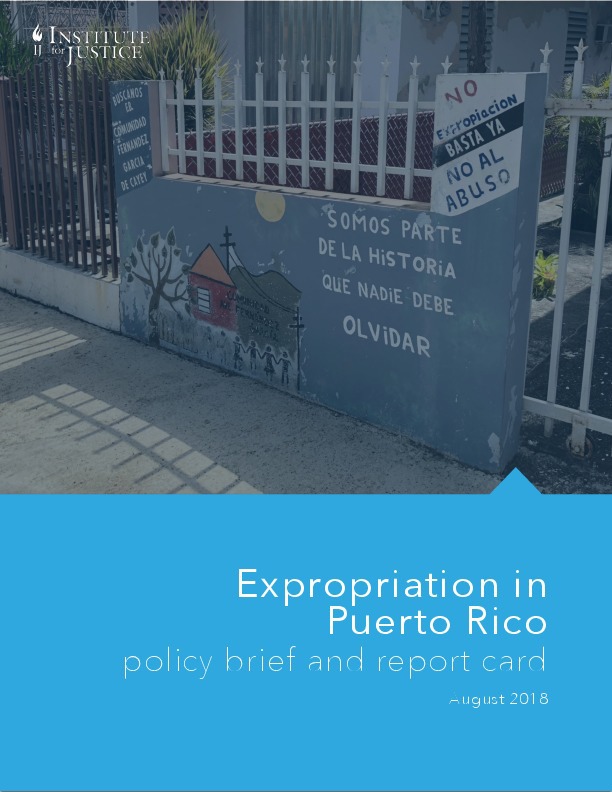
Expropriation in Puerto Rico
In a new report (released August 6), the Institute for Justice (IJ) gives Puerto Rico’s eminent domain laws a grade of “F.” IJ is a nonprofit, civil liberties law firm dedicated to ending eminent domain…
Eminent Domain | Private Property
Comment on Carpenter and Ross (2009) Eminent Domain and Equity
In an October 2009 Urban Studies article, Dick Carpenter and John Ross present new research on eminent domain in the US. The authors study areas where local governments plan to acquire property via eminent domain…
Eminent Domain Podcasts
March 26, 2026
City Tried to CONDEMN Property Over 2 Stray Cats
What happens when the government tries to take well-kept homes and businesses by slapping them with a “blight” label that doesn’t fit? Perth Amboy, New […]
Listen NowOctober 09, 2025
A Pipeline Demanded Their Land for Pennies. They Fought Back.
When the government, or even a private company, takes your land using eminent domain, the law promises you just compensation. But what about the thousands […]
Listen NowJanuary 31, 2025
The Government Can GIVE Your Home to Developers
In 2005, the U.S. Supreme Court issued one of its most reviled decisions in modern history, in Kelo v. City of New London. By a […]
Listen NowSeptember 28, 2024
Popular Family Store Fights Bogus Eminent Domain
Can the government take your land just because they don’t like you? That’s happening to Brinkmann’s Hardware, a beloved local store in Long Island. After […]
Listen NowGrassroots Strategies for Winning the Fight Against Eminent Domain Abuse

Activists nationwide have used the information in IJ’s Survival Guide to successfully protect their homes and small businesses from eminent domain abuse.