IJ Fights Pennsylvania’s Costly “Ghost Office” Requirement
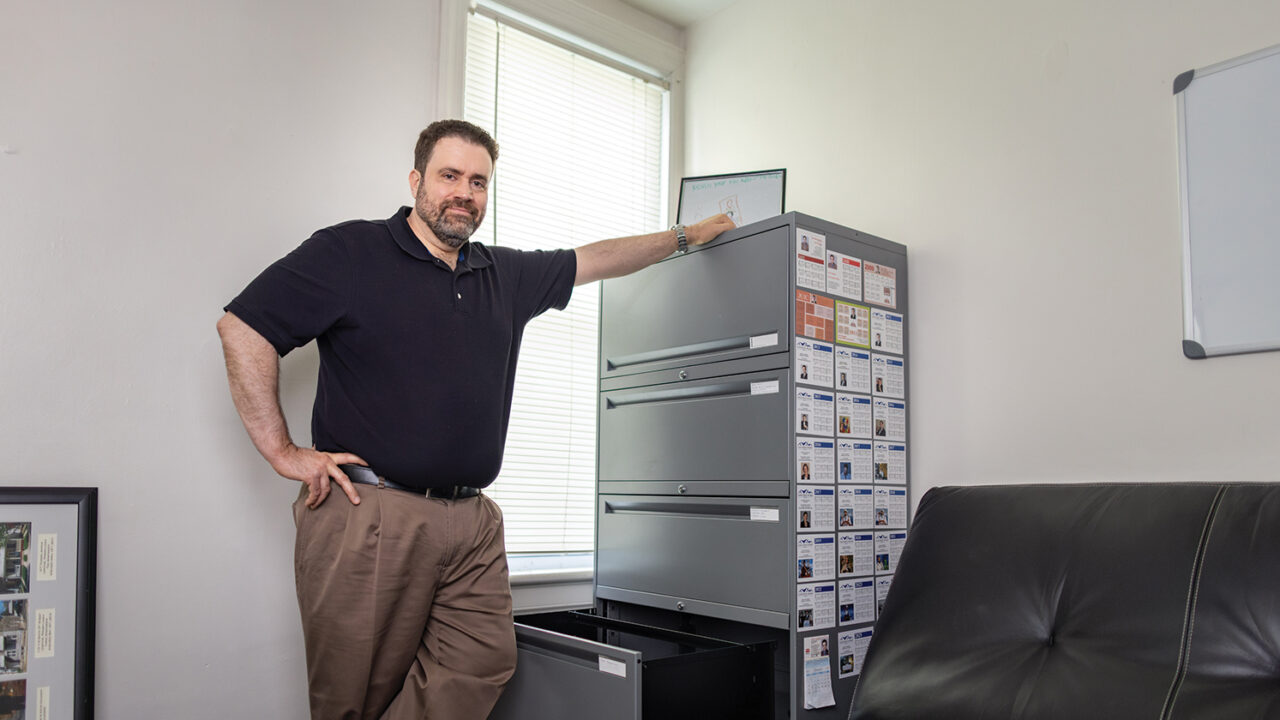
A former apartment just outside Harrisburg, Pennsylvania, has sat vacant for years. Not because no one wants to live there—but because state law requires it to be kept as a real estate office.
That office belongs to IJ client Kevin Gaughen, a third-generation broker who has worked in Pennsylvania real estate for 20 years. Like many modern brokers, he does not sit in an office waiting for clients to come to him. Instead, using his phone or computer, he works from home, on the road, or at the properties themselves. His office is merely a billboard—an expensive one.
But Pennsylvania requires Kevin to maintain an office, even if he never uses it.
That requirement dates back nearly a century, to a time when the real estate industry looked very different. Today, brokers communicate by phone, text, and email; use online listings and electronic signatures; meet clients at properties; and attend inspections, walk-throughs, and closings away from the office. As for other professionals working remotely across the country, offices have become at least optional, if not obsolete, for brokers.
Yet Kevin keeps the office—not for clients, but for inspectors. Up to four times a year, the Real Estate Commission sends inspectors (unannounced) to check for things like a conference table, a landline phone, and a filing cabinet. Kevin risks heavy fines—and even his license—for noncompliance.
Kevin and other brokers incur tens of thousands of dollars in costs each year. All the while, their ghost offices sit empty rather than serve as housing or some other productive use.
This requirement imposes a real burden. Kevin and other brokers incur tens of thousands of dollars in costs each year in rent, insurance, taxes, utilities, and repairs—costs they must absorb or pass on to their clients. All the while, their ghost offices sit empty rather than serve as housing or some other productive use.
But the Pennsylvania Constitution protects the right to earn an honest living free from outdated and burdensome regulations like these. This principle was reinforced in our victory representing Sally Ladd (featured in the December 2022 issue of Liberty & Law).
As an Airbnb manager, Sally was not a broker in the traditional sense of helping clients buy or sell properties. But the same state commission demanded she obtain a broker’s license anyway and comply with all its requirements, including 300 hours of coursework, an apprenticeship … and, of course, maintaining an office. The Pennsylvania Supreme Court determined these regulations were unnecessarily burdensome for someone like Sally.
Now Kevin has teamed up with IJ to answer a follow‑up question: If the office requirement does not make sense for Sally, why does it make sense for a more traditional broker like himself?

Kevin satisfies all the other requirements of his license. But when it comes to the office requirement, neither he nor his clients have any use for it. If Pennsylvania’s protections for the right to earn a living mean something, they should apply to a licensed broker just the same as an unlicensed property manager.
A win here would not just be a win for one broker with one office. Nor would it be limited to realtors. Licensing regimes in many occupations come with outdated brick-and-mortar space requirements that keep out small businesses or protect incumbent ones. A win would cement Pennsylvania as one of several states that provide meaningful protections for economic liberty—including Georgia, North Carolina, and Texas.
The government cannot force you to maintain a ghost office just to earn a living. IJ will make sure Pennsylvania courts say so.
Christian Lansinger is an IJ attorney.

Also in this Issue

Liberty & Law
One Woman’s Fight Protects Property Owners Across Texas

Liberty & Law
A Plain Outlier: North Dakota Prefers Licensed Teachers Over Qualified Ones

Liberty & Law
What’s In A Name? Speakeasies Aren’t Illegal, But In Nebraska, Their Names Can Be

Liberty & Law
A Lot at Stake: IJ Battles Restrictive Zoning

Liberty & Law
Taking Out The Trash: Texas Entrepreneur Fights City’s Dumpster Monopoly
Liberty & Law
IJ Takes North Dakota Ranchers’ Pipeline Fight To The Supreme Court

Liberty & Law
A Victory For Fresh Starts In The Bluegrass State

Liberty & Law
Victory! An Illinois City Lets Garden Grow

Liberty & Law
Friends Of The Court, Foes Of Financially Driven “Justice”

Liberty & Law
IJ Makes Headlines
Subscribe to get Liberty & Law magazine direct to your mailbox!
Sign up to receive IJ's bimonthly magazine, Liberty & Law, along with breaking news updates about the Institute for Justice's fight to protect the rights of all Americans.