
Project on the 4th Amendment
Every American is now at risk of government searches, seizures, and surveillance. IJ defends vital rights to privacy and security.
Project on the 4th Amendment
Protecting Our Right to be Secure in Our Persons and Property
The Institute for Justice’s Project on the Fourth Amendment strives to protect one of America’s foundational property rights: The right to be secure from unreasonable searches and seizures. As government has grown in size and scope, judges have invented one exception after another, poking holes in the Fourth Amendment until it resembled Swiss cheese.
These exceptions let Big Brother snoop on our daily lives–including by coming onto peoples’ land to snoop on them and demanding records about who people called or what websites they visited–all without ever having to get a judge’s permission. The threat these exceptions pose grows ever more dire because under current search and seizure law, the further technology advances, the more privacy must retreat.
But IJ’s Project on the Fourth Amendment will restore Americans’ rights to security and privacy. It will persuade both courts and the public that the Fourth Amendment is a fundamental aspect of our property rights. It will eliminate loopholes that let the government investigate us and our property without having to get a warrant. And it will convince courts that whether a search or seizure is “unreasonable” turns not on their own personal views, but rather on the protections that Americans fought a revolution to secure.

The Fourth Amendment
The right of the people to be secure in their persons , houses , papers , and effects, against unreasonable searches and seizures, shall not be violated, and no warrants shall issue, but upon probable cause, supported by Oath or affirmation, and particularly describing the place to be searched, and the persons or things to be seized.
What Happened?
How Our Right to be Secure Got Eviscerated
The Fourth Amendment is a broad declaration of our right to be secure in our persons and property but it, like all our rights, is only good so long as courts interpret and apply the right consistent with the Framers’ understanding. Early on, that’s what happened. In the first major Fourth Amendment case that came before the Supreme Court, the Court rejected the government’s claim that it could open letters and packages travelling through the mail, holding that the “constitutional guaranty of the right of the people to be secure in their papers against unreasonable searches and seizures extends to their papers, thus closed against inspection, wherever they may be.” Ex parte Jackson, 96 U.S. 727, 733, 24 L. Ed. 877 (1877). In another early case, the Supreme Court rejected the government’s attempt to subpoena a person’s private papers for use in a forfeiture proceeding and declared that
[C]onstitutional provisions for the security of person and property should be liberally construed. A close and literal construction deprives them of half their efficacy, and leads to gradual depreciation of the right, as if it consisted more in sound than in substance. It is the duty of courts to be watchful for the constitutional rights of the citizen, and against any stealthy encroachments thereon. Their motto should be obsta principiis [“resist beginnings”].
Boyd v. United States, 116 U.S. 616, 6 S. Ct. 524, 29 L. Ed. 746 (1886).
How We’re Fighting Back
Our right to be secure deserves better than its current treatment. So IJ’s Project on the Fourth Amendment will persuade courts to get rid of the confusing and contradictory Fourth Amendment rules that currently exist. In their place, the Project is offering courts a fresh approach to search-and-seizure law that is simple to understand, consistent with original understanding, and broadly protective of our right to be secure.
IJ’s Project on the Fourth Amendment will take aim at the doctrines that allowed the horror stories that both IJ clients and others have experienced. And in so doing, IJ will convince courts that all purposeful investigative acts by government officials are “searches” and that whether those searches are “reasonable” turns not on judges’ personal beliefs, but on whether they are consistent with the protections the Framers intended. These reforms are critical to ensure that Americans can feel secure in our persons and property for generations to come.
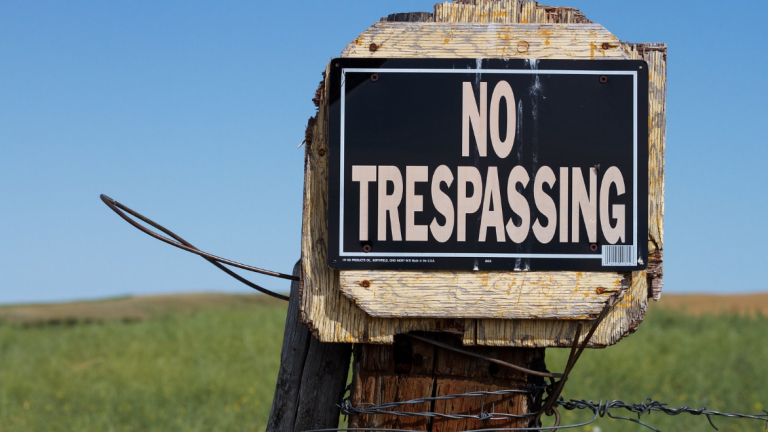
Open Fields Doctrine
Private land isn’t really private if government officials can come onto it whenever they want. Learn more about how the open fields doctrine opened up our private property to public inspection, how modern technology now allows that inspection to continue 24/7, and how IJ’s Project on the Fourth Amendment is fighting back.

Third-Party Doctrine
Our information is our property. But the second we share our information with others, we lose all Fourth Amendment protections, even if the other party contractually agreed to keep it secure. Learn how the Supreme Court wrongly applied a rule meant for mob stool pigeons to us all, and how IJ’s Project on the Fourth Amendment is pushing back.

Business Inspections
Just because you open a business doesn’t mean you give up your right to be secure. Although the Supreme Court says the government typically needs a warrant to inspect the non-public parts of your shop, lower courts have gutted that guarantee by blowing open what was supposed to be a narrow exception for ultra-hazardous businesses.

Rental Inspections
Our home is our castle, and that doesn’t change depending on whether we own it outright or rent it from someone else. But numerous cities across the United States are demanding to enter renters’ homes, either by strong-arming landlords or by using administrative warrants that don’t require the government to have any evidence of a problem.
4th Amendment Issues
License Plate Readers
As part of our Project on the Fourth Amendment, the Institute for Justice is challenging the government’s arbitrary power to use ALPRs to surveil the entire driving…
Open Fields Doctrine
The open fields doctrine is the product of decades of bad Fourth Amendment judging. History shows that the Framers’ original understanding and purpose for enacting the Fourth Amendment…

Rental Inspections
Renters head at least 36% of the nation’s 122.8 million households. Although renters are entitled to the same security and privacy in their homes as homeowners, their Fourth…

Third Party Doctrine
Americans rightly think that whom they call, what websites they visit, or what they have in the bank is their own business. But according to the U.S. Supreme Court,…
Warrantless Inspections of Businesses
Some people think that the Fourth Amendment’s mentioning of our “persons, houses, papers, and effects” means its protections are limited to just those four things. But they…
Project on the 4th Amendment Cases

4th Amendment Project | License Plate Readers | Rule of Law | Warrantless Surveillance
San Jose residents file federal lawsuit challenging city's use of nearly 500 license plate reader cameras
San Jose residents file federal class action lawsuit challenging city's use of nearly 500 license plate read cameras.

4th Amendment Project | Immunity and Accountability | Rule of Law
Portland Family Files Lawsuit After SWAT Team Arrested Innocent 16-Year-Old at Gunpoint
Parents sue after a SWAT team detained their innocent 16-year-old son at gunpoint as he walked to lunch.
4th Amendment Project | Immunity and Accountability | Private Property
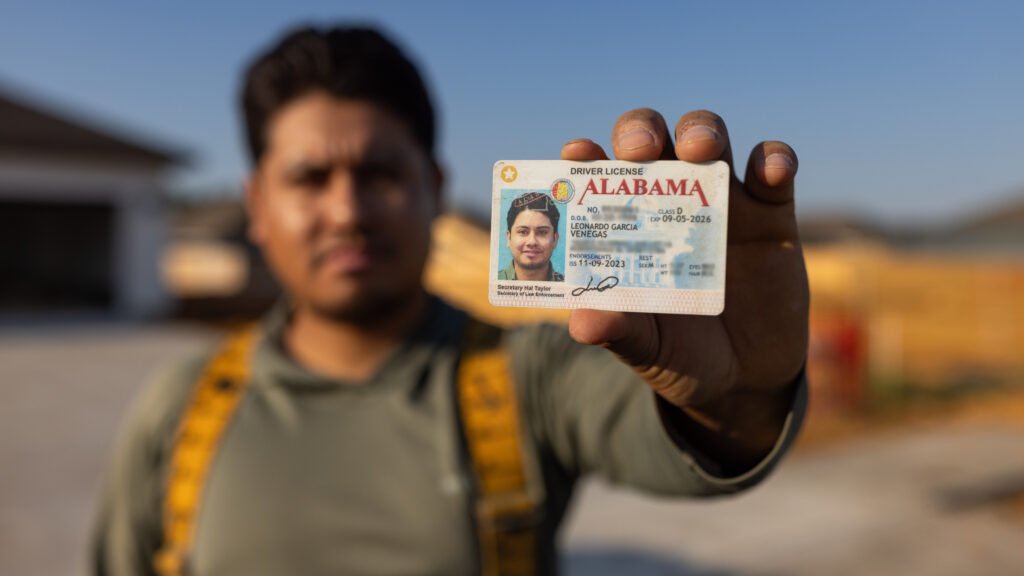
U.S. Citizen Demands End to Unconstitutional Raids and Detentions
A U.S. citizen, who was wrongly detained twice, is suing to stop unconstitutional raids on private construction sites.

4th Amendment Project | Immunity and Accountability | Rule of Law
Woman Traumatized by False Arrest Sues US Marshals
Penny McCarthy was mistaken for another woman and violently arrested by armed U.S. Marshals. She is suing over the violation of her Fourth Amendment rights.

4th Amendment Project | Open Fields Doctrine | Private Property
Alabama Residents File Lawsuit Challenging Statute Permitting Game Wardens to Search Private Property Without Warrant
Three northern Alabama residents have teamed up to file a lawsuit challenging a statute that allows game wardens to trespass on private property without a warrant.
Latest Project on the 4th Amendment Events
License Plate Readers
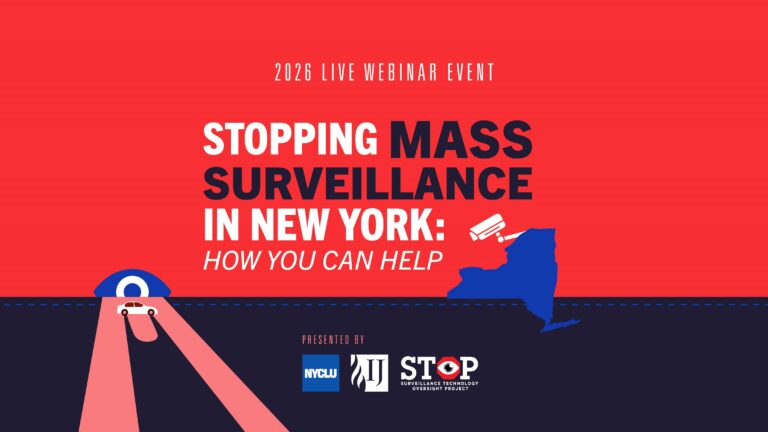
Webinar: Stopping Mass Surveillance in New York
Live Webinar Event: Stopping Mass Surveillance in New York Automatic license plate readers (ALPRs) have expanded across New York, creating a growing network of cameras that record where people drive, when they travel, and…
4th Amendment Project | License Plate Readers
The Future for License Plate Readers after the Supreme Court’s Big 4th Amendment Decision
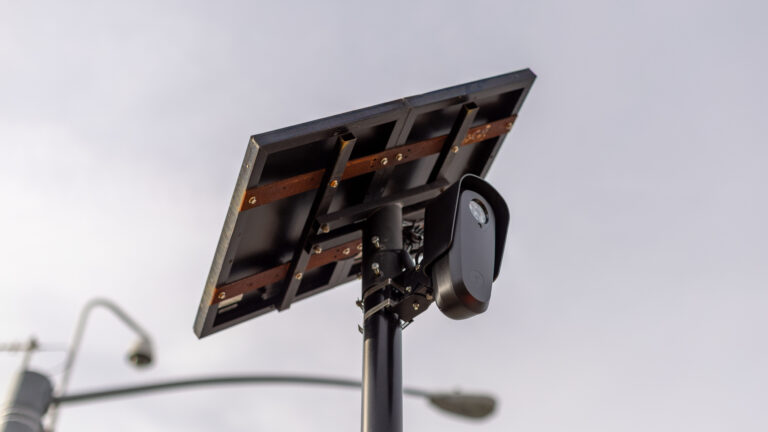
Across the U.S., more than 100,000 automated license plate readers (ALPRs) capture the driving data of Americans going about their daily lives. The detailed information is readily available to law enforcement, almost always without…

4th Amendment Project | License Plate Readers
The Open Road and the Watchful State: Automatic License Plate Readers and the Fight for Fourth Amendment Privacy
Across the country, cities are blanketing streets with high-speed cameras that scan and record the details of every passing car, storing millions of data points about where people go, when, and how often. Officials…
Project on the 4th Amendment News

Victory! Court Rejects Qualified Immunity in Louisiana Motorists’ Case, Allowing Fourth Amendment Claims of an Unconstitutional Traffic Stop to Continue
NEW OLREANS—For nearly four years, Mario Rosales and Gracie Lasyone have pursued justice over an unconstitutional traffic stop and roadside questioning by two Alexandria, Louisiana, police officers. Last year, Mario and…
How Flock is trying to take credit for the post-pandemic crime drop
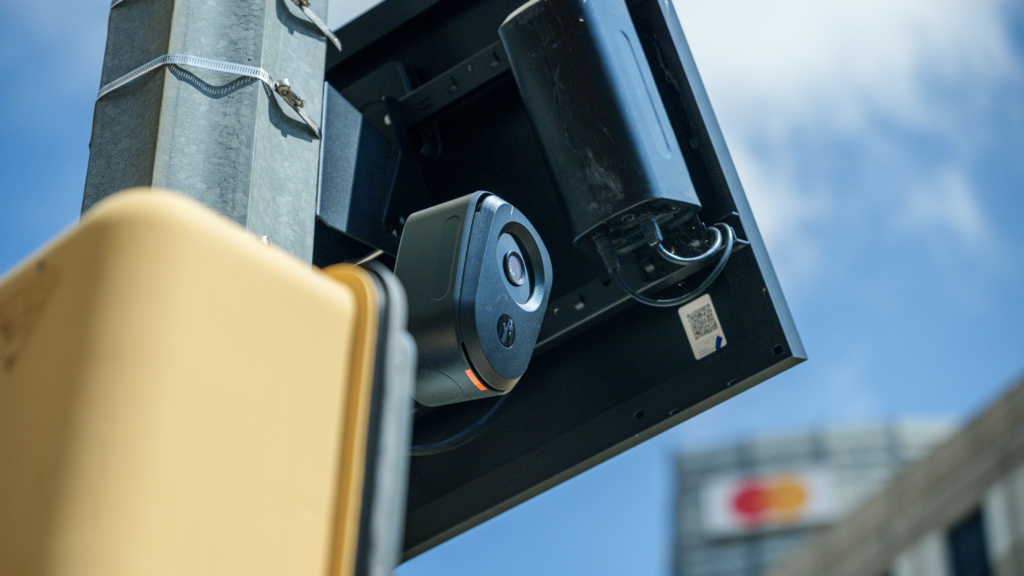
Boosters of automated license plate reader (ALPR) surveillance make grand claims about the capabilities of their technology. Flock Safety, for instance, says its mission is to “eliminate…

Federal Court Orders DHS to Stop Detaining People with Valid Identification and Halts Warrantless Construction Site Raids
MOBILE, Ala.—A federal judge in Alabama ordered immigration officers to stop warrantless raids of construction sites, to stop detaining construction workers without a reason to suspect that a specific individual…
Do Flock cameras actually reduce crime? The jury is still out.
A recent study on how Flock cameras influence crime rates has limitations that prevent firm conclusions from being drawn.

FinCEN Renews Financial Surveillance Order Declared Illegal in 9th Circuit
ARLINGTON, Va.—Yesterday, the Financial Crimes Enforcement Network (FinCEN) reissued an order requiring certain businesses in targeted ZIP codes in New Mexico and Texas to report all cash transactions above $1,000.
US Citizen and Construction Worker Wins First Round in His Lawsuit Over Repeated Unconstitutional Detentions
MOBILE, Ala.—A judge in Alabama granted Leo Garcia Venegas, an American citizen and construction worker, a first-round victory in his federal lawsuit aimed at stopping unconstitutional raids and detentions by immigration officers. Judge…
Institute for Justice Sounds Alarm on Smithtown Surveillance
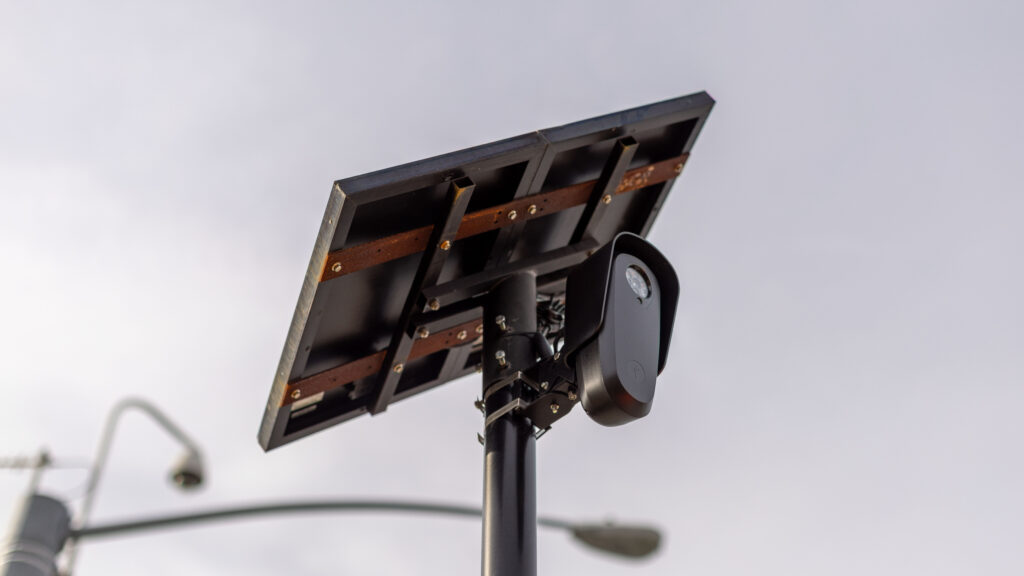
IJ is warning residents of Smithtown, New York, that the town appears to have virtually no safeguards governing its new 250-camera surveillance network.
Institute for Justice Unveils New Database Tracking Cancelations of License Plate Reader Contracts
ARLINGTON, Va.—As backlash grows against the warrantless use of automated license plate reader (ALPR) cameras throughout the country, local governments are increasingly deciding to end their use of these cameras. Today,…
Project on the 4th Amendment Legislation
4th Amendment Project | License Plate Readers
The Protecting Everyone from Excessive Police Surveillance (PEEPS) Act
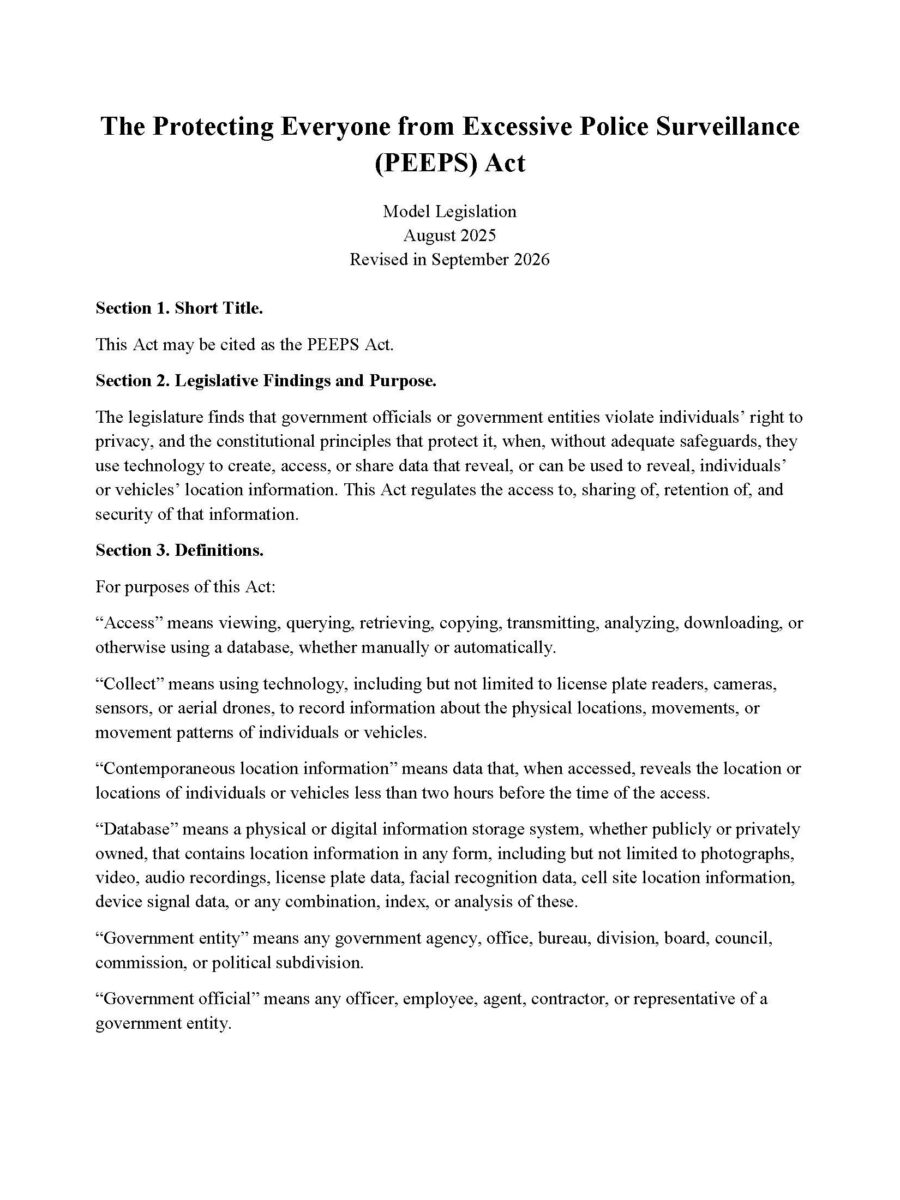
George Orwell’s vision of an all-seeing state isn’t fiction anymore. Modern surveillance technology enables the government to track your everyday movements, store your location history, and watch your life unfold in real time.
4th Amendment Project | Open Fields Doctrine
Protecting Real Property From Warrantless Searches Act
A State Solution to the Open Fields Doctrine Under the Fourth Amendment The Fourth Amendment protects the right to be secure from government’s power to search and seize. Ordinarily, courts enforce that right by…
4th Amendment Project | Third Party Doctrine
Protection of Shared Physical and Digital Property from Warrantless Searches Act
The Fourth Amendment aims to safeguard privacy and property by restricting the government’s authority to conduct searches and seizures. Typically, officials are required to secure a warrant from a judge before they can examine or take…
Related Amicus Briefs
Chatrie v. United States
United States Supreme Court
Dept. of Development Services v. CF Homes
Ohio Supreme Court
The People of the State of Michigan v. Armstrong
Michigan Supreme Court
Jackson v. United States
7th U.S. Circuit Court of Appeals
Logsdon v. United States Marshal Service
10th U.S. Circuit Court of Appeals
Long Lake Township v. Maxon
Michigan Supreme Court
City of Seattle v. Long
Washington Supreme Court
Project on the 4th Amendment Research
4th Amendment Project | Open Fields Doctrine
The Open Fields Doctrine Is Wrong
This year marks the centennial of the Fourth Amendment “open fields” doctrine. That doctrine holds that the vast majority of private land in the United States receives zero Fourth Amendment protection—and thus government officials…
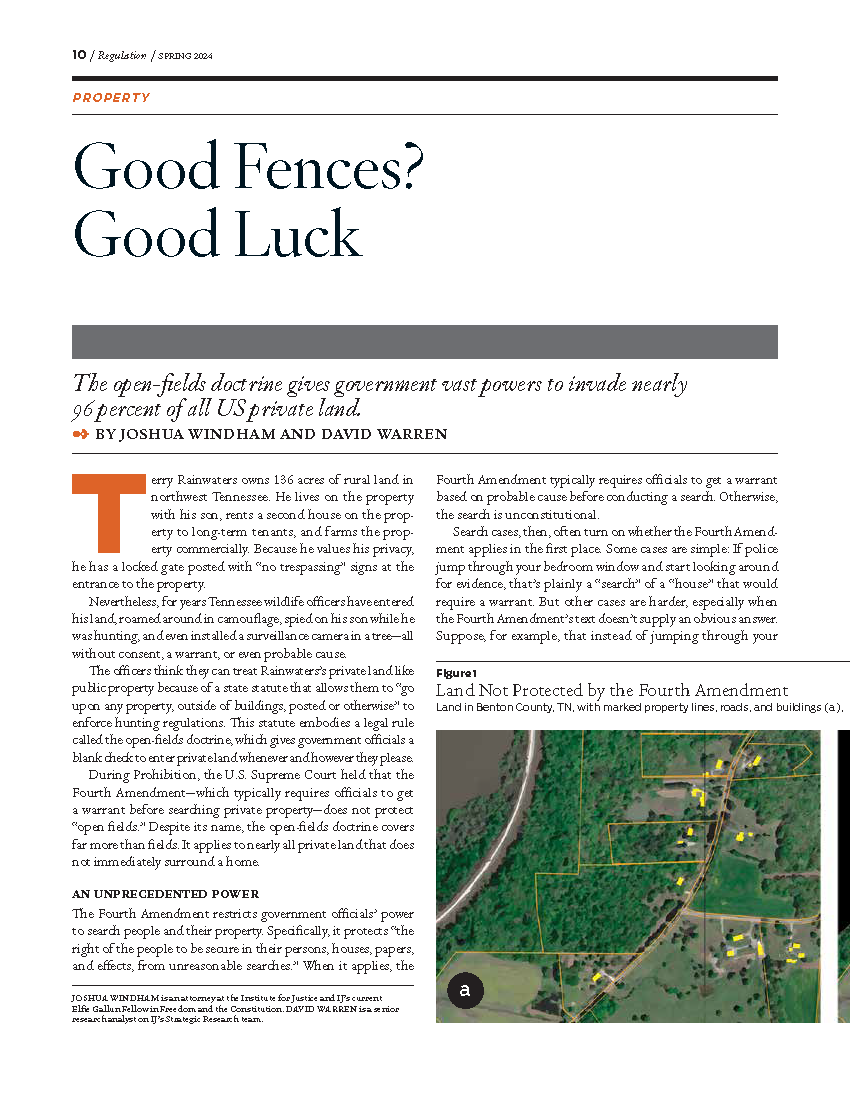
4th Amendment Project | Open Fields Doctrine
Good Fences? Good Luck
Released in the Cato Institute’s Regulation magazine, IJ’s study “Good Fences? Good Luck” is the first study to put a number on the amount of private property vulnerable to warrantless searches by federal agents thanks to a…
Project on the 4th Amendment Podcasts
January 08, 2026
Americans Keep Getting Caught Up In Immigration Raids
Leo Garcia Venegas and George Retes were simply trying to work, when they got ensnared by dragnet federal immigration raids. Even though both men identified […]
Listen NowJuly 28, 2025
Another Game Warden Caught Spying: "This is a real problem"
Dalton Boley thought he found a refuge for him and his children in 10 acres of woods by his Alabama home. That is, until government […]
Listen NowDecember 16, 2024
Creepy AI-powered Surveillance Cams in 5,000 Cities and Counting
Not long ago, if police wanted to know where someone drove, they would have to follow that person for days, taking significant resources. But new […]
Listen NowNovember 26, 2024
"Fish Cops" Flounder the 4th Amendment
In Pennsylvania, officers of the Fish and Boat Commission have the power to trespass on any land or water without a warrant. For one couple, […]
Listen Now