IJ Fights For Family’s Freedom To Build Backyard Cottage
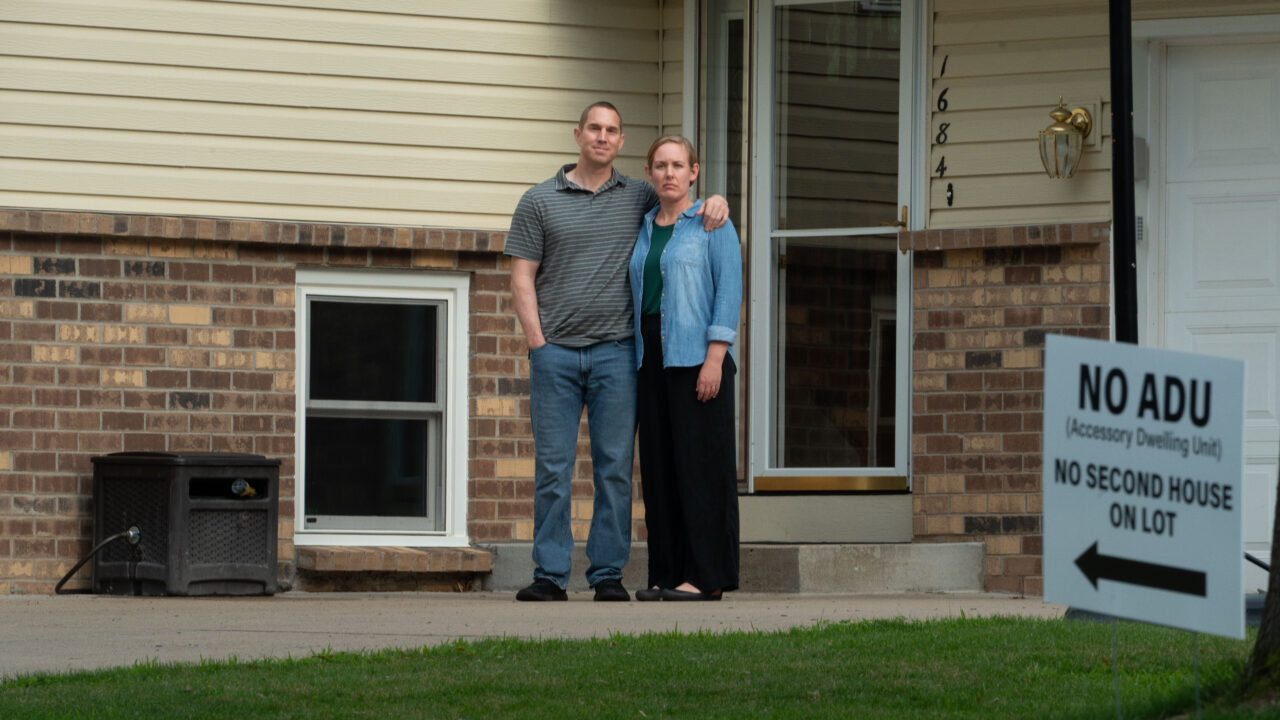
You might call it an in-law cottage or granny flat. City zoning ordinances call it an “accessory dwelling unit,” or ADU. These small backyard homes offer an affordable place to live for people who don’t need a large house—like a grandparent, a retired couple, or a small family. Many cities have legalized ADUs in response to pressing housing shortages, letting property owners use their own land to address the public problem of sky-high housing costs.
That’s exactly what Alex and Lynda Pepin want to do.
For years, the Pepins have worked with nonprofits that assist people who have low incomes or are vulnerable to homelessness. As their involvement deepened, the couple decided the next step in their charitable mission was to more directly help a vulnerable family get back on their feet by providing a stable and affordable place to live. So they drew up plans to build an ADU behind their own home and hoped to rent the cottage at a below-market rate to a small family transitioning out of homelessness.
Alex and Lynda’s town—Blaine, Minnesota—legalized ADUs a few years ago for the express purpose of giving people the freedom to build affordable housing. Relying on this law, the Pepins used their own money to submit an ADU application that met every detailed requirement: height, number of bedrooms, square footage, occupancy, setbacks, roof pitch, architectural style, and parking accommodations. Alex and Lynda’s application was the first one Blaine had received since legalizing backyard homes.
Blaine’s planning staff approved the Pepins’ application, recognizing that they had met every requirement to build under the city’s law. But the city council rejected the application, protesting that the Pepins wanted to add a new unit of housing in a predominantly single-family neighborhood—even though the law expressly allowed it.
Blaine’s mayor even admitted that Alex and Lynda were allowed to build their ADU. Nonetheless, the city council defied its own law to revoke the Pepins’ property rights. The council falsely claimed that the backyard home conflicted with the unwritten “intent” of the ADU ordinance—though, by its plain terms, the Pepins were free to build.
Some residents object to the Pepins’ plans because they don’t want to bring a family down on their luck into the neighborhood. But no neighbor—or city official—gets to decide who can and cannot live on private property. The Pepins have a right to build a legally compliant structure and use it in a way that doesn’t harm others. Any prospective tenant will be someone local to Blaine, identified by a local nonprofit, and rigorously screened by the Pepins; after all, they’re raising their own small children just across the yard, less than 20 feet away.
As part of our broader Zoning Justice Project, IJ sued Blaine on behalf of the Pepins. This case isn’t just about one family’s backyard; it’s about protecting property rights nationwide. Zoning exists to regulate land, not people. The government can’t block new housing simply because it doesn’t like who might live in it.
Matt Liles is an IJ attorney.
Also in this Issue
Liberty & Law
IJ Makes Headlines
Liberty & Law
Victory! Farmers Vindicate The Right To A Real Judge

Liberty & Law
Rogue Detroit Prosecutor Must Stand Before Judge

Liberty & Law
Where’s The (Cultivated) Beef? IJ Takes On Texas’ Ban On Cultivated Meat
Liberty & Law
How IJ Stopped The Biggest Forfeiture Heist In American History

Liberty & Law
IJ And SPN Establish Chip Mellor Prize For Excellence In Public Interest Litigation

Liberty & Law
Are Federal Officials Above The Law?

Liberty & Law
Home Sweet Business: Victory For Garage-Based Entrepreneurs In Nashville

Liberty & Law
New Campaign Seeks To Shut Down Mass Surveillance
Liberty & Law
Another Real Class Act(ion) At The Crossroads Of America
Subscribe to get Liberty & Law magazine direct to your mailbox!
Sign up to receive IJ's bimonthly magazine, Liberty & Law, along with breaking news updates about the Institute for Justice's fight to protect the rights of all Americans.