IJ Takes On Small-Town Tyrants

As America enters its 250th year, our core constitutional rights should be clearly established. But the government-friendly test for qualified immunity—which looks for prior cases with similar facts that should have put officers on notice that their particular conduct is unconstitutional—often gives a free pass to government officials who use novel means to violate the same old rights. By focusing so narrowly on the specifics of an official’s conduct, rather than on whether the violated right is clearly established, courts can miss the forest for the trees.
This happens in cases where government officials retaliate against someone for their protected speech. Trial courts can get so hung up on whether anyone has ever before retaliated in the same exact way that they lose sight of the fact that every cop, mayor, and prosecutor should know that the First Amendment forbids retaliation for speech in the first place—no matter the form.
Last year, IJ won a major victory on this exact point in a federal court in Kansas. Ruth Herbel was vice mayor of Marion when city police searched her home and confiscated her computer and only phone. The raid was retaliatory, to silence Ruth for her political opposition to the mayor and his allies.
City officials argued that they should get qualified immunity because there was no case saying that the First Amendment forbids executing a search warrant for a political rival’s cell phone and computer. But the trial court denied qualified immunity, adopting IJ’s broader view that the First Amendment’s protection against retaliation is so well settled—and a raid of a political rival’s home is so egregious—that a case on point is unnecessary.
We’re now looking to extend that victory to Arizona. Back in 2024, new IJ client Fernando “Fernie” Madrid was running for superintendent of schools in rural Apache County after a long career in education. The incumbent, coincidentally, was married to the county attorney, Michael Whiting. Fernie would soon learn that Whiting was hell-bent on using his government power to launch a coordinated intimidation scheme to make Fernie drop out.
Whiting directed two cronies on the government payroll to follow and surveil Fernie. They pelted his house with rocks. They physically assaulted him while he was collecting signatures to appear on the ballot. And, finally, they sent him creepy anonymous packages and letters threatening to bring financially ruinous legal action unless he dropped out. Terrified of what Whiting would do to him and his family next, Fernie ended his run, clearing the playing field for Whiting’s wife.
County attorneys hold a special trust—they prosecute crimes for the public, after all. But Whiting and his team instead committed crimes themselves to block an opponent from the political process. (Whiting is being criminally prosecuted, which rarely happens. One assistant has already pleaded guilty.)
Beyond criminality, this retaliatory scheme was a bedrock violation of Fernie’s First Amendment rights. Political disagreements must be resolved through open debate and at the ballot box, not with intimidation. Indeed, seeking out and campaigning for office is core protected speech. And accountability for violating that right shouldn’t depend on whether another prosecutor has already violated someone’s rights in the exact same way.
That’s why, in February, Fernie and IJ filed a federal lawsuit: to hold those who violated his First Amendment rights to account—and to cement that officials across the country who would go after political opponents for exercising free-speech rights can, in response, expect to be met with the full force of a certain merry band of justice-seeking litigators.
Jared McClain is an IJ senior attorney.
Watch the case video!



Also in this Issue

Liberty & Law
Victory For Accountability In Brookside

Liberty & Law
Detention Before Lunch

Liberty & Law
First-Round Victory For Food Startups In Texas

Liberty & Law
Despite Setback, Opportunities Abound In IJ’s Excessive Fines Work

Liberty & Law
Happy Warriors At The Podium
Liberty & Law
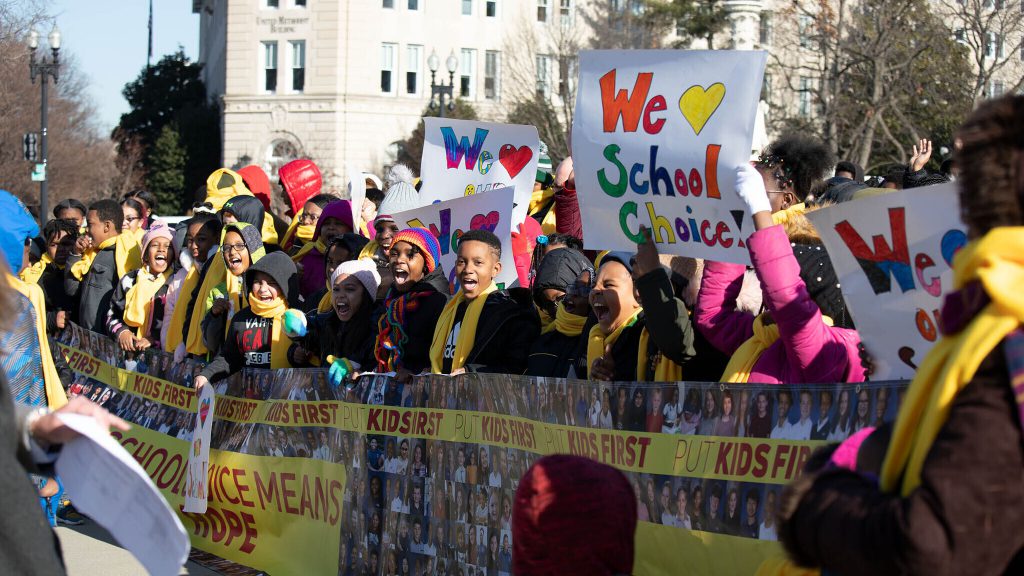
The Future Of Educational Choice Is In Good Hands

Liberty & Law
With Cities Work, Cities Are Embracing The IJ Way

Liberty & Law
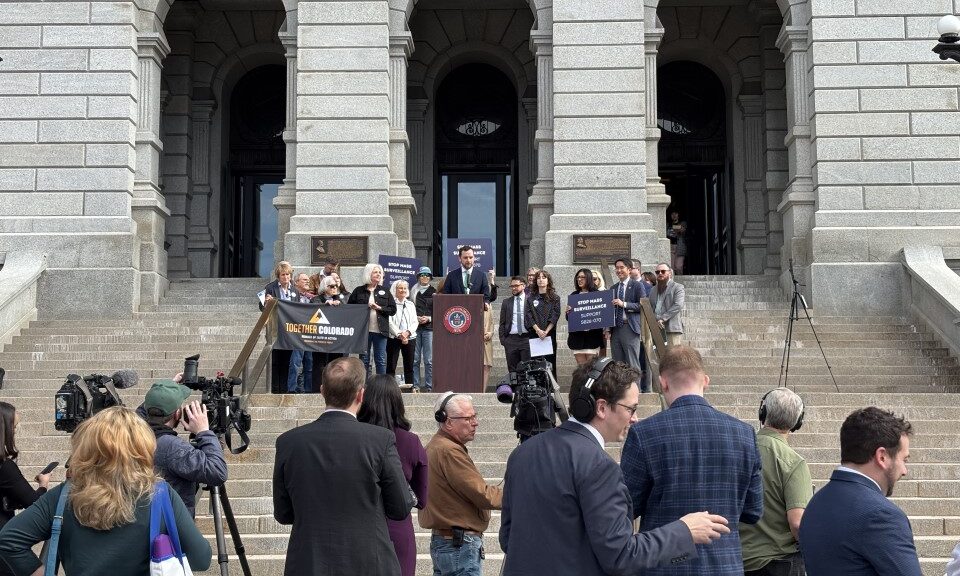
Yes In My Bar Association: Americans Are Free To Critique The Government
Liberty & Law
IJ Makes Headlines

Liberty & Law
Burying Oklahoma’s Casket Cartel Once and For All
Subscribe to get Liberty & Law magazine direct to your mailbox!
Sign up to receive IJ's bimonthly magazine, Liberty & Law, along with breaking news updates about the Institute for Justice's fight to protect the rights of all Americans.