First-Round Victory For Food Startups In Texas

IJ recently scored an important first-round victory on behalf of entrepreneurs and consumers in the Lone Star State when a Texas federal judge denied the state’s attempt to throw out our lawsuit challenging Texas’ ban on the sale of “cultivated” meat. IJ filed the lawsuit in 2025 on behalf of Wildtype and UPSIDE Foods, two California-based startups that produce cultivated salmon and chicken, respectively.
Unlike conventional meat, which is harvested from slaughtered animals, cultivated meat is grown directly from animal cells in clean, controlled facilities. The innovative technology behind cultivated meat allows consumers to enjoy the taste of meat without the ethical concerns they may have about the large-scale killing of animals or the health concerns they may have about environmental toxins or bacteria found in conventional meat.
Startups like Wildtype and UPSIDE may not look like the sort of economic liberty clients that readers of Liberty & Law are most familiar with. But their story—of established industry using government power to shut out competition—is a familiar one.
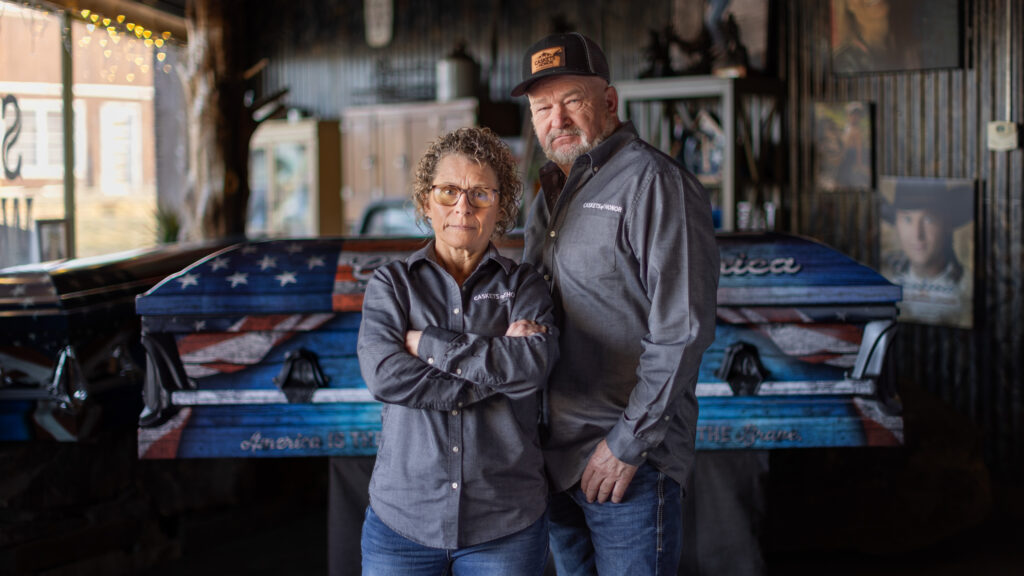
Just as restrictions on who can sell caskets are pushed not by the public but by licensed funeral directors, bans on cultivated meat are pushed by ranchers and farmers who produce conventional meat. Rather than compete against cultivated meat in the marketplace, these groups have lobbied hard to kill the cultivated meat industry before it can establish a foothold in the market.
Those efforts highlight an important and sometimes unappreciated aspect of economic liberty. Economic liberty is not just about entrepreneurs’ right to earn an honest living. It’s also about the right of entrepreneurs to innovate—and to share those innovations with their fellow Americans.
The Founders knew this. After our nation’s failed experiment with the Articles of Confederation, they drafted the Constitution to create a national common market. As part of this, the Founders drafted the Commerce Clause, which gave Congress—not the states—the power to regulate interstate commerce.
The Commerce Clause (often correctly) gets a bad rap. Much of that is the result of the Supreme Court, which in the 20th century improperly expanded the scope of the Commerce Clause to give the federal government expansive power over purely local concerns. Understood properly, though, the Commerce Clause represents a vital balancing between state and federal interests. By creating a national common market, the Commerce Clause ensures that consumers in every state can enjoy the benefits of innovation from any state.
The Texas district court agreed. It rejected the government’s motion to dismiss Wildtype and UPSIDE’s Commerce Clause challenge, which means we will now move forward building the factual record to prove that Texas’ law is about protecting in-state agriculture, not Texas consumers.
Whether cultivated meat will ultimately succeed in the market is anyone’s guess. But under our constitutional system, that question should be resolved not by state regulators acting on behalf of favored industries but by the free choices of entrepreneurs and consumers. Thanks to the Texas court’s ruling, we’re one step closer to giving them that chance.
Paul Sherman is an IJ senior attorney.

Also in this Issue
Liberty & Law
Victory For Accountability In Brookside

Liberty & Law
Detention Before Lunch

Liberty & Law
IJ Takes On Small-Town Tyrants

Liberty & Law
Despite Setback, Opportunities Abound In IJ’s Excessive Fines Work

Liberty & Law
Happy Warriors At The Podium

Liberty & Law
The Future Of Educational Choice Is In Good Hands
Liberty & Law
With Cities Work, Cities Are Embracing The IJ Way

Liberty & Law
Yes In My Bar Association: Americans Are Free To Critique The Government
Liberty & Law
IJ Makes Headlines
Liberty & Law
Burying Oklahoma’s Casket Cartel Once and For All
Subscribe to get Liberty & Law magazine direct to your mailbox!
Sign up to receive IJ's bimonthly magazine, Liberty & Law, along with breaking news updates about the Institute for Justice's fight to protect the rights of all Americans.