City of Miami Faces Lawsuit Over Unconstitutional Land Taking Scheme Targeting More Than a Thousand Homeowners Across the City
CONTACT: Phillip Suderman, [email protected] (850) 376-4110
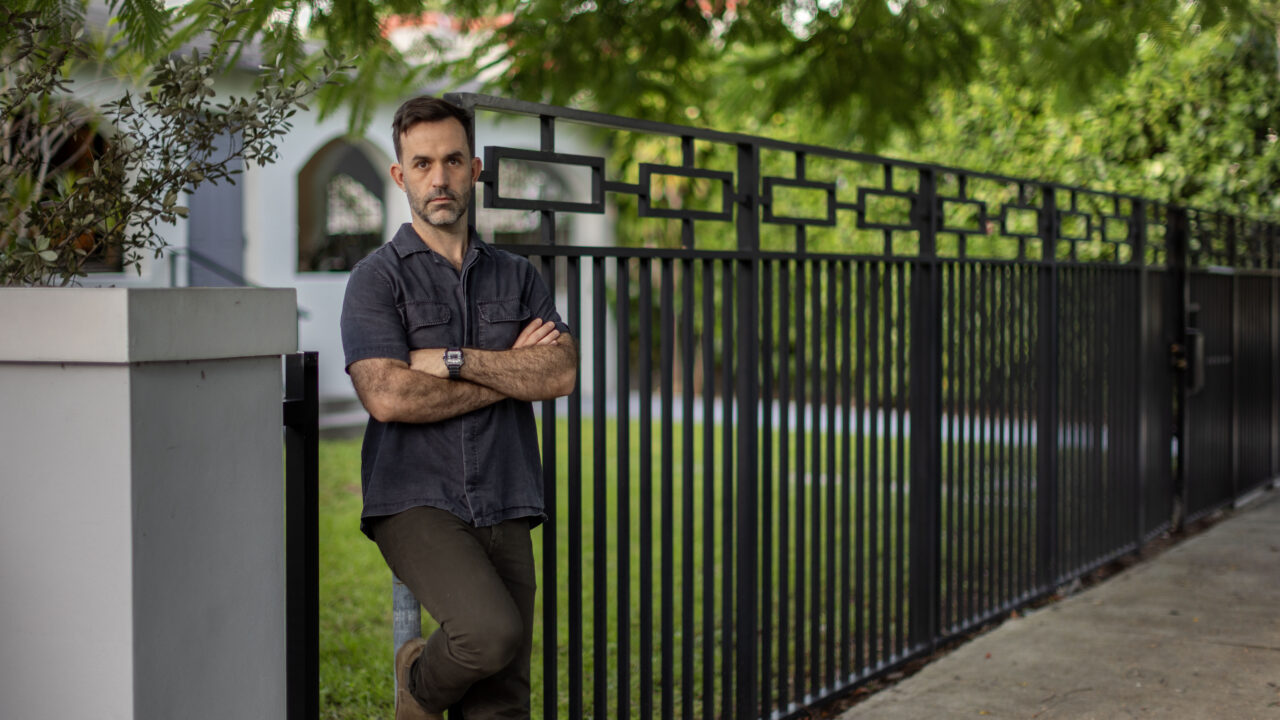
Miami— Chad Trausch is a Navy veteran who wanted to expand his home in Miami due to his growing family. But when he submitted plans for a two-bedroom, two-bathroom addition, the city came back with a strange request: it wanted half his front yard. Chad was perplexed. The demand for land had nothing to do with the addition. The city didn’t seem to have any concerns with his building plan; it simply saw an opportunity to force Chad to give up part of his property. So, Chad decided to fight back with the help of the Institute for Justice (IJ) to protect his property rights and the property rights of everyone else in the city.
“The right to prevent the government from unlawfully taking your property is a right recognized from the very start of this nation,” said IJ Attorney Suranjan Sen. “The city of Miami cannot simply decide to take your property away because it wants it.”
Miami requires a permit to build on your property. If you want to build an extra bathroom, bedroom, an accessory dwelling unit, or any other type of structural addition defined under Miami code you must get permission. This is a fairly standard process in many cities. But in Miami, the government has used the permitting process to take land from residents without having to pay for it.
The city adopted a policy of demanding this expanded right-of-way from all land use permit applicants, whenever the public right-of-way over their parcel is less than the base building line. Someone might need a permit for bathroom remodeling, for a kitchen expansion, or an accessory dwelling unit. In any case, applicants must give up their land.
The city has been doing this because it wants to bank the land to eventually widen roads at some point in the future. As it currently stands, IJ has been able to identify more than 1,000 homes threatened by this scheme across 66 streets.
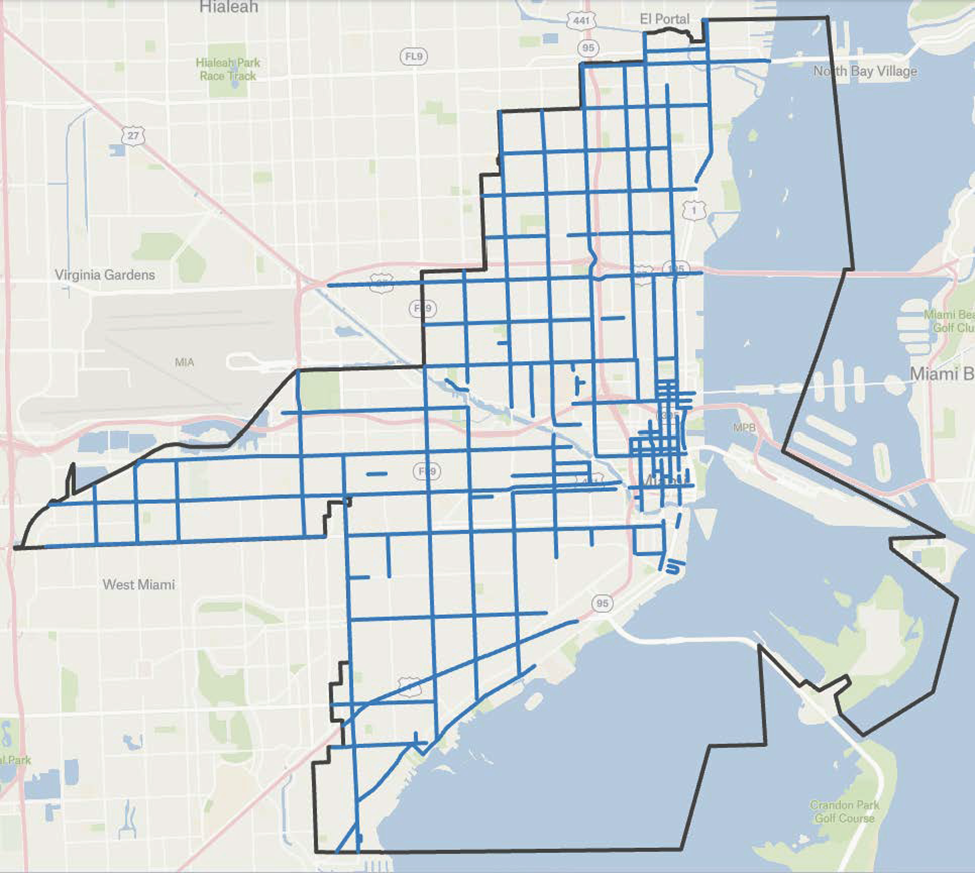
*A map of streets in Miami IJ has identified as under threat
The City has been making this demand for years, and Chad’s experience dealing with the City was typical under this scheme. Chad submitted a permit application to build a modest addition to the back of his home, which would provide needed space so that his wife’s parents could move in with them and help provide childcare for his growing family. Miami refused to issue Chad’s permit unless he handed over 500 square feet of his land adjacent to the street—half of Chad’s front yard.
It was only after IJ became involved Miami finally granted a waiver for Chad to finally build, over a year after he had originally submitted his request. But that delay still came at an emotional and financial cost. Chad’s wife and daughter ended up moving to South Carolina during the process to be with her parents since they couldn’t move in with her, leaving Chad alone. It will now also cost him approximately $200,000 extra for building materials and labor to build the addition.
To make matters worse, the waiver granted to Chad was only for this particular addition. The City still asserts it could demand Chad, or anyone else whose land they want, to turn over his land if he needed to go through the permitting process again.
“The City of Miami demanding half of my front yard in return for me building an addition in my backyard makes no sense,” said Chad. “I’m just trying to help my family, but the City is using this as an excuse to take my property without compensation. It’s not fair and it’s not right. If they can do this to me, they can try to do the same thing to anybody.”
“This is theft by extortion,” added IJ Attorney Benjamin Marsh. “It’s time to end this unconstitutional process.”
People have a right to use their own property, so land use permitting conditions must be tailored to mitigating public harm from that use. But a city may not, under those conditions, require that the property owner do work unrelated to safety, like giving up half their front yard. Miami’s demand wasn’t related to Chad’s project, instead, the city attempted to obtain an unrelated benefit at Chad’s expense.
That’s unconstitutional and the city may not make such a demand.
The Institute for Justice (“IJ”) is the nation’s premier defender of property rights. At no charge to its clients, IJ defends the rights of homeowners against eminent domain abuse, as in Kelo v. City of New London and DeVillier v. Texas; uncompensated property destruction, as in Baker v. City of McKinney; abusive fines and fees against homeowners, as in Ficken v. City of Dunedin; and against regulations that restrict the housing supply, as in Tiny House Hand Up v. City of Calhoun and Adams v. City of Seattle, Washington.
# # #
To arrange interviews on this subject, journalists may contact Phillip Suderman, IJ’s Communications Project Manager, at [email protected] or (850) 376-4110. More information on the case is available at: https://ij.org/case/miami-permit-takings
More News

Education Entrepreneurship
Texas City Hits Learning Pod with Cease-and-Desist in Violation of State Law

New Decision in Ongoing Legal Saga of Atlanta Family Wrongly Raided by FBI SWAT Team

First Amendment