Glendale Small Business Files Federal Lawsuit Challenging Seizure of Money by Federal Agents During Raid
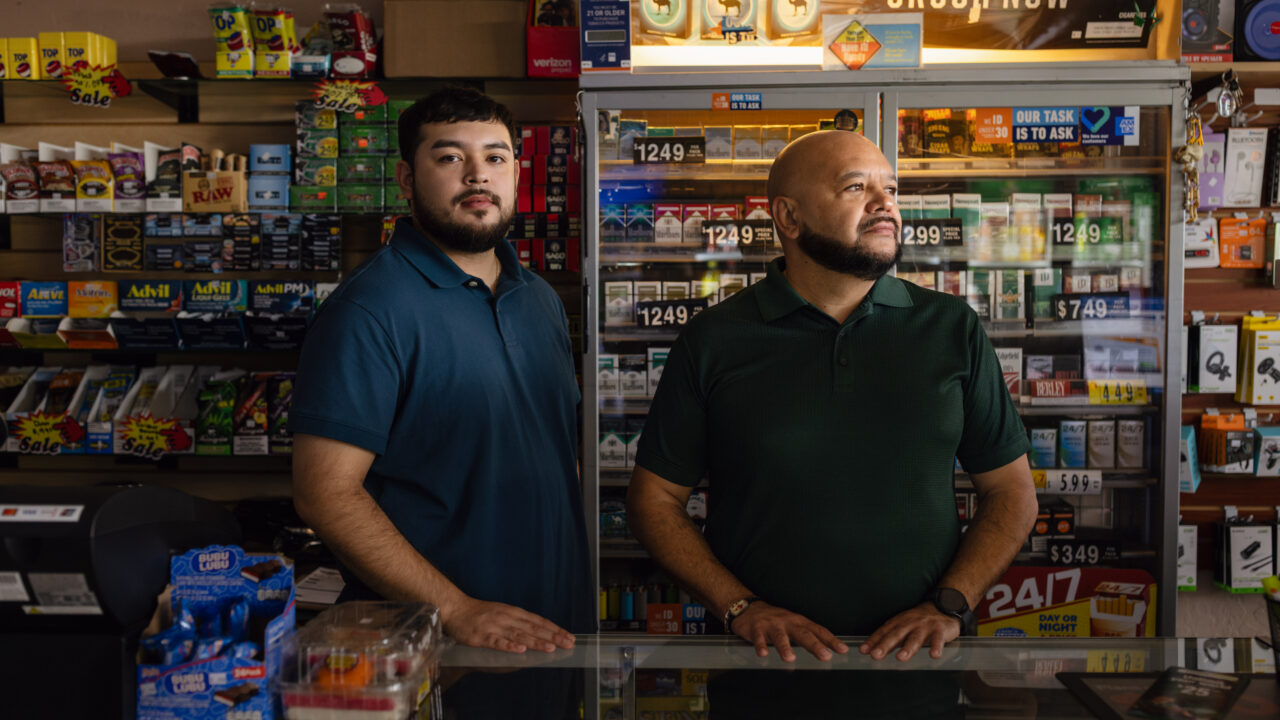
PHOENIX—Today, the owner of a Glendale money services business (MSB) teamed up with the Institute for Justice (IJ) to file a federal lawsuit after his business was raided and had cash, computers, and other property seized by federal agents last year. Ayala’s Mini Market owner Mario Ayala was never told what he allegedly did wrong and was never given a way to contest the seizure.
“The government can’t take your stuff, disappear, and then never explain itself,” said IJ Attorney Betsy Sanz. “For over a year and a half, the government has been holding Mario’s money and property. This prolonged seizure violates the Fourth Amendment and federal law. The government cannot hold onto your property indefinitely without explanation so it can eventually take it permanently using civil forfeiture.”
MSBs like Ayala’s have been around for more than a century and remain vital resources in underserved communities. For those without the means to open a bank account, MSBs are essential for cashing checks, paying bills, or sending money to family. Because cash is the product for MSBs, they tend to keep large sums of it on hand. But these businesses are also regulated extremely closely and abide by strict anti-money laundering measures.
“This business is my American Dream and the government took years of my hard work without telling me what I did,” said Mario. “This raid hurt me and my family. I hope this lawsuit gets my money back and helps make sure this doesn’t happen to anyone else.”
In February 2025, Mario was out of the country visiting his dying father. But he had to cut the trip short when agents with the Internal Revenue Service (IRS) and Homeland Security Investigations (HSI), a division of Immigration and Customs Enforcement (ICE), raided several Phoenix-area MSBs, including Ayala’s Mini Market. During the raid at Ayala’s, agents showed a warrant marked “under seal.” The investigation appears to have been based on a suspicion of structuring, the crime of breaking up large transactions into multiple small transactions to avoid federal financial reporting requirements. But agents never provided evidence to support the claim that Ayala’s was engaged in structuring or any other illegal activity. Instead, the agents spent hours interrogating employees, then bagged and took cash, documents, computers, and personal cell phones.
When the raids concluded, the agents left an inventory list of what they took (which did not specify how much cash was seized), said the business could go on operating as usual, and said Mario would receive information on next steps soon. But that additional information never came.
The raid left Mario shell-shocked and unable to operate business as usual. And despite trying everything in his power to get his property returned, Mario has been given the cold shoulder by the federal government.
Today’s filing argues the seizure was unconstitutional under the Fourth Amendment of the U.S. Constitution. Additionally, the lawsuit contends that the seizure violated the Civil Asset Forfeiture Reform Act (CAFRA), which requires the government to provide forfeiture notices within 90 days of seizing someone’s property, and the Clyde-Hirsch-Sowers Act, which bars the IRS from seizing property where the only offense for which there is evidence is structuring. That bipartisan law was named after former IJ clients Jeff Hirsch and Randy Sowers.
IJ is the nation’s leader in the fight against civil forfeiture, the legal process through which the government can take people’s property without charging them with a crime. After IJ sued the FBI for seizing a woman’s life savings without charging her with any crime, the FBI returned her money. IJ is also representing a small jewelry business who had a package with cash in it seized by law enforcements at a FedEx hub in Indianapolis. And IJ is still fighting for interest payments and fees after securing the return of $8,000 for a Rochester, New York, woman who had money she planned to invest in a food cart business taken by the DEA without ever being charged with a crime.
More News
Civil Forfeiture
Court Says Marion County Must Clearly State What Crime Was Committed Before Taking Money Seized at FedEx Hub

Nitro Nostalgia, an Ice Cream and Board Game Café, Wins South Side Pitch Competition

Educational Choice
