
New Study Lands as Supreme Court Weighs Whether Cities Must Pay for Property Destroyed by Police
First nationwide data on law enforcement property damage suggest compensating victims would barely register in municipal budgets
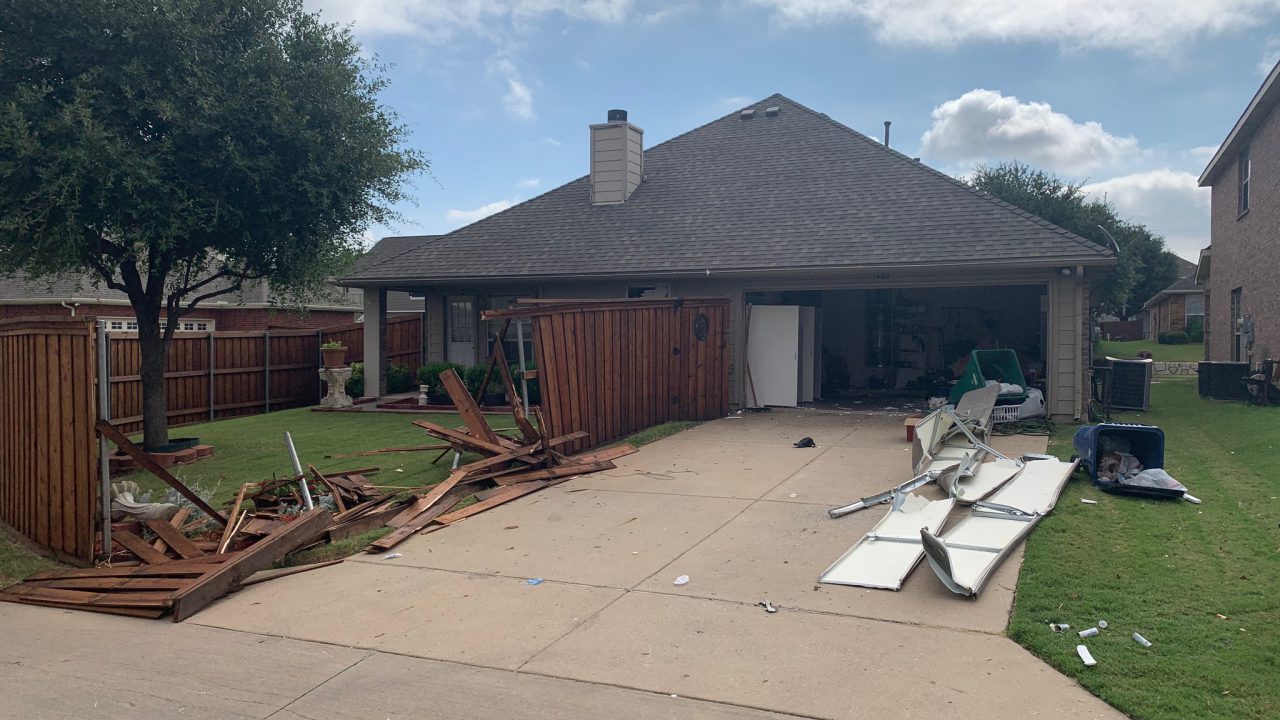
ARLINGTON, Va.—A new report, “Public Benefit, Private Burden,” released today by the Institute for Justice (IJ), sheds light on an important question that the United States Supreme Court has a chance to address in the coming months: Who pays when law enforcement damages an innocent person’s property in the course of their duties? In recent years, there have been a number of prominent news stories about SWAT teams inflicting major damage on innocent people’s property while pursuing fugitives. And often neither the local government nor the owner’s insurance will pay for the damage.
“This is the first nationwide study to explore what happens when property owners seek compensation after law enforcement damages their property while trying to protect the public,” said report co-author Jason Tiezzi, a data scientist who frequently collaborates with IJ. “What we found is that local governments frequently refuse to compensate property owners, even though they could easily afford to make worthy owners whole.”
The report found more than 2,700 claims seeking compensation for damage caused by law enforcement across 222 local jurisdictions between 2015 and 2023. Over the same nine years, that translates to about 12,000 claims across the more than 1,000 local jurisdictions home to the country’s largest law enforcement agencies with SWAT teams.
The key findings of the report include:
- Claims most often involved residential damage from routine law enforcement activities, such as police breaking down a door or fence to conduct a search or respond to an emergency. Vehicle claims were the next most common. Claims involving residential damage from tactical raids were the third largest category.
- Unexpected property damage caused by law enforcement can create real hardship. Half of all claims were for over $1,260, which is more than most Americans have available to cover an emergency expense. And 1 in 10 claims were for $10,000 or more.
- Unlucky bystanders are often left holding the bag. More than 90% of claimants were not the target of the law enforcement action that led to the property damage, and more than 70% of those had no relationship to the target. Yet 41% of these owners’ claims were denied.
- Compensating worthy victims would not bust local government budgets. Assuming all claims are worthy, paying them would cost municipalities an average of $6,500 per year, a small fraction of annual spending amounting to a rounding error.
IJ has two petitions pending before the Supreme Court, in cases where innocent property owners seek compensation for the destruction of their property by police during SWAT operations. One plaintiff is a Los Angeles small business owner whose print shop was destroyed by a SWAT team after a fugitive broke into the shop and barricaded himself inside. The other plaintiff is a South Bend, Indiana, woman whose home was damaged by a SWAT team looking for a suspect who had never even set foot inside the home.
“The Fifth Amendment requires that the government provide just compensation when it damages someone’s property for a public good, like getting a criminal off the streets, and this report makes it clear that doing so would not bankrupt local governments,” said IJ Senior Attorney Jeffrey Redfern. “The Supreme Court has a great opportunity to make sure governments are providing just compensation during these instances by granting our petitions.”
IJ has also represented other innocent people whose properties were damaged by SWAT raids. Earlier this year, an appeals court upheld a ruling that the Texas Constitution requires the city of McKinney to compensate a woman whose home was destroyed by a SWAT team in 2020. Likewise, a federal court recently ruled that a North Carolina family’s lawsuit can move forward after a SWAT team caused damage while raiding the wrong home. IJ also previously represented an innocent family in Colorado whose home was damaged in a SWAT raid.
More on Private Property
Private Property
Federal Court Orders DHS to Stop Detaining People with Valid Identification and Halts Warrantless Construction Site Raids

Private Property
Clayton County Grants License to Salon Entrepreneur Who Brought Constitutional Lawsuit
Private Property
US Citizen and Construction Worker Wins First Round in His Lawsuit Over Repeated Unconstitutional Detentions
Related Content
Related Reports
SWAT Destruction
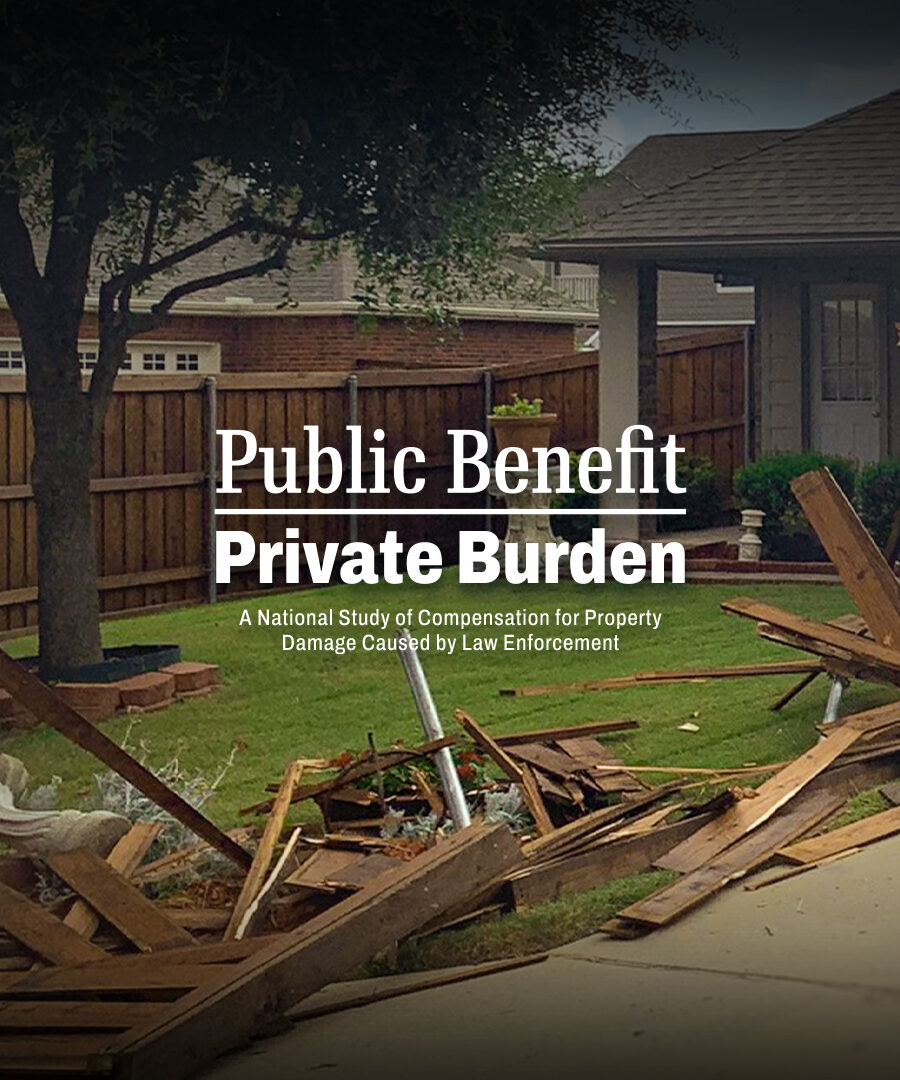
Public Benefit Private Burden
This study finds governments frequently refuse to compensate people when law enforcement damages their property for the common good—even though they could easily afford to make worthy owners whole.